Genre Other. Page - 301

Description
The Magnificent Ambersons, winner of the 1919 Pulitzer prize, is considered by many to be Booth Tarkington’s finest novel and an American classic. The story is set in the Midwest, where George, the spoiled and oblivious scion of an old-money family, must cope with their waning fortunes and the rise of industry barons in the automobile age.
George’s antiheroic struggles with modernity encapsulate a greater theme of change and renewal—specifically, the very American notion of a small community exploding into a dark and dirty city virtually overnight by virtue of industrial “progress.” Tarkington’s nuanced portrayal of the often-unlikable Amberson family and his paradoxical framing of progress as a destroyer of family, community, and environment, make The Magnificent Ambersons a fascinating and forward-thinking novel—certainly one with a permanent place in the American social canon. Despite the often heavy themes, Tarkington’s prose remains uniquely witty, charming, and brisk.
The novel is the second in Tarkington’s Growth trilogy of novels, and has been adapted several times for radio, film, and television, including a 1942 Orson Welles adaptation that many consider one of the finest American films ever made.
Description
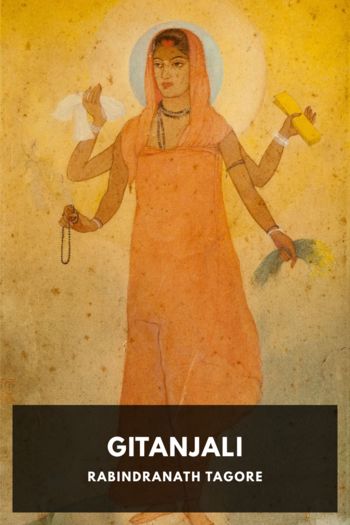
Widely regarded as one of the most important figures in Indian (and more specifically Bengali) literary history, Rabindranath Tagore was the first Indian—indeed, the first person outside Europe—to win the Nobel Prize in Literature, largely in recognition of his “spiritual offering of songs,” Gitanjali.
Tagore himself translated the poems from the original Bengali, taking many liberties in the process. His English translation is rightly recognized as a work distinct from the Bengali original, consisting of major revisions, many elisions, and many poems originally published in other collections.
Tagore’s lyrical simplicity, vivid imagery, and themes of nature, spirituality, death, and transcendence combine to produce a truly unique, powerfully moving work of thoughtful beauty. For many who read it, Tagore’s words in Song XCVI ring true: “What I have seen is unsurpassable. I have tasted of the hidden honey of this lotus that expands on the ocean of light, and thus I am blessed.”

Description
Scaramouche tells the tale of André-Louis Moreau, a young lawyer in Brittany. When his friend is killed by an unremorseful landowner, Moreau swears revenge and begins a life of adventure on the run. His travels lead him to joining a traveling theater troupe, becoming a master swordsman, and even to revolution.
While the story of Scaramouche is fiction, Sabatini was always very careful to portray history as accurately as he could in his novels. Thus, the backdrop of the French Revolution is vibrant, immediate, and carefully described. In general Sabatini’s prose is sharp and entertaining.
Scaramouche was incredibly popular in its day, and was Sabatini’s most famous novel. The first line is written on Sabatini’s grave.

Description
A Room With a View, perhaps E. M. Forster’s lightest novel, was also one long in gestation—he began it as early as 1901, and only published it in 1908.
In it we meet young Lucy Honeychurch and her cousin Charlotte Bartlett, who have gone on tour to Italy. During their stay they meet a series of interesting characters, including George Emerson, the son of an eccentric gentleman. The conflict between Lucy’s choice of the unusual George, or her more conventional English suitor Cecil, forms the crux of Forster’s critique of contemporary English society.
Despite the novel being a societal critique, the prose is light and studded with Forster’s easy witticisms. In 1958 Forster added an appendix elaborating on what occurred to the main characters after the novel’s end: the two world wars figure largely in their futures.

Description
Sartor Resartus was a strange and new book when it was first published in 1833, and in many ways it remains a strange and new book today. The bulk of the novel takes the form of the a commentary on the life and works of the fictional Diogenes Teufelsdröckh, a sort of renaissance-man German philosopher who develops a “Philosophy of Clothes.” The commentary is composed by a fictional English commentator, known only as the “Editor”; the Editor claims to have translated many of Teufelsdröckh’s ideas and quotes from German. As the commentary progresses, the Editor receives a bag of paper scraps on which are written various autobiographical fragments from Teufelsdröckh’s life. The Editor’s attempts to organize and interpret these scraps forms the second part of the novel.
The work is multi-faceted: sometimes a parody, sometimes a comedy, sometimes a satire, and sometimes seriously philosophical. Some critics consider it an early existentialist text. At the very least its unique structure and use of meta-narrative is hugely influential to modern literature; Borges was said to have memorized entire pages, and modern texts like Nabokov’s Pale Fire borrow liberally from the concept of a meta-narrative organized on scraps of paper.

Description
Max Beerbohm earned his fame as a caricaturist and essayist, and Zuleika Dobson is his only novel. Despite that, Zuleika has earned no small measure of fame, with the Modern Library ranking it 59th in its “100 Best English-Language Novels of the 20th Century.” Beerbohm’s essays were famous for their sharp wit and humor, and Zuleika follows in that tradition—Beerbohm himself called the novel “the work of a leisurely essayist amusing himself with a narrative idea.”
The novel follows Zuleika Dobson, a rather talentless woman of middling looks who nonetheless holds an almost mystical power of attraction over the men she comes in contact with. When she begins attending Oxford, she catches the eye of not just the Duke of Dorset, but of the entire male class.
Zuleika is both an easy comedy and a biting satire of Edwardian social mores and of the male-dominated Oxford student culture. Beerbohm also seems to forecast with eerie accuracy the cultural obsession with talentless celebrity that came to dominate the turn of the 21st century.

Description
Sons and Lovers, a story of working-class England, is D. H. Lawrence’s third novel. It went through various drafts, and was titled “Paul Morel” until the final draft, before being published and met with an indifferent reaction from contemporary critics. Modern critics now consider it to be D. H. Lawrence’s masterpiece, with the Modern Library placing it ninth in its “100 Best English-Language Novels of the 20th Century.”
The novel follows the Morels, a family living in a coal town, and headed by a passionate but boorish miner. His wife, originally from a refined family, is dragged down by Morel’s classlessness, and finds her life’s joy in her children. As the children grow up and start leading lives of their own, they struggle against their mother’s emotional drain on them.
Sons and Lovers was written during a period in Lawrence’s life when his own mother was gravely ill. Its exploration of the Oedipal instinct, frank depiction of working-class household unhappiness and violence, and accurate and colorful depiction of Nottinghamshire dialect, make it a fascinating window into the life of people not often chronicled in fiction of the day.

Description
Dead Souls is Nikolai Gogol’s last novel, and follows the tale of Pavel Chichikov, a down-on-his-luck gentleman determined to improve his lot in life. The story charts his scheme to purchase dead souls—the titles of deceased serfs—from wealthy landowners.
The novel’s satirical take on the state of Russian society at the time leads Chichikov into increasingly difficult circumstances, in his attempts to cheat both the system and the cavalcade of townspeople he meets along the way.
Originally planned as a trilogy, Gogol apparently only completed the first two parts, and destroyed the latter half of the second part before his death. The novel as it stands ends in mid sentence but is regarded as complete.

Description
Francisco de Quevedo holds the status of a man-of-letters in the same pantheon as Cervantes; but despite that, Pablo de Segovia is his only novel. Quevedo had circulated the manuscript privately for several years before it was published in 1626 without his permission. The novel is partly a satire of contemporary Spanish life, and a caricature of the various social strata Pablo encounters and emulates.
Pablo himself is a low-born person who aspires to become a gentleman, but despite his best efforts he repeatedly fails and is eventually forced to become a “sharper,” or rogue. His failures give Quevedo an avenue to expound on his belief that attempting to break past your social class can only lead to disorder; and that despite one’s best efforts, bettering oneself is largely impossible. Pablo’s stumbling from misfortune to misfortune is a farce that helped cement Quevedo’s reputation as a literary giant.
A Strange Manuscript Found in a Copper Cylinder James De Mille (top 10 best books of all time txt) 📖

Description
A Strange Manuscript Found in a Copper Cylinder is perhaps James De Mille’s most popular book; sadly, De Mille didn’t get to see this novel grow in popularity, as it was first serialized posthumously, in Harper’s Weekly. De Mille had written the novel before the “lost world” genre had become saturated, meaning many of the ideas were fresh and original for the time in which it was written. But, since he didn’t succeed in publishing it during his lifetime, by the time the novel was made public other authors like H. Rider Haggard had made the ideas and plot clichéd.
The novel itself tells the tale of a shipwrecked sailor, Adam More, who passes through a mysterious underground passage into a hidden land deep in the Antarctic, kept warm by a hidden volcano. The land is populated by an ancient civilization whose views on life and wealth are the polar opposite of those held in British society of the time—they view death and poverty as the highest religious and social achievements. As More adventures through the strange land, he encounters fantastic dinosaurs, lovelorn princesses, and the classic kind of adventure that foreshadows the pulp novels of the next century.