Genre Other. Page - 367

Description
Howard Phillips Lovecraft was one of the most influential writers of horror fiction in the early 20th century. His fame is mostly posthumous: he was only published in pulp magazines in his lifetime, and never saw financial success. Despite that, Lovecraft’s unique blend of gothicism, horror, and the supernatural, set in an imagined but eerily-real New England, marked a gold standard for horror fiction for decades after his death.
Readers of modern fantasy and horror fiction will certainly recognize Cthulhu, the tentacle-mouthed god who lies asleep in a sunken Atlantean ruin; the Necronomicon, a grimoire of unspeakable power and horror penned by the “mad Arab” Abdul Alhazred; and the dark, twisted New England countryside of the Miskatonic Valley. These and other features take shape in Lovecraft’s stories, creating a backdrop of the bizarre and evil behind seemingly day-to-day lives. A thread of cosmic horror soon turns anything normal towards madness.
This edition is small because verifying the U.S. public domain status of Lovecraft’s corpus is a difficult, if not impossible, academic exercise, and finding first-edition copies to transcribe is also difficult. This edition will be updated as more transcriptions become verified and available.
Included in this edition are some of Lovecraft’s juvenalia—in particular, “The Alchemist” was written when he was just seventeen or eighteen.

Description
A Study in Scarlet is the novel which first introduced Arthur Conan Doyles’ iconic characters Sherlock Holmes and Dr. Watson. It was published in 1887 in a popular magazine, Beeton’s Christmas Annual. It attracted little public attention at the time, but interest in Holmes continued to build with the subsequent series of short stories Doyle wrote featuring the austere, analytical detective—now one of the most well-known characters in all of English literature.
A Study in Scarlet is told from the point of view of Dr. John Watson, a medical doctor who has recently returned to London after suffering serious injury and illness as part of the Army Medical Department deployed to Afghanistan. In precarious health and even more precarious financial straits, he’s looking for cheap lodgings when a friend introduces him to Sherlock Holmes. The pair agree to share the rent of a flat Holmes has found.
Watson is baffled by his companion’s strange nature, his peculiar interests, his unusual breadth of knowledge in certain fields alongside his shocking ignorance in others, and his many strange visitors. Only eventually does Watsonb discover that Holmes has set himself up as the world’s first “consulting detective,” and it’s not long before Watson finds himself assisting Holmes in a mysterious case. The body of a man has been found in an abandoned house, without wounds or other marks of injury. But on the wall, scrawled in blood, is the word RACHE. The subsequent unravelling of the mystery takes many unexpected turns.

Description
Arsène Lupin takes on his most fearsome opponent yet in this second collection of his larcenous adventures. More a loving homage than a straight copy, Herlock Sholmes (changed just enough to avoid fallout from a copyright claim by Conan Doyle) and his companion Wilson are summoned to France initially to throw light on the case of the Blonde Lady. Having encountered Arsène Lupin before, Sholmes is only too happy to get a chance of revenge.
This collection of two stories were originally serialised in the magazine Je Sais Tout from 1906 to 1907, and were translated into English in 1910. After an earlier story with an unauthorised Sherlock Holmes, Maurice Leblanc was forced to rename his antagonist for these stories.

Description
Considered by many to be Maugham’s masterpiece, Of Human Bondage is a semi-autobiographical coming-of-age tale. The novel follows Philip, a sensitive young man interested in literature and art, as he searches for happiness in London and Paris. Philip, the ostensible stand-in for Maugham, suffers from a club foot, a physical representation of the stutter that Maugham himself suffered. Philip’s love life, a central aspect to the book, also mirrors Maugham’s own stormy affairs.
Maugham originally titled the book “Beauty from Ashes” before settling on the final title, taken from a section of Spinoza’s Ethics in which he discusses how one’s inability to control one’s emotions results in a form of bondage.
Description
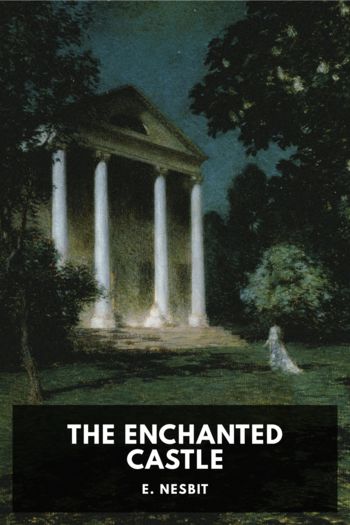
The Enchanted Castle is a novel for young readers by Edith Nesbit, who was writing in the late Victorian and early Edwardian era in Britain. As in her other children’s books, it begins in the everyday world but quickly brings in the fantastical and magical. A large part of the delight of Nesbit’s books is that her children behave in quite ordinary ways, getting into scrapes, getting dirty and their clothes torn, making decisions which seem right to them at the time but which are generally wrong-headed. It’s the contrast between the ordinariness of the children and the magical adventures they become involved in which makes the books so charming.
The Enchanted Castle was originally serialized in The Strand Magazine alongside stories by Rudyard Kipling and Arthur Conan Doyle. The first book edition was published in 1907.
In the story, Kathleen and her brothers Gerald and Jimmy find a way into a remarkable garden designed to create a Palladian landscape, full of statues and pseudo-Classical temples and buildings. It is not long before they come across a sleeping Princess. They wake her, and she introduces them to an item of real magical value, a ring which makes its wearer invisible. But once on, the ring won’t come off! “Those of my readers who have gone about much with an invisible companion will not need to be told how awkward the whole business is,” comments the author, which is indicative of the simple and direct language she uses, and the humor of the books. Even the invisibility ring, however, is not quite as simple as it seems; and many interesting and amusing adventures follow.
Description
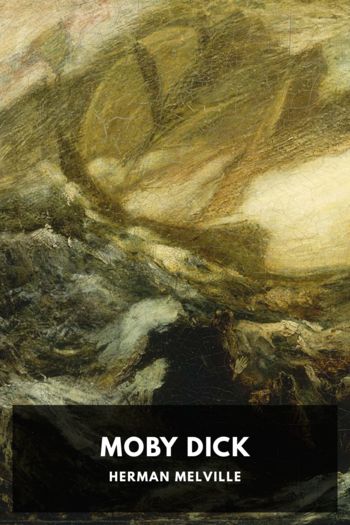
“Call me Ishmael” says Moby Dick’s protagonist, and with this famous first line launches one of the acclaimed great American novels. Part adventure story, part quest for vengeance, part biological textbook and part whaling manual, Moby Dick was first published in 1851. The story follows Ishmael as he abandons his humdrum life on shore for an adventure on the waves. Finding the whaler Pequod at harbour in Nantucket, he signs up for a three year term without meeting the Captain of the ship, a mysterious figure called Ahab. It is only well into the voyage that Ahab’s thirst for vengeance against the eponymous white whale Moby Dick—and the consequences—become clear.
The novel is semi-autobiographical: Herman Melville had had his own experience of whaling, having spent a year and a half aboard a whaling ship and further years travelling the world in the early 1840s. Herman used the knowledge gained from his experiences and wide reading on the subject to furnish Moby Dick with an almost encyclopaedic quality at times. The literary style varies widely, veering from soliloquies and staged scenes to dream sequences to comprehensive lists of ships provisions, but everything serves to further detail the world that’s being painted.
Presented here is the New York edition, which was published later than the London edition and reverted numerous changes the original publishers had made, as well as including the initially omitted epilogue.

Description
Arsène Lupin, with his characteristic wit, plots over the course of nine short stories to steal many of France’s best antiques and artworks from under their owners’ noses. Only his classic opponent Detective Ganimard has the brilliance to attempt to foil Arsène’s plans, albeit with mixed results.
This first collection of nine Arsène Lupin stories were originally serialised in the magazine Je Sais Tout from 1905 and translated into English in 1910. The final story of the set features an unauthorised Sherlock Holmes whose appearance annoyed Arthur Conan Doyle; the character’s name was changed to “Herlock Sholmes” for later stories. Arsène Lupin later went on to feature in over fifty stories by Maurice Leblanc along with many other books, films and plays around the world.

Description
Set in the 1820s in central Sweden, The Story of Gösta Berling follows the saga of the titular character as he falls from the priesthood and is rescued by the owner of a local estate. Joining the other saved souls in the pensioners’ wing of the mansion, he embarks upon a series of larger-than-life stories that tell of adventure, revelry, romance and sadness.
Gösta Berling was the eventual Nobel Prize winner Selma Lagerlöf’s first published novel, and was written as an entry to a magazine competition. The richly detailed landscapes of Värmland were drawn from her own upbringing there, and the local folk tales inspired many of the individual stories in the book. The novel was published in Swedish in 1891; this edition is based on the 1898 English translation by Pauline Bancroft Flach. In 1924 the story was made into a silent film, launching the career of Greta Garbo.
Description
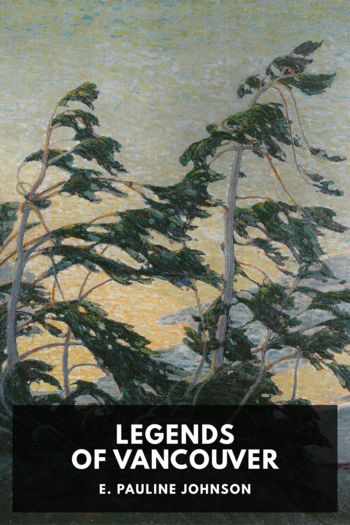
Emily Pauline Johnson, who was also known by the Mohawk name Tekahionwake, was a Canadian poet and author born in 1861. Born to a Mohawk father and an English mother, she was known for introducing indigenous culture to a wider North American and European audience.
In Legends of Vancouver, perhaps her best-known prose work, Johnson tells stories of the Squamish people, as relayed to her by Chief Joe Capilano, whom she befriended upon moving to Vancouver in 1909. She provides her own framing for these stories, placing them in the context of her relationship with the Squamish people.
In 1911, a group of Johnson’s friends collected this series of stories, that had previously been published in the Daily Province, in order to raise funds to support her as she struggled with poverty and health issues. In the intervening years, Legends of Vancouver has become a foundational piece of Vancouver’s literary heritage.

Description
Emma is one of Jane Austen’s best-loved novels. Its eponymous heroine, Emma Woodhouse, is described in the very first paragraph as “handsome, clever, and rich … and had lived nearly twenty-one years in the world with very little to distress or vex her.” In other words, she has lived a pampered, protected life and consequently is somewhat unrealistic in her regard for herself and her own abilities.
She befriends Harriet Smith, a young woman of dubious parentage and no money and determines to improve her prospects. As part of this project, Emma decides to become a matchmaker between Harriet and the Reverend Mr. Elton, a vicar in the nearby town. Things, however, do not go as smoothly as she had imagined.
The novel provides an insight into the distinctions in the rigid class structure of England in the Regency period, and the social barriers to marriage between persons considered to be of superior and inferior rank.
Emma was published in 1815, the last of Austen’s novels to be published while she still lived. It received a generally very positive reception, and was well reviewed (though anonymously) by Sir Walter Scott. Criticisms of the novel, such as they were, centered around its supposed lack of plot, though its treatment of character was recognized and applauded. Today it is regarded as one of Austen’s best works. The novel has been adapted many times for theater, movies and television.