Genre Other. Page - 368
Description
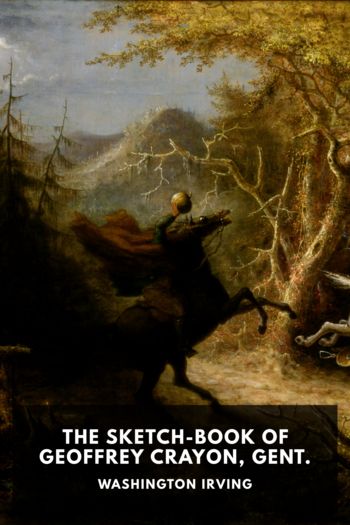
Initially published throughout 1819 and 1820, The Sketch-Book is a collection of 34 essays and short stories, collected and ordered according to the Author’s Revised Edition published in 1848. The Sketch-Book is the first publication to use Irving’s pseudonym Geoffrey Crayon, which he would carry into later works.
The stories vary in nature, from the comical “The Mutability of Literature” to the eerie and seemingly supernatural “The Legend of Sleepy Hollow,” but the personality of their narrator, Geoffrey Crayon, connects the stories and attracts their readers. Some stories are written on American topics, forming the need for separate American and English editions, and others consist of English life and landscape, written from the perspective of living in England for a time.
Two of the stories, “The Legend of Sleepy Hollow” and “Rip Van Winkle,” are Irving’s most well-known works, and are presented as posthumous writings of fictional Dutch historian Diedrich Knickerbocker. From these stories came the iconic characters Rip Van Winkle, Ichabod Crane, and the Headless Horseman.
Description
In Three Lives are the stories of three working-class woman from Bridgepoint—a town loosely based on Baltimore—in the early twentieth century. Each story tells of the hopes, loves, romances and sadnesses of the women as they live their lives.
Written in a unconventional style, the lives of the three women are uncovered through their layered conversations and interactions more than through detailed depictions. The book is notable for its descriptions of homosexual romance, something that at the time in the USA wasn’t accepted (indeed, Gertrude Stein moved with her partner to Paris to be able to live openly).
Three Lives was Gertrude Stein’s first published book, and although the sales weren’t as expected it was generally well received by critics. It’s considered today to be among her more accessible books, and is a regular on English literature curricula.
Description
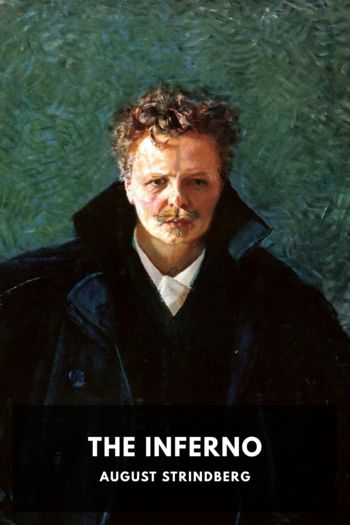
The narrator of The Inferno—ostensibly August Strindberg himself—has not had an easy recent past, and a move to Paris is not helping. As his mania overtakes his ability to function in the society of artists, writers, scientists and philosophers he’d like to be part of, he turns to more unconventional methods to help make sense of his world.
Written in diary form, The Inferno is a semi-autobiographical work that blends self-deprecating humour with a whirl of neurosis and attempted rationalisation. The novel, with a certain amount of exaggeration for literary effect, charts two years of Strindberg’s life in the 1890s. Presented here is Claud Field’s 1913 translation from the original French.
Description
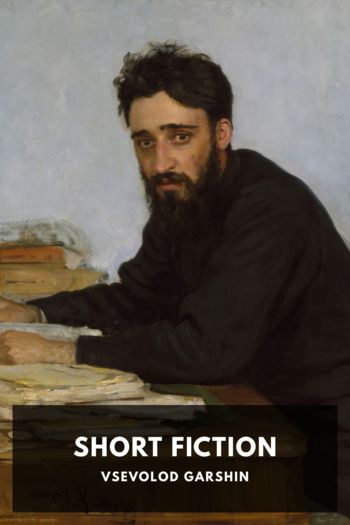
Vsevolod Garshin’s literary career followed a stint as a infantry soldier and later an officer, and he received both public and critical acclaim in the 1880s. Before his sadly early death at the age of thirty-three after a lifelong battle with mental illness he wrote and published nineteen short stories. He drew on his military career and life in St. Petersburg as initial source material, and his varied cast of characters includes soldiers, painters, architects, madmen, bears, frogs and even flowers and trees. All are written with a depth of feeling and sympathy that marks Garshin out from his contemporaries.
Collected here are the seventeen translations into English by Rowland Smith of Garshin’s short stories and novellas, in chronological order of the original Russian publication.
Description
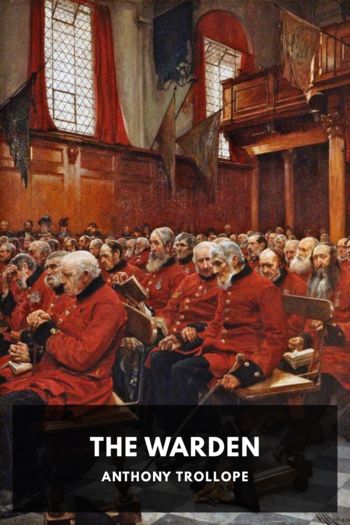
The Warden is concerned with the unassuming Rev. Septimus Harding, who has for many years been the Warden of Hiram’s Hospital in the fictional town of Barchester. This “hospital” is what we would today probably call an aged-care or retirement home. It was established under the provisions of a will to look after the needs of old men too feeble to work any longer and unable to support themselves. Mr. Harding benefits financially from his position, though the duties are very slight.
A local doctor, though sweet on Mr. Harding’s daughter Eleanor, is nevertheless a keen reformer, zealous to overturn what he sees as corrupt patronage in the Church. He investigates the terms of Hiram’s will and concludes that the money intended for the benefit of the aged wool-carders is unfairly being consumed by the salary of the Warden. He proceeds to pursue this issue through the pages of a crusading journal, The Jupiter.
Though strongly defended by the Church authorities, including his son-in-law Archdeacon Grantly, Mr. Harding has long struggles with his conscience because of this imputation.
The Warden, published in 1855, was Trollope’s first major writing success, and formed the basis for a series of six novels set in the same fictional county and its cathedral city of Barchester, now known as the “Chronicles of Barsetshire.”

Description
Barchester Towers, published in 1857, is the sequel to Trollope’s The Warden and continues the story of the clerical doings in the fictional cathedral town of Barchester.
As this novel opens, the old Bishop of Barchester lies dying, and there is considerable doubt as to who will replace him. The Bishop’s son Dr. Grantly, the Archdeacon, has high hopes of succeeding him, but these hopes are dashed and a new Bishop, Dr. Proudie, is appointed. Along with Dr. Proudie comes his domineering wife and their ambitious chaplain the Reverend Mr. Slope.
The old clerical party headed by Dr. Grantly and the new, championed by Mrs. Proudie and Mr. Slope, are soon in contention over Church matters. These two parties represent a then-significant struggle between different evangelical approaches in the Church of England. One local issue in particular is fought over—the appointment of a new Warden for Hiram’s Hospital, the focus of the preceding book.
Mrs. Eleanor Bold is the daughter of Mr. Harding, the prior Warden. She has recently been widowed. The wealth she inherited from her late husband makes her an attractive match, and her affections are in contention from several prospective suitors, including the oily Mr. Slope. All of this lends itself to considerable humor and interest.
Though not well received by critics on its initial publication, Barchester Towers is now regarded as one of Trollope’s most popular novels. Together with The Warden, it was made into a very successful television series by the BBC in 1982.
Description
Published in 1915, The Thirty-Nine Steps is a thriller set in Britain on the eve of the First World War.
The novel’s protagonist, Richard Hannay, is an expatriate Scot who has just returned to London after many years in South Africa working in the mining industry. He finds England extremely dull and is just considering returning to South Africa when he is accosted by another inhabitant of the block of flats where he is living.
This man, Scudder, tells Hannay he knows of a fantastical plot by England’s enemies to create a diplomatic scandal. Hannay, at first skeptical, eventually accepts that there is something in it and harbours Scudder in his own flat. Returning to his flat some days later, Hannay is horrified to find Scudder stabbed to death. Realising that he will be suspected by the police, and that he may also be in danger from the plotters, Hannay flees London.
What follows is an exciting chase across Scotland, with Hannay frequently coming close to capture.
The Thirty-Nine Steps was immediately popular, particularly with troops in the trenches of the First World War. It has remained popular and has been used as the basis for several movies including one directed by Alfred Hitchcock in 1935. It could also be seen as the prototype of several similarly-themed movies and television shows such as The Fugitive.
John Buchan continued the adventures of Richard Hannay in a series of sequels. He also had a highly distinguished government and diplomatic career, ultimately becoming Governor General of Canada.
Description
Flatland is uniquely both a social critique and a primer on multi-dimensional geometry. Written in two parts in 1884 by Edwin A. Abbott, an English mathematician and theologian, it tells the story of a square living in Flatland: a two-dimensional realm. After a dream of a restrictive one-dimensional existence and the difficulties this poses, he is visited by a sphere from a three-dimensional space who wishes to enlighten him into the ways of “Upward, yet not Northward.”
Edwin A. Abbott wrote other theological fiction and non-fiction (including several biographies), but he is best remembered for Flatland. While it was mostly forgotten after publication, it received a revived interest from the 1960s onwards, and has more recently had several sequels and film adaptations. This edition of is based on the second published edition and includes its preface, which in part attempts to address some of the contemporary accusations of misogyny.
Description
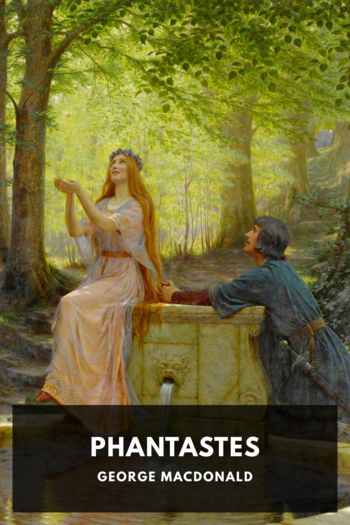
Phantastes was published in 1858. It tells the story of Anodos, who, on coming of age, is examining the effects of his deceased father. To his astonishment, in doing so he sees an apparition of a fairy woman, who tells him that he has some fairy blood and conveys him to Fairy Land.
In Fairy Land Anodos undergoes a long series of strange adventures and spiritual experiences. He is frequently under threat, at first from malevolent trees, and later from his own evil Shadow. At one point he discovers Pygmalion’s cave and sees the form of a beautiful woman enclosed in transparent alabaster. He falls instantly in love with this woman and contrives to free her from the stone, but she flees from him. Later, he encounters the Arthurian knight Sir Percivale, who has just come off the worst of an encounter with the evil Maid of the Alder-Tree. Eventually, after many trials and hazards, Anodos encounters Sir Percivale again and becomes his squire. Together they carry out deeds of chivalry before Anodos eventually returns to the mundane world.
Phantastes is now regarded as a classic of the fantasy genre and has been an important influence on later generations of fantasy writers, including such names as C. S. Lewis.
Description
Published in 1818, Peacock’s novella Nightmare Abbey is a gentle satire of the then-popular gothic movement in literature. He pokes fun at the genre’s obsessions and most of the book’s characters are caricatures of well-known personages of the time.
Young Scythrop is the only son of Mr. Glowry, living in the semi-ruined Nightmare Abbey on his estate in Lincolnshire. Mr. Glowry, the survivor of a miserable marriage, is addicted to the depressing and the morbid, surrounding himself with servants whose names, such as Raven, Graves and Skellet, reflect his obsessions. His friends, also, are chosen from those who best reflect his misanthropic views.
Scythrop himself imagines himself a philosopher with a unique view of the world, and to this end has written a treatise titled “Philosophical Gas; or, a Project for a General Illumination of the Human Mind.” Only seven copies of this treatise have ever been sold, and Scythrop dreams of being united with one of the buyers. His passions, though, become more earthy when he falls in love both with his cousin Marionetta and then also with a mysterious woman who appears in his apartment and begs him for asylum, thus creating a situation of romantic farce as he tries to decide between the two.
These events are interleaved between entertaining discussions among the varied guests at Nightmare Abbey, richly filled with humor, allusions and quotation.
Nightmare Abbey is probably Peacock’s most successful work of fiction, and helped establish his position as an important satirist of his times. His satire, though, is light-hearted rather than savage and is directed more at foolish opinions than attacking particular persons.