Genre Other. Page - 376
Description
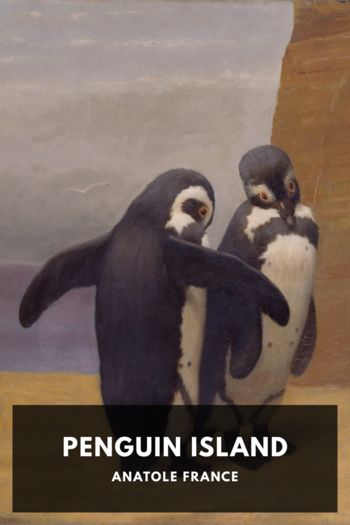
Penguin Island, published by Anatole France in 1908, is a comic novel that satirizes the history of France, from its prehistory to the author’s vision of a distant future.
After setting out on a storm-tossed voyage of evangelization, the myopic St. Maël finds himself on an island populated by penguins. Mistaking them to be humans, Maël baptizes them—touching off a dispute in Heaven and ushering the Penguin nation into history.

Description
R.U.R., or Rossum’s Universal Robots is a play written in 1920 by Karel Čapek, a Czech writer who wrote many plays and novels, many of them with science-fiction and dystopian themes. R.U.R. is perhaps the most well-known of these works in the English-speaking world because it brought the word “robot” into the language. “Robot” is derived from the Czech word meaning “worker.”
The play is set in the island headquarters of the R.U.R. corporation. The corporation has been manufacturing artificial beings which resemble humans, but who are tireless workers. They can be mass-produced in large numbers and are being adopted as workers in many countries. In the first scene of the play, they are visited by a young woman, Helena Glory, who aspires to relieve the lot of the robots, who she sees as oppressed. However, in what must be the fastest seduction scene in all drama, she is wooed and agrees to marry Harry Domin, the factory manager, who she has just met. She still however aspires to improve the life of robots and find a way to give them souls. Ultimately, however, this admirable desire leads to disaster for humankind.
The play was translated into English, and slightly abridged, by Paul Selver and Nigel Playfair in 1923. This version quickly became popular with both British and American audiences and was well received by critics.

Description
The Tempest, thought to be one of the last plays that Shakespeare wrote alone, begins with a storm which shipwrecks the king of Naples and his crew. We quickly learn that the tempest was not a natural occurence; it was created by Prospero, the usurped duke of Milan who is stranded on a nearby island, with the help of Ariel, a spirit in his service. The rest of the play explores the relationships between the shipwrecked crew, Prospero, his daughter Miranda, and a native of the island: a half human, half monster called Caliban.
Though this play is traditionally classified as a comedy, more modern scholarship, out of a desire to highlight the dramatic elements of some of Shakespeare’s comedies, created a genre subgroup called the “late romances.” The Tempest is included in that subgroup.
This Standard Ebooks production is based on William George Clark and William Aldis Wright’s 1887 Victoria edition, which is taken from the Globe edition.
Description
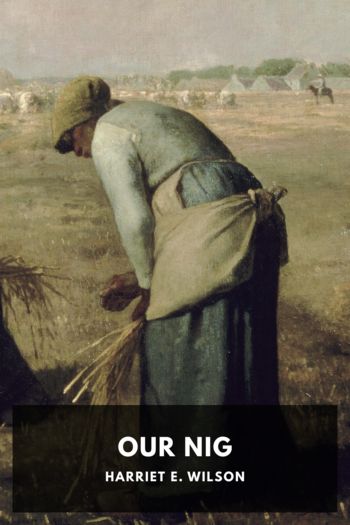
Our Nig is an an autobiographical novel by Harriet E. Wilson, her only published work. It was written not for pleasure, but to financially support the lives of the author and her sick child. It was long considered to be the first novel published by an African-American woman in the United States, but recent research has put that title into question.
Frado, born to a white mother and black father, is abandoned by her parents at age six and left to the Bellmont family. Though the Bellmonts live in the northern United States, the matriarch of the family, Mrs. Bellmont, loathes her for her dark skin color. She forces Frado (nicknamed “Nig”) to do the chores of the family under the threat of rawhide floggings and beatings. However, not everyone agrees with Mrs. Bellmont’s treatment of their new family member.

Description
Over four hundred years after it was first published, Romeo and Juliet remains one of Shakespeare’s most famous and most frequently performed plays. During the late 1500s many playwrights loved to base their plays off of Italian stories, and Shakespeare was no different; he was heavily influenced by the Italian tale “The Goodly History of the True and Constant Love of Romeo and Juliett.” Today Romeo and Juliet continues to spread its influence within literature and performing arts. It has been adapted into 24 operas, numerous films, a ballet, and has also been referenced in law. The play has entertained generations with its romance, deception, revenge, sword-fighting, creative verse, comedic relief, and tragic fate.
The prologue lays before us the fate of our star-crossed lovers: two Italian households have a long, ongoing vendetta against each other, kept under control only by Prince Escalus, the ruler of Verona. Romeo meets with his friends Benvolio and Mercutio after having his heart broken by Rosaline. Encouraged to find love elsewhere, Mercutio sneaks him into one of Capulet’s masked parties, where he encounters Juliet, Capulet’s daughter. This is the beginning of a love affair that is destined to end in tragedy.
This Standard Ebooks production is based on William George Clark and William Aldis Wright’s 1887 Victoria edition, which is taken from the Globe edition.
Description
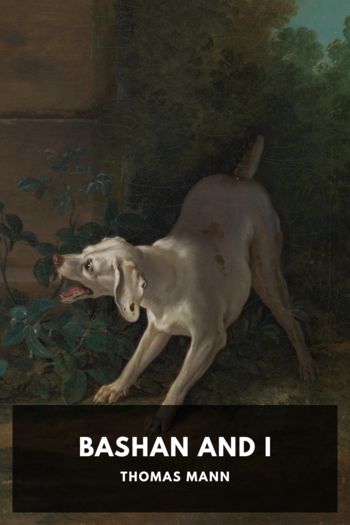
In Bashan and I (sometime referred to as Man and Dog), Thomas Mann, the Nobel Prize-winning author of The Magic Mountain and Death in Venice, writes in the most remarkable way of the unique relation that links a dog with his master. These memoirs read as a novel, and describe in fierce detail the behavior, feelings and psychology of Mann’s dog Bashan, and of Mann himself. Mann tells how he acquired Bashan, details traits of his character, and describes how they go on harmless and bucolic hunts.
Written in 1918 at the end of the First World War, Bashan and I is an ode to life, to nature, to simple joys, and to a dog.

Description
This collection of short stories, retold by Irish author James Stephens, focuses mainly on the adventures of legendary hunter-warrior Fionn mac Uail and his companions in the Fianna. The stories often feature the magical people of the Shí (fairies) and their interactions with the residents of medieval Ireland.
Description
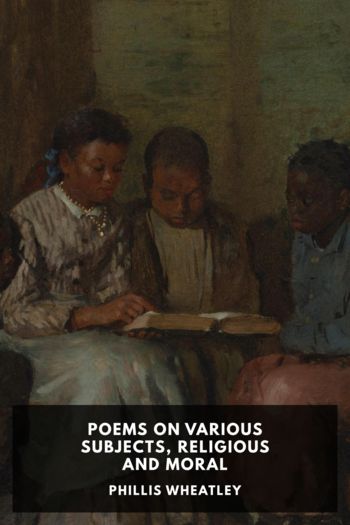
Poems on Various Subjects, Religious and Moral was the first book of poetry ever published by an African-American author. Phillis Wheatley’s deep familiarity with Latin literature and Christianity, combined with her African ancestry, provided her with a unique and inimitable view of poetry.
She was kidnapped and brought over to America on a ship called The Phillis after which she was named. Her interest in poetry and literature was recognized by the Wheatley family who, though keeping her enslaved, provided her with classic works of literature by authors such as Virgil, Homer, Terence, and Pope, all of whom had a significant influence on her work.
She received praise from many of her contemporaries including George Washington, John Hancock, and Voltaire. Shortly after publishing her collection of poetry she was emancipated by the Wheatley family. Even so, her life ended in poverty and obscurity.
Though her influence on poetry and African-American literature is indisputable, more modern critics of her work point to the lack of censure of slavery and the absence of discussion about the lives of black people in the United States as an example of the Uncle Tom syndrome.
Description
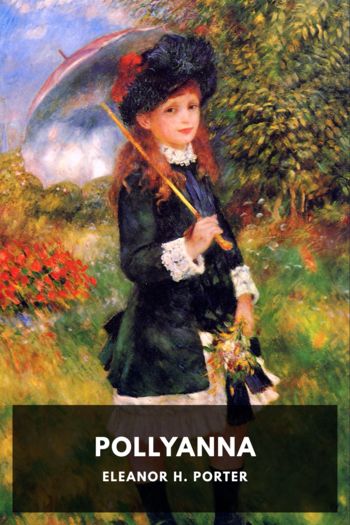
Eleven year-old Pollyanna, having recently been orphaned by her widower father, is sent back East to be cared for by her dutiful and stoic Vermont aunt. Naive and ever-literal, this very positive young girl brings with her an infectious habit of instinctive gratitude that was taught to her as “the game” by her late father. This game serves her well, while also uplifting the turn of the century New England community which becomes her home.
Pollyanna inspired the production of five feature length films and fifteen subsequent novels, including books written by six other authors. Pollyanna was a best-selling children’s book when first published, and the eponyms “Pollyanna” and “Pollyanna Principle” have taken a lasting place in our culture.
Description
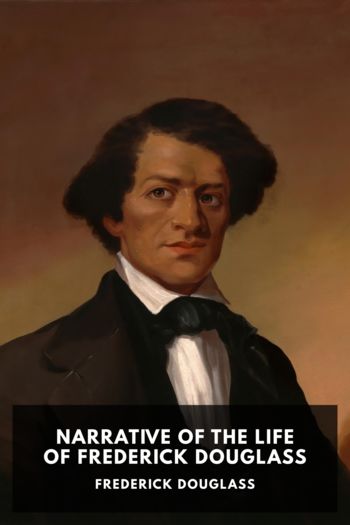
The Narrative of the Life of Frederick Douglass was written in 1845, seven years after Douglass escaped slavery, and is the first of three autobiographies. It covers his life as a slave, enduring the whips of the overseers and the hopelessness of his circumstances, until his escape to the north and arrival at New Bedford, Massachusetts. The brutalities he witnessed and his slowly growing desire for freedom are presented in the vivid language he was already known for in his antislavery oration.
The eloquence of Douglass’s speeches caused some skeptics to doubt his credibility, believing that a former slave with no education could never speak so well. Thus, part of his motivation for writing the book was to dispel this suspicion and to provide a fuller history than was possible in his lectures. The abolitionists William Lloyd Garrison and Wendell Phillips provided introductions vouching for the truth of Douglass’s words.
The book was an immediate best seller. The fame brought danger to Douglass, who sailed for England shortly after the book’s publication to ensure he would not be apprehended as a fugitive slave. He spent two years touring and lecturing in Great Britain and Ireland before returning to America to continue his abolitionist work. English supporters raised funds to purchase his freedom from his former master.
The slave narrative is an autobiographical genre written by escaped slaves concerning their lives in bondage. Slave narratives not only promoted abolitionism by giving first hand evidence of the cruelty and hypocrisy of slaveholders, but also allowed African Americans to express themselves as intelligent, articulate individuals, deserving of respect and freedom. Douglass’s Narrative is perhaps the most important example of the genre, on the basis of its literary merits and its impact on the abolitionist movement.