Genre Other. Page - 377

Description
William Congreve’s comedy The Way of the World was first performed in 1700 at the theatre in Lincoln’s Inn Fields, London. It was not well received, and as a result Congreve vowed never to write for the stage again—a vow he kept. Nonetheless the comedy was printed in the same year and has come to be regarded as the author’s masterpiece, a classic of Restoration drama.
In a world still reacting against the puritanism of Cromwell and the Commonwealth, Restoration drama had slowly transitioned from celebrating the licentiousness and opulence of the newly returned court to the more thoughtful and refined comedy of manners that was to dominate the English stage of 18th century. In one way Congreve’s The Way of the World is the last (and best) of its type, and in another way, it is the forerunner of a style that is echoed even now.
The play centers on the love affair of Mirabell and Millamant who are prevented from marrying by a number of obstacles, not the least of which is Mirabell’s past dalliance with Millamant’s aunt’s affections. Intricate, witty, and amusing, the comedy nevertheless concludes with no clear heroes or heroines—one of the things that makes it such an incisive portrait of human experience and an enduring example of its type.

Description
American naturalist and conservationist Thornton W. Burgess was the author of more than one hundred books for children; the best-remembered of these is Old Mother West Wind, which was originally written for his young son. Burgess also wrote dozens of books about the creatures of the northern North American forest, four of which are collected here as the Green Forest Stories.
This Green Forest Stories compilation focuses on Lightfoot the Deer, Blacky the Crow, Whitefoot the Wood Mouse, and twin bear cubs Woof-Woof and Boxer. Readers may have encountered these characters in other of Burgess’s stories about the “little people” of the Massachusetts forest. Burgess’s earliest ventures into animal fantasy are roughly contemporary with Rudyard Kipling’s Just So Stories and Beatrix Potter’s tales of various animals, and represent the most lasting American entry into this genre.
Animal fantasy is a sub-genre of children’s literature in which animals are anthropomorphized into human-like characters and use language like humans. It is often criticized by those who want readers to experience more realistic representations of animals and the natural world, but animal fantasies engage a millennia-old tradition, in the Western canon reaching back at least as far as Aesop’s Fables; animal characters feature in teaching stories for children (and adults) in cultures around the world. Burgess’s stories are intended for children in the early elementary grades. The challenges and triumphs of the “little people” in his stories will feel identifiable to many young readers, and the snippets of moralizing and authorial commentary interleaved with the actions of the plot reflect a teaching device with a long history.
In the late twentieth century, Burgess fell out of favour with teachers and librarians. This shift occurred in part due to changing tastes in literary style and in part due to a changing society. Burgess is entirely a writer of his time. Most of the animals he depicts are male, and many of the female animals who wander into the stories are more passive and more stereotyped than the kinds of representation preferred for girls today. (Such is not the case, however, of Old Granny Fox, who may be the smartest of the little people Burgess represents and certainly does not lack agency or self-determination.)
The style of Burgess’s storytelling is undeniably old-fashioned but still deserves consideration. Although the writing is often simple and plain, there are rhetorical flourishes that reveal the author’s attention to craft. In particular, Burgess’s use of formulaic expressions such as “jolly, round, bright Mr. Sun” and “the Merry Little Breezes” links these tales to an orality that stretches back to at least The Iliad and The Odyssey of Homer (think of phrases such as “the wine-dark sea,” “rosy-fingered Dawn,” and “bright-eyed Athena”). Through his broader use of repetition and through onomatopoeia, Burgess underscores characteristics of his characters’ real-life forest counterparts—the way a chickadee calls, a squirrel scolds, or a rabbit lopes, for example.
In these stories, as in the Green Meadow Stories collection, we observe features that signal Burgess’s experience as a writer for periodicals and as an early radio broadcaster. Each chapter begins with reminders about the previous chapter, and chapters end with either a strong, propulsive conclusion or a traditional cliff-hanger. The chapters are generally quite short—a comfortable size to read as a bedtime story, and just long enough to hold a new reader’s attention without demanding too much of that reader’s energy. The strong narrative voice sounds distinctly like oral storytelling. One can almost imagine a small group of young people seated in a circle at the storyteller’s feet.
That image captures the essence of these animal tales. They are light, bright peeks into a complex and beautiful world, a world any girl or boy may want to pursue through study or personal explorations. As humanity faces the daily loss of animal species, stories that delight readers and listeners, that encourage them to learn about and respect the creatures of the non-human world, deserve our renewed attention and respect.

Description
When Orion Clemens is appointed Secretary of the Nevada Territory, his brother Samuel Clemens, better known by his pen name Mark Twain, joins him on his journey west. Together with their all-important six pounds of Unabridged Dictionary they make their way to Nevada in a six-horsed mail coach and are, of course, derailed by all sorts of problems.
In Roughing It Twain combines the beautiful descriptions of the West’s idyllic landscape with his now-patented sense of humor. He joins the silver and gold mining scramble, begins his career as a writer working for different newspapers and journals, visits the Mormons of Salt Lake City, and even makes his way to Hawaii, then still known as the Sandwich Islands.
Roughing It was written as a prequel to his earlier travelogue The Innocents Abroad.
Description
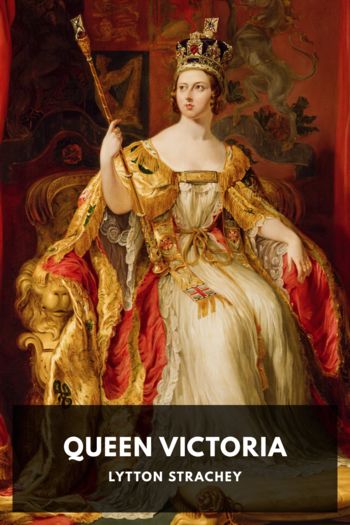
The publication of Lytton Strachey’s Eminent Victorians in 1918 was a tremendous success. In it, Strachey looked at four iconic figures of the Victorian Age and punctured the hagiographical illusions surrounding them. It seems only fitting that he should follow up in 1921 with a similarly unsentimental but fair biography of the person at the pinnacle of that era, Queen Victoria herself.
Thoroughly researched, with his references documented in hundreds of footnotes, Strachey looks at the life of the young woman who, when she was born, was by no means certain to become the British monarch. He also spends considerable time on her consort, Prince Albert, who, in Strachey’s telling, develops from a careless youth to becoming a truly remarkable and effective figure in British society, while continuing to be generally perceived as an outsider.
Strachey’s sardonic and witty style makes this account of Queen Victoria and Prince Albert an entertaining and very informative read.

Description
Thornton W. Burgess was an American naturalist and the author of dozens of books for children, the most enduring of which are Old Mother West Wind and The Burgess Bird Book for Children. Burgess was a passionate twentieth-century conservationist who dedicated his life to teaching children and their families about the importance of the natural life of the northern North American forest.
The Green Meadow Stories compilation is made up of four distinct but entwined tales: those of Happy Jack Squirrel, Mrs. Peter Rabbit, Bowser the Hound, and Old Granny Fox. Through the adventures of these focal characters readers are introduced to the wider territory of the Green Meadows, the Green Forest, and the Smiling Pond as well as to the animals’ Great World.
The animals of Burgess’s stories are anthropomorphized, undoubtedly, but not caricatured: these are not the twee creatures of Disney cartoons. Their behaviour is explained in ways that would be understandable to a human child—this is fiction, after all—but Burgess’s “little people of the forest” are not simply humans dressed in fur and feathers. The original illustrations in Burgess’s books (by Harrison Cady, not reproduced in this edition) show the animals wearing clothes, but Burgess’s own descriptions of animals are more natural and metaphorical, and less fantastic. For example, he describes Chatterer the Red Squirrel, “who always wears a red coat with vest of white,” a compact way of communicating the look of a squirrel that many of today’s children will never have seen with their own eyes. Less pleasantly, it is Peter Rabbit’s fur and flesh that is rent when Hooty the Owl tears Peter’s “coat” one night on the Old Pasture.
Burgess has tremendous respect for the creatures he depicts, as well as for their natural home. While the presentation of the Green Meadow is hardly “Nature, red in tooth and claw,” it is surprisingly unsentimental. Peter Rabbit, for example, lives a highly anxious life under threat from the many predators who would enjoy having him for dinner; similarly, Happy Jack Squirrel experiences days and nights of terror when Shadow the Weasel discovers Happy Jack’s home and hunts him relentlessly. During a long, hard winter, Granny Fox and Reddy Fox come close to starving, and Old Man Coyote leads Bowser the Hound on a dangerous chase that may result in one or the other dying. Despite other fanciful, sentimental elements of storytelling, Burgess does not sugarcoat prey/predator relationships or the precarity of wild animals’ lives.
Burgess is a clear conservationist in his representations of hunting. The animals are highly aware of hunters and their “dreadful guns.” It is a notable moment in this collection when Farmer Brown’s Boy decides he will no longer use his gun to harm the little people of the Green Meadow and the Green Forest. The stories are also notable in their detailed representation of a largely intact forest, something few children in the twenty-first century will experience.
On the other hand, these are books for children, and they contain plenty of sweetness and light. Animal pairings—such as when Peter Rabbit meets the dainty Little Miss Fuzzytail, the future Mrs. Rabbit—are vague but sentimental and soon lead to proud new families of Rabbits, Ducks, Deer, and Owls. The “little people” celebrate the arrival of each spring’s babies, mark each other’s new relationships and homes, play together, and even help each other survive. They laugh, tease, and trick each other—a fanciful interpretation of animal behaviour that could lead to a reader’s life-long fascination with, and respect for, forest creatures—and for generations of readers, they did just that.
The stories are also more didactic than most twenty-first-century authors would dare to be. There are morals associated with most stories, often attributed to the animal about whom the story is being told. Through this practical teaching, Burgess suggests a correspondence between how animals and humans live; but he consistently clarifies that animal intelligence is different from, but certainly no less than, human intelligence.
Unlike the bouncy rhyming verses of many of today’s children’s books, Burgess’s sentences have a somewhat old-fashioned cadence, creating the distinct and appealing music of traditional storytelling. Burgess’s episodic chapters are eminently readable and particularly come to life when they are voiced by animated reading-aloud. For older readers looking for something different to share with children, or for new readers beginning to tackle “chapter books,” the tales of the Green Meadow Stories collection are a delightful place to discover Burgess and his animal friends.

Description
In a desire for better sheep-farming land on an unnamed British colony, Higgs decides to traverse the distant mountain range. On the other side he discovers not the empty rolling plains of his imagination but an entirely new civilization: the land of Erewhon. Inducted into the ways of their culture, he attempts to transcribe as best he can their thoughts on birth, death, machines, the production of food, their financial system, and many more subjects that on first glance seem absurd to the narrator but often end up revealing absurdity in his own thinking.
Erewhon was extremely well received on its initial (and anonymous) publication, with its satirical commentary on contemporary Victorian attitudes ensuring its commercial success. Samuel Butler incorporated into the novel his philosophical ideas, including chapters founded on his interest in Darwinian evolution theory, and on the potential rise in artificial consciousness. George Orwell held the novel in high regard, and the Erewhonian philosophy on the danger of machines even made its way into Frank Herbert’s Dune series as the “Butlerian jihad.”

Description
The protagonist of this fictional autobiography wrestles with race in America from the perspective of someone who learns that he is considered black but also that he can pass as white if he wants to. His personal ambitiousness and racial ambivalence makes him a sort of American Hamlet: undone by indecision. Will he be “a credit to his race” by advancing an African-American heritage he loves and appreciates in the face of a hostile culture, or will he retreat into the mediocrity of a safe, white, middle-class family life?
Along the way, he shares his penetrating observations about race relations in the American north and south, about the “freemasonry” of subterranean black American culture, about the emerging bohemian jazz subculture in New York City, and about traditions of African American religious music and oratory.

Description
In the year 2126, scientists Arcot and Morey chase a sky pirate—and invent the technology to travel through space. In the second story, the heroes travel to Venus and make first contact with an alien species. Finally, they must defend the solar system from invaders whose own star has long since gone dark.
Originally published separately as “Piracy Preferred” in Amazing Stories June 1930 edition, “Solarite” in Amazing Stories November 1930, and “The Black Star Passes” in Amazing Stories Quarterly Fall 1930, these three novellas were edited and collected into this volume in 1953.
This is the first book in John W. Campbell’s Arcot, Morey, and Wade trilogy. Most famous for editing Astounding Science Fiction and Fact magazine and introducing Isaac Asimov, Robert Heinlein, and many other great science fiction authors to the world, Campbell’s other notable works include the novella “Who Goes There?”, which was adapted to film as The Thing by John Carpenter in 1982.
Description
Fritz Leiber is most famous for his “Fafhrd and the Gray Mouser” stories, but he also wrote in many other genres. Between 1950 and 1963 he wrote a number of short stories that appeared in Galaxy magazine, including one in the same universe as The Big Time and the Change War stories (“No Great Magic”).
Description
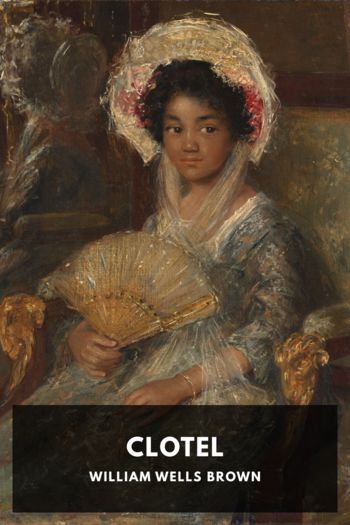
The first published novel by a black American author combines real-life stories, including his own story of escaping slavery and recollections he heard while helping others escape, with abolitionist agitprop, revealing ephemera from the newspapers of the time, and sympathetic (if somewhat melodramatic) characters. What emerges from this collage is an indictment of slavery and of American hypocrisy about liberty that found an enthusiastic and enraged audience when it was published in 1853.
Clotel has a complex publishing history, with four separate editions published between 1853 and 1867. These editions contain huge differences in characters and plotting, so much so that they might each be considered separate novels in their own right. This edition is based on the first edition of 1853.