Genre Other. Page - 378
Description
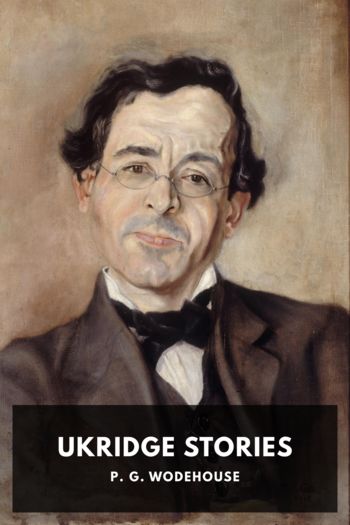
Stanley Featherstonehaugh Ukridge is one of P. G. Wodehouse’s less famous characters. He first appears in Love Among the Chickens in 1906 and then continues to make appearances in another 19 short stories until as late as 1966, making him Wodehouse’s longest running character.
Ukridge is an inveterate opportunist, and these stories chronicle his exploits as a young man: his trials and tribulations as one who is destined for greatness, if the rest of the world would only cooperate. Told from the point of view of his long-suffering friend and fellow bachelor “Corky” Corcoran, they chronicle their many meetings in the years before the period of Love Among the Chickens.
As with most of his stories, Wodehouse published the first 10 stories in both the U.S. (Cosmopolitan) and the UK (Strand Magazine) before they were published in the 1924 collection Ukridge.

Description
Carol Milford grows up in a mid-sized town in Minnesota before moving to Chicago for college. After her education, during which she’s exposed to big-city life and culture, she moves to Minneapolis to work as a librarian. She soon meets Will Kennicott, a small-town doctor, and the two get married and move to Gopher Prairie, Kennicott’s home town.
Carol, inspired by big-city ideas, soon begins chafing at the seeming quaintness and even backwardness of the townsfolk, and their conservative, self-satisfied way of life. She struggles to try to reform the town in her image, while finding meaning in the seeming cultural desert she’s found herself in and in her increasingly cold marriage.
Gopher Prairie is a detailed, satirical take on small-town American life, modeled after Sauk Centre, the town in which Lewis himself grew up. The town is fully realized, with generations of inhabitants interacting in a complex web of village society. Its bitingly satirical portrayal made Main Street highly acclaimed by its contemporaties, though many thought the satirical take was perhaps a bit too dark and hopeless. The book’s celebration and condemnation of small town life make it a candidate for the title of the Great American Novel.
Main Street was awarded the 1921 Pulitzer Prize, but the decision was overturned by the prize’s Board of Trustees and awarded instead to Edith Wharton for The Age of Innocence. When Lewis went on to win the 1926 Pulitzer for Arrowsmith, he declined it—with the New York Times reporting that he did so because he was still angry at the Pulitzers for being denied the prize for Main Street.
Despite the book’s snub at the Pulitzers, Lewis went on to win the Nobel Prize in Literature in 1930, with Main Street being cited as one of the reasons for his win.

Description
Satan has returned to Earth for a sightseeing visit in the form of the American billionaire Henry Wondergood. Accompanied by his faithful demon butler Toppi they head for Rome, but are sidetracked by an unforeseen accident and end up at the home of the inscrutable Thomas Magnus and his divine daughter Maria. As Satan begins to discover the meaning of being a man, the satanic aspects of mankind become ever more apparent to him.
Leonid Andreyev was a Russian author active in the beginning of the twentieth century, famous mostly for his plays and short fiction, and often portrayed as Russia’s equivalent to Edgar Allan Poe. Satan’s Diary was his last work, completed just a few days before his death in 1919. This edition was translated by his previous collaborator Herman Bernstein and published in 1920.
Description
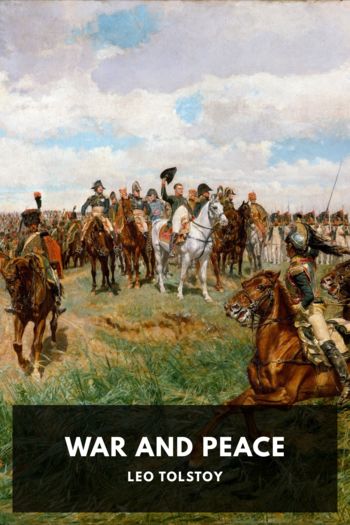
Against the backdrop of the Napoleonic Wars, five aristocratic families in Russia are transformed by the vagaries of life, by war, and by the intersection of their lives with each other. Hundreds of characters populate War and Peace, many of them historical persons, including Napoleon and Tsar Alexander I, and all of them come to life under Tolstoy’s deft hand.
War and Peace is generally considered to be Tolstoy’s masterpiece, a pinnacle of Russian literature, and one of history’s great novels. Tolstoy himself refused to call it that, saying it was “not a novel, even less is it a poem, and still less a historical chronicle.” It contains elements of history, narrative, and philosophy, the latter increasing in quantity as the book moves towards its climax. Whatever it is called, it is a triumph whose breadth and depth is perhaps unmatched in literature.
This production restores the Russian given names that were anglicized by the Maudes in their translation, the use of Russian patronymics and diminutives that they eliminated, and Tolstoy’s original four-book structure.

Description
Piccadilly Jim, by P. G. Wodehouse, was first published on February 24, 1917 by Dodd, Mead and Company in New York. It was subsequently published in London in May 1918 by Herbert Jenkins. It is based on a story originally published in the Saturday Evening Post from September 16 to November 11, 1916. The book sees Jimmy Crocker, also known as “Piccadilly Jim,” trying to escape his increasingly bad reputation by returning to New York from London. On the way, he meets and falls in love with Ann Chester, and agrees to help her kidnap Ogden, her cousin, for his own good. Their plans go awry and become more convoluted as impersonations, explosives and a determined detective get in the way.
Description
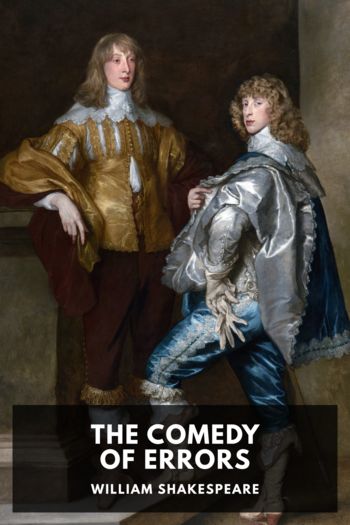
The Comedy of Errors is one of Shakespeare’s earliest and shortest plays. This comedy utilizes slapstick humor, word play, and mistaken identities to create a series of farcical accidents. Over time, the play’s title has become an idiom used to describe “an event or series of events made ridiculous by the number of errors that were made throughout.”
In Ephesus, the law forbids entry to any merchants from Syracuse, and if they are discovered within the city, they must pay a thousand marks or be put to death. Aegeon, an old Syracusian merchant, is arrested and Solinus, the Duke of Ephesus, listens to his story of coming to the city. Long ago, Aegeon was on a sea voyage. Traveling with him was his wife, his twin sons, and their twin slaves. The family becomes separated during a tempest; Aegeon, one son, and one slave were rescued together, and the others were never to be seen again. Years later his son Antipholus and his slave Dromio left to search for their long lost siblings; after the boys didn’t return, Aegeon set out to bring his son back home. Moved by this story, the duke allows Aegeon one day to get the money to pay his fine and to find his family.
This Standard Ebooks production is based on William George Clark and William Aldis Wright’s 1887 Victoria edition, which is taken from the Globe edition.

Description
The Iron Heel is some of the earliest dystopian fiction of the 20th century. The novel is framed as a presentation of the long-lost “Everhard Manuscript,” a document written by the socialist revolutionary Avis Everhard around 1932. The manuscript is discovered in the year 2600, and is introduced and annotated by a far-future commentator.
In it, Avis tells of how the United States was slowly overcome by a group of oligarchs, the Iron Heel, who use their monopoly power to systematically bankrupt American small businesses and farmers in order to cement their control over the capitalist system. Eventually, the U.S. Army is brought under the control of the oligarchs, who entrench a brutal system of repression against the working class. Everhard, her husband, and a scrappy group of socialists fight valiantly against the Iron Heel, though we learn in the foreword that they don’t survive the fight, and die as martyrs.
London uses the narrative as a vehicle for espousing his socialist views, sometimes to the detriment of the plot, and even going so far as to plagiarize an essay by Frank Harris nearly verbatim—issues which caused the work to earn scant critical praise. Despite this, it sold over 50,000 copies in hardcover and influenced a generation of activists, including George Orwell, Harry Bridges, and Frederic Tuten.

Description
Jude the Obscure was first published in its complete form in 1895, just after finishing its serial run in Harper’s Magazine. At the time, its unconventional and somewhat scandalous themes earned it widespread criticism and condemnation. In the 1912 “Wessex Edition,” Hardy appended a postscript to the book’s preface in which he stated that the outrage ultimately abated with no lingering effect other than “completely curing me of further interest in novel-writing.” Indeed, Jude was to be Hardy’s last novel.
The story chronicles the life of Jude Fawley, an orphan boy of unremarkable birth or means, growing up in the small farming village of Marygreen in Hardy’s fictional version of Wessex, England. From an early age, Jude determines to chart the course of his life by the stars of learning and scholarship, but he very quickly discovers just how little interest the society of his time would take in the grand ambitions of a young man of so humble an origin. Without proper guidance and limited resources, his progress is slow and arduous. And when he discovers the existence of his cousin, the charming Sue Bridehead, it is nearly abandoned altogether in favor of an almost obsessive pursuit.
The novel proceeds to trace the lives of Jude and Sue as they become locked in a struggle both against themselves and the conventions of their times. Lofty ideals clash with harsh realities; grand pursuits fall prey to darker aspects of human nature. Characters are complex: at times spiteful, selfish, or self-destructive. Hardy, however, remains very subtle in his portrayal of these tragic figures and their flaws. The effect is to render them convincingly human. Ultimately, Jude is an unhappy tale of unfulfilled promise that is rarely told, and rarely told so well.
Description
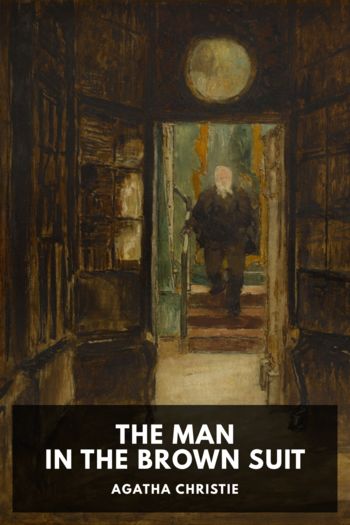
After her father’s death, young Anne Beddingfeld moves to London with her meagre inheritance, hopeful and ready to meet adventure. She witnesses a fatal accident at a Tube station and picks up a cryptic note dropped by the anonymous doctor who appeared on the scene. When Anne learns of a murder at the estate that the dead man was on his way to visit, it confirms her suspicion that the man in the brown suit who lost the note was not a real doctor.
With her clue in hand she gains a commission from the newspaper leading the search for the “man in the brown suit,” and her investigation leads her to take passage on a South Africa–bound ocean liner. On board, she meets a famous socialite, a fake missionary, a possible secret service agent, and the M.P. at whose estate the second murder occurred. She learns about a secretive criminal mastermind known only as the Colonel and of stolen diamonds connected to it all.
During the voyage, she evades an attempt on her life, and in South Africa she escapes from a kidnapping and barely survives another attack on her at Victoria Falls. She falls in love, finds the diamonds, and discovers the truth about the two deaths in London that started it all. Finally, she confronts the mysterious criminal mastermind, the Colonel.
Published in 1924 by the Bodley Head, The Man in the Brown Suit is Agatha Christie’s fourth novel. Unlike the classic murder mysteries that made her famous, The Man in the Brown Suit, like her second novel The Secret Adversary, is an international crime thriller.
Description
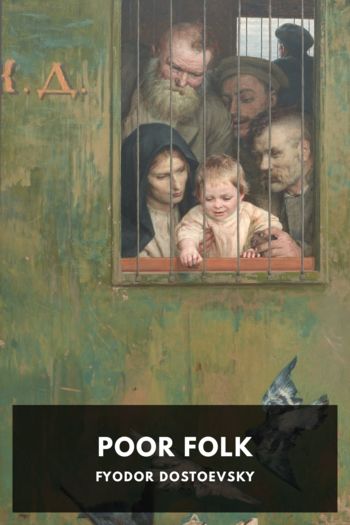
In 1840s St. Petersburg the ageing copyist Makar Dievushkin is, with various degrees of subtlety, trying to woo Barbara Dobroselova, a young woman who has had a swift fall in fortunes. Told in alternating letters to each other, their past stories and current hopes play out in raw and personal detail, as the daily realities of an uncaring and expensive town take hold.
Poor Folk was Fyodor Dostoevsky’s first novel and was written to try and cover his escalating debts from his expensive lifestyle and gambling addiction. Luckily for Dostoevsky, it was an immediate success when it was published in the St. Petersburg Collection, and the accolades from critics such as Belinsky and Herzen propelled him into the high echelons of Russian literary society. This edition is the 1915 translation by C. J. Hogarth.