Genre Other. Page - 379

Description
Vladimir Korolenko was a Ukrainian author and humanitarian. His short stories and novellas draw both on the myths and traditions of his birthplace, and his experiences of Siberia as a political exile due to his outspoken criticism of both the Tsars and the Bolsheviks. His first short story was published in 1879, and over the next decade he received many plaudits from critics and other authors, including Chekhov, though he also received some criticism for perceived uneven quality. He continued writing short stories for the rest of his career, but thought of himself more as a journalist and human rights advocate.
Korolenko’s work focuses on the lives and experiences of poor and down-on-their-luck people; this collection includes stories about life on the road (“A Saghálinian” and “Birds of Heaven”), life in the forest (“Makar’s Dream” and “The Murmuring Forest”), religious experience (“The Old Bell-Ringer,” “The Day of Atonement” and “On the Volva”) and many more. Collected here are all of the available public domain translations into English of Korolenko’s short stories and novels, in chronological order of their translated publication. They were translated by Aline Delano, Sergius Stepniak, William Westall, Thomas Seltzer, Marian Fell, Clarence Manning and The Russian Review.
Description
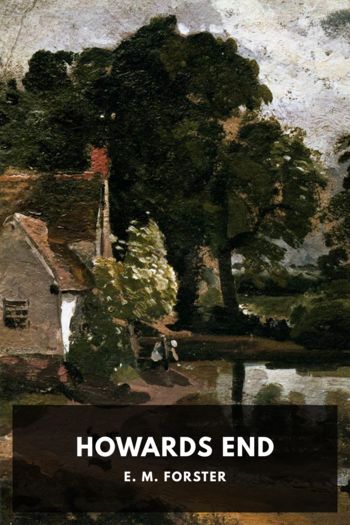
Howards End, published in 1910, is considered by many to be Forster’s masterpiece. The plot revolves around three families in Edwardian England: the Schlegels, a trio of half-German, middle-class siblings who to poor people seem rich, but to rich people seem poor; the Wilcoxes, a large, wealthy family of businessmen; and the Basts, a lower class young couple struggling to keep up appearances.
The Schlegel siblings are sharp, intelligent, and idealistic, and they pursue culture and art with an enthusiasm reminiscent of the Bloomsbury group. They befriend the Wilcoxes while on a trip abroad, and the lonely Wilcox matriarch and Margaret Schlegel, the strong-willed elder sister, strike up a friendship. As their families begin butting heads in London, Helen, the younger Schlegel sister, runs in to Leonard Bast while at the opera. Bast is proud and ambitious, but clearly impoverished and lacking gentility. Helen, a rash and fiery idealist, takes him up as a pet project, oblivious to the deep cultural gulf between Bast and themselves as she tries her best to educate him in matters of art and literature and lift him out of his class.
The interplay between the three families becomes a complex reflection on social codes and class difference in England: how class can lock lives in place, and how even the well-to-do are not immune from becoming ossified in their station thanks to the seemingly-unbreakable social conventions of the age. Capitalism, a still-new philosophy of life, is juxtaposed against humanism and the arts as the families try to do what they each think is the right thing. Forster weaves these threads expertly against the backdrop of London city life and the cozy family cottage of Howards End, the ultimate centerpiece in these three families’ lives.

Description
Jurgen is James Branch Cabell’s most famous novel, and a highly influential one in the fantasy genre. The novel is a witty, parodic send-up of the ideal of courtly love. Soon after publication, its bawdy style and double-entendre-laden dialog brought it to the attention of the New York Society for the Suppression of Vice, who promptly attempted to prosecute it for obscenity. After some years Cabell finally won the trial, and the publicity the trial brought made the book and Cabell famous. In his revised 1922 edition (on which this ebook is based) Cabell satirizes the Society in his Foreword, where Jurgen is placed on trial by the Philistines, overseen by a giant dung beetle as prosecutor.
The eponymous Jurgen is a pawnbroker and self-described “monstrous clever fellow” who, after passing by a demon and offering an offhand compliment, finds himself having regained his youth as he is launched on a magical, amorous journey. On his quest for love Jurgen meets a series of mythological and legendary characters—from Nessus the centaur, to Guinevere, to Helen of Troy, to the Lady of the Lake, and more. His wit charms all of them, though Jurgen never seems happy with whatever astonishing situation he finds himself in—whether it’s pestering the devils of hell or chatting with the creator in heaven.
The novel is dense with allegory and allusion, but despite its erudition it maintains a brisk pace as puns and witticism zip by. It influenced a huge number of authors, including Fritz Leiber and Robert A. Heinlein, and was widely considered a masterpiece of its time, with personalities like Alistair Crowley proclaiming it an “epoch-making masterpiece of philosophy.” Its publication and widespread popularity and acclaim set the stage for the modern fantasy-comedy genre perfected by authors like Terry Pratchett and Piers Anthony.

Description
Thomas Malory did not invent the stories of Arthur, King of Britain, but it is fair to say that he reinvented them. Although the legends were already hundreds of years old by the fifteenth century, the contemporary stories of Arthur in Malory’s day were primarily French. The French had added many of the elements familiar to modern readers, among them Lancelot, and the search for the Holy Grail. Malory combined, edited, and added some of his own material to the stories available to him, and in the process created a uniquely British work. (It was his printer Caxton who gave it a French name.) Le Morte d’Arthur is the source material for almost all modern retellings of King Arthur and his knights, from Hollywood movies and musicals to Nobel-prize winning writers.
Malory’s identity is still in some dispute, as there are several men of various spellings of the name to choose from. Sir Thomas Malory from Newbold Revel in Warwickshire is the most popular choice, but his life of crime—he was a rapist and serial thief at the minimum—seems to be at odds with the acts of chivalry and moral code present in this book. It is known from the author’s own notes that he wrote the book while in prison; perhaps he was trying to make amends for his crimes. Regardless, the result was to give new life to King Arthur and his Knights of the Round Table.

Description
Against the backdrop of a secret war between two all-powerful alien races, Virgil Samms of the Triplanetary Service is selected by the seemingly omniscient Arisians to be the first bearer of the Lens. Only individuals deemed brave, virtuous, capable, and incorruptible can receive a Lens, which grants its user telepathy and other powers. With it, Samms seeks out other “Lens worthy” humans and aliens, with the goal of creating a Galactic Patrol that will defend planets adhering to Civilization from corruption, vice, and piracy.
First Lensman is the second book in E. E. Smith’s Lensman series but was the last to be written. Unlike the rest of the series, it was never serialized, and was first published in 1950 to help link Triplanetary with Galactic Patrol. Smith’s imaginative and bizarre alien races are on full display, as well as the constantly escalating space warfare that is the hallmark of the space opera genre.

Description
In the fictional town of Roulettenberg, Germany, a Russian tutor to the children of a seemingly wealthy general is enticed to play roulette at the local casino. First playing for others (including his beloved Polina Alexandrovna), he soon gets a taste for the experience himself, which can lead in only one direction.
Dostoevsky wrote this story based at least partially on personal experience. After his second marriage (and the successful publication of Crime and Punishment) he and his wife took a honeymoon in Baden-Baden, where Dostoevsky lost large quantities of money at the roulette table. To get his financial situation back to normal he then set up a wager with his publisher: they’d have the right to publish his work for free for nine years if he couldn’t deliver this novel by November 1866. He succeeded in this, and was able to move on to writing The Idiot.
The Gambler has been translated to screen and radio, and was even turned into an opera by Prokofiev. This edition is the 1915 translation by C. J. Hogarth.

Description
Pellucidar, the sequel to At the Earth’s Core, was published in 1915. It continues the adventures of David Innes as he returns to the hollow interior of the Earth in search of his friend Perry and his lost love Dian the Beautiful. He takes with him many tools and weapons, intent on bringing civilization to the savage world within, which is populated with dinosaurs and neolithic creatures. He has many perilous adventures as he battles to survive.

Description
A classic science fiction novel by French writer Jules Verne, this work is one of the most well-known subterranean fictions to this day. It inspired many similar works and adaptations. First published in 1864 in French as Voyage au centre de la Terre, it was quickly translated to English by several different publishers in the 1870s. The current edition was based on the translation by Frederick Amadeus Malleson that was published by Ward Lock & Co Ltd. in 1877.
Our protagonist is Axel, whose overcautious and unadventurous spirit contrasts with that of his uncle Professor Otto Lidenbrock, an eccentric professor of geology. When Professor Lidenbrock obtains a mysterious runic-coded note in the manuscript of an Icelandic saga, he is determined to decipher it. Axel inadvertently solves the code and, much to his chagrin, discovers that it is a set of directions left by a sixteenth-century Icelandic alchemist to reach the center of the earth via the volcano Snæfelljökull. Reluctantly, Axel joins his uncle on a trip to Iceland, and with the aid of a local guide, Hans, begins an adventure towards the center of the earth, where they will encounter giant mushrooms and insects, an island with an enormous geyser, and battle pre-historic reptiles. One of Verne’s most well-known works, this novel is a testament to Verne’s love of geology, science, and cryptography.

Description
A Midsummer Night’s Dream is one of the many comedies written by William Shakespeare. It was written around 1595 and first published in Shakespeare’s first quarto in 1600. The exact reason for why this play was produced has been lost to time; some historians theorize that it could have been written for an aristocratic wedding, or for Queen Elizabeth I to celebrate the feast of St. John.
The play opens with Theseus, Duke of Athens, and Hippolyta, Queen of the Amazons, planning the celebration of their marriage. During their visit to Athens four guests—Demetrius, Lysander, Helena, and Hermia—are trying to find their own spouses and to follow each other into the woods. Also entering the woods are six actors practicing a play for the duke and his new wife. Unbeknownst to all, they have also entered the realm of the fairy kingdom, ruled by King Oberon and Queen Titania and inhabited by the mischievous Puck.
This Standard Ebooks production is based on William George Clark and William Aldis Wright’s 1887 Victoria edition, which is taken from the Globe edition.

Description
The Time Traders is the first book in Andre Norton’s Time Traders series. First published in 1958 by World Publishing Co., The Time Traders is told from the perspective of Ross Murdock, a young criminal faced with a choice: be turned over to the new Rehabilitation Service or volunteer for a secret government project.
Murdock chooses the secret government project, hoping for a chance to escape. At the Arctic base he learns what the project is, and instead of escaping he joins a team posing as Beaker Traders during Europe’s Bronze Age. His team makes several jumps through time searching for the source of technology the Reds are using to gain advantages in the present.