Genre Other. Page - 380

Description
Charlotte Brontë’s last novel, Villette, is thought to be most closely modelled on her own experiences teaching in a pensionnat in Brussels, the place on which the fictional town of Villette is based. In the novel, first published in 1853, we follow the protagonist Lucy Snowe from the time she is fourteen and lives with her godmother in rural England, through her family tragedies and departure for the town of Villette where she finds work at a French boarding school. People from her past reappear in dramatic ways, she makes new connections, and she learns the stories and secrets of the people around her. Through it all, the reader is made privy to Lucy’s thoughts, feelings, and journey of self-discovery.
Description
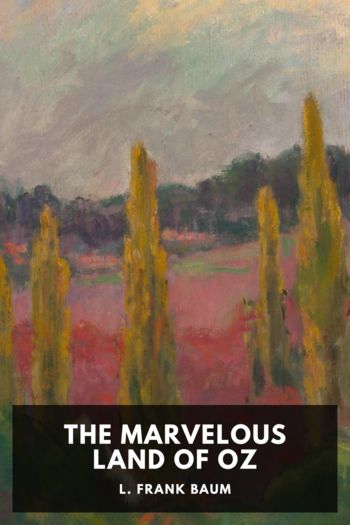
Four years after writing his immensely popular The Wonderful Wizard of Oz, L. Frank Baum returned to the Land of Oz in this second book of fourteen he wrote about the magical country. Like its predecessor, The Marvelous Land of Oz has delighted children through the years, and has been adapted into stage plays, films, and comics.
A young boy named Tip lives in Gillikin Country in Oz with an old witch named Mombi. When Mombi threatens to turn Tip into a statue, he escapes with his friend Jack, a wooden man with a pumpkin for a head who has been brought to life through magic. He then journeys to the Emerald City, where he embarks upon an exciting adventure, meeting new quirky characters and returning favorites from the first book.

Description
In the late 19th century, Lewis Carroll—better known these days as the author of Alice’s Adventures in Wonderland—was also an established mathematician who had published many books and papers in the fields of algebra and logic. His mathematical interest extended to the setting of puzzles for popular consumption. The stories collected here cover varied subjects including the cataloguing of paintings, the number of times trains will pass each other on a circular track, the most efficient way to rent individual rooms on a square, and many more. They were published originally in The Monthly Packet magazine and then collected with some additional commentary into a book originally published in 1885. Included along with the stories is a full appendix with Carroll’s answers, and his often acerbic commentary on the answers submitted to him at the time.
Description
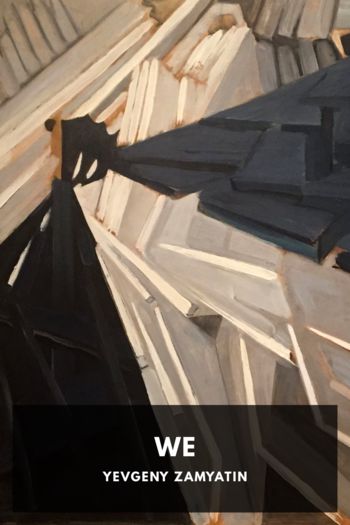
D-503 is the Builder of the Integral, the United State’s first spaceship. A life of calculations and equations in the United State leaves little room for emotional expression outside of the pink slips that give one private time with another Number. The façade however starts to crack when I-330, a mysterious she-Number with a penchant for the Ancients, enters the picture.
We, Yevgeny Zamyatin’s fourth novel, was written in 1920–21, but remained unpublished until its English release in 1924 due to conditions in the Soviet Union at the time (it was eventually published there in 1988). Its dystopian future setting predates Orwell’s 1984 and Huxley’s Brave New World, and it’s now considered a founding member of the genre. It has been translated into English and other languages many times; presented here is the original 1924 translation by Gregory Zilboorg.
Description
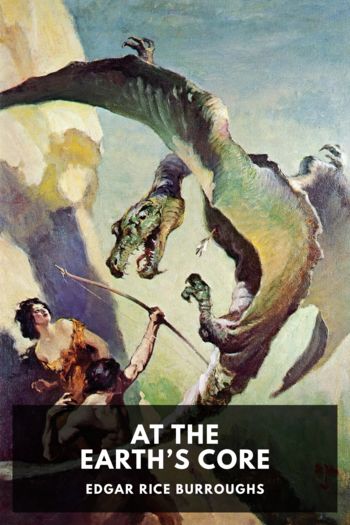
At the Earth’s Core, published in 1914, is the first of a series of science fiction novels written by Edgar Rice Burroughs set inside a hollow earth with a central “sun,” a land called Pellucidar. However unlikely this scenario, it allowed Burroughs free play to create heroic adventures in yet another alien environment in addition to his fantastic version of Mars in his Martian series.
The story’s hero, David Innes, is recruited by an old man, Perry, to help fund his invention, a “mechanical subterranean prospector,” and then to test it out. Unfortunately once the powerful burrowing machine is set going, it cannot be steered, and the pair find themselves burrowing deeper and deeper into the Earth’s crust. To their astonishment, rather than dying from suffocation or increasing heat, they emerge inside a hollow shell inside the Earth. This world is populated by prehistoric creatures as well as primitive humans, intelligent gorillas, and supremely intelligent pterosaurs, the masters of this land. David and Perry are captured by these creatures and many adventures ensue.
Description
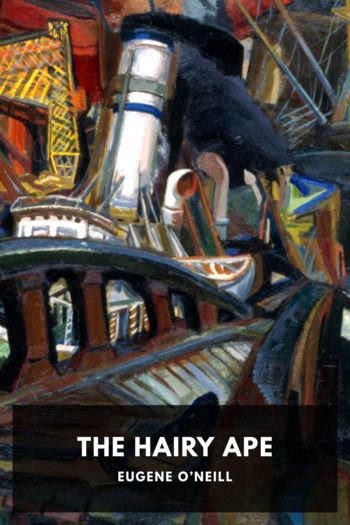
Eugene O’Neill’s The Hairy Ape isn’t one of his best-known works, but it has gained popularity as an exploration of early American society. It was first produced in 1922 by the Provincetown Players in Massachusetts, embracing expressionism in its set design and staging, before moving on to Broadway, where it faced resistance from local and federal governments due to its radical views.
The play examines the existential crisis of the protagonist, a brutish stoker named Yank, who begins the play secure in his role as the leader of firemen on an Atlantic ocean liner. But when confronted by the disdain of an upper-class passenger who calls him a “filthy beast,” he seeks to rebel against his place. Then, as all his plans for revenge fail, he slowly finds himself descending to the literal level that society has relegated him to.
O’Neill uses Yank’s search for belonging to explore the destructive forces of industrialization and social class. Early on, The Hairy Ape’s commentary on the dehumanization of workers caused it to be taken up by many labor groups and unions to further their own causes. The play also touches on themes of masculinity and socialism, and the repeated references to the “blackface” of the ship’s stokers and Yank’s degeneration into an animal have added a racial element to recent analyses.
Description
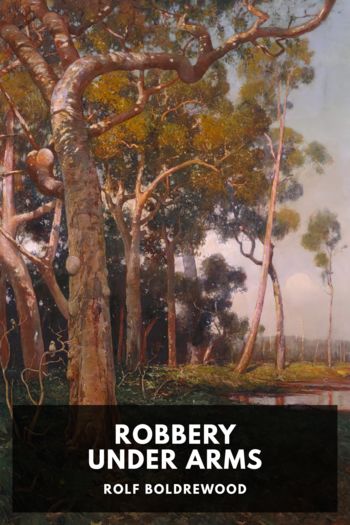
Robbery Under Arms, subtitled A Story of Life and Adventure in the Bush and in the Goldfields of Australia, was published in serial form in the Sydney Mail newspaper between July 1882 and August 1883. It was published under the name of Rolf Boldrewood, a pseudonym for Thomas Alexander Browne, a police magistrate and gold commissioner.
Robbery Under Arms is an entertaining adventure story told from the first person point of view of Richard “Dick” Marston. The story is in the form of a journal written from jail where he’s waiting to be hanged for his crimes. Marston and his brother Jim are led astray as young men by their father, who made money by cattle “duffing,” or stealing. They are introduced to their father’s associate, known only as Captain Starlight, a clever and charming fraudster. After a spell in jail, from which he escapes, Marston, his brother, and father are persuaded by Starlight to operate as bank robbers and bushrangers. They embark on a life continually on the run from the police. Despite this, Dick and Jim also manage to spend a considerable time prospecting for gold, and the gold rush and the fictitious gold town of Turon are described in detail.
The character of Captain Starlight is based largely on the real-life exploits of bushrangers Harry Redford and Thomas Smith, the latter known as “Captain Midnight.”
Regarded as a classic of Australian literature, Robbery Under Arms has never been out of print, and has been the basis of several adaptations in the form of films and television serials.
This Standard Ebooks edition is unabridged, and restores some 30,000 words from the original serialization which were cut out of the 1889 one-volume edition of the novel.