
ection.
A second condition of the spiritual life has been expressed in the precept, reiterated in many religions, by many experts in things relating to the life of the soul: "Live as if this hour were thy last." You will recall, as I pronounce these words, the memento mori of the Ancients, their custom of exhibiting a skeleton at the feast, in order to remind the banqueters of the fate that awaited them. You will remember the other-worldliness of Christian monks and ascetics who decried this pleasant earth as a vale of tears, and endeavored to fix the attention of their followers upon the pale joys of the Christian heaven, and you will wonder, perhaps, that I should be harking back to these conceptions of the past. I have, however, no such intention.
The prevailing attitude toward the thought of death is that of studied neglect. Men wish to face it as little as possible. We know, of course, what the fate is that awaits us. We know what are the terms of the compact. Now and again we are

ould say that John M. Neal was possibly hung for murder, not through design, but through traditional ignorance of the power of nature to cure both old and young, by skillfully adjusting the engines of life so as to bring forth pure and healthy blood, the greatest known germicide, to one capable to reason who has the skill to conduct the vitalizing and protecting fluids to throat, lungs and all parts of the system, and ward off diseases as nature's God has indicated. With this faith and method of reasoning, I began to treat diseases by Osteopathy as an experimenter, and notwithstanding I obtained good results in all cases in diseases of climate and contagions, I hesitated for years to proclaim to the world that there was but little excuse for a master engineer to lose a child in cases of diphtheria, croup, measles, mumps, whooping cough, flux and other forms of summer diseases, peculiar to children. Neither was it necessary for the adult to die with diseases of summer, fall and winter. But at last I took my st

anding his dissipation, Bottle-nosed Ned was a generalfavourite; and the authorities of Mudfog, remembering his numerousservices to the population, allowed him in return to get drunk inhis own way, without the fear of stocks, fine, or imprisonment. Hehad a general licence, and he showed his sense of the compliment bymaking the most of it.
We have been thus particular in describing the character andavocations of Bottle-nosed Ned, because it enables us to introducea fact politely, without hauling it into the reader's presence withindecent haste by the head and shoulders, and brings us verynaturally to relate, that on the very same evening on which Mr.Nicholas Tulrumble and family returned to Mudfog, Mr. Tulrumble'snew secretary, just imported from London, with a pale face andlight whiskers, thrust his head down to the very bottom of hisneckcloth-tie, in at the tap-room door of the Lighterman's Arms,and inquiring whether one Ned Twigger was luxuriating within,announced himself as the bearer of
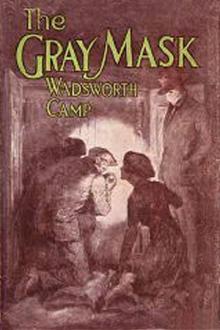
at he was in the hands of the police. Garth noticed also as he entered the car that the passengers were not aware of the substitution. He resented the repugnance in the glances they turned on the mask. Simmons' attitude toward life became comprehensible. But, as the journey extended itself interminably, Garth grew restless. He realized he was in the position of a man entering a cavern without a light. He must feel his way step by step. He must walk blindly toward innumerable and fatal pitfalls.
At last the train paused for the change from locomotive to electric motor. Although he knew that normally no passengers would board it at this place, he gazed anxiously from the window. A man stood close to the track with the evident intention of entering the train. Garth saw him elude a brakeman, saw him grasp the railing and swing himself out of sight. A moment later the man walked into the car, stopped dead, and turned sharp, inquisitive eyes on the gray mask.
About the figure was a somber air, accentu


ad formerly held in his affections, and cease from a cruelty that would destroy her. "For I may die," wrote the hapless girl, "but marry another--never!" That single word, indeed, had sufficed to betray her secret, had it not been already discovered; as it was, it gave increased fury to Sir Peter, as his sister triumphantly pointed it out to him, for it need hardly be said that while the ink of the address was yet wet, and the seal still warm, Rosina's letter was carried to this lady. The culprit was summoned before them; what ensued none could tell; for their own sakes the cruel pair tried to palliate their part. Voices were high, and the soft murmur of Rosina's tone was lost in the howling of Sir Peter and the snarling of his sister. "Out of doors you shall go," roared the old man; "under my roof you shall not spend another night." And the words "infamous seductress," and worse, such as had never met the poor girl's ear before, were caught by listening servants; and to each angry speech of the baronet, Mrs.

topped more than once, and, loitering along, it was dark when they neared their destination.
As they would have drawn up to the wharf there was a sudden flash of light--gone in a moment--followed by a dark body that swished by them like a flash.
Frank uttered an exclamation of astonishment.
"See that?" he demanded.
"Yes. What could it have been?"
"You've got me, but it's heading toward the open sea. Great Scott! Maybe it's an enemy."
"An enemy?"
"Yes; you know how anxious the Germans are over this submarine business. Maybe this fellow has been spying about. May be going to report to a German submarine out there some place."
"Think we had better follow and have a look?" asked Jack.
"Believe it would be a good idea. Let's go."
Without another word, Jack brought the boat about and headed after the one that had so recently dashed by them. In the darkness ahead there was nothing to be seen.
"Like looking for a needle in a haystack," Jack

ns, anddown the pleasant vale of Argos, and away and out to sea. And awayand out to sea before it floated the mother and her babe, while allwho watched them wept, save that cruel father, King Acrisius.
So they floated on and on, and the chest danced up and down uponthe billows, and the baby slept upon its mother's breast: but thepoor mother could not sleep, but watched and wept, and she sang toher baby as they floated; and the song which she sang you shalllearn yourselves some day.
And now they are past the last blue headland, and in the open sea;and there is nothing round them but the waves, and the sky, and thewind. But the waves are gentle, and the sky is clear, and thebreeze is tender and low; for these are the days when Halcyone andCeyx build their nests, and no storms ever ruffle the pleasantsummer sea.
And who were Halcyone and Ceyx? You shall hear while the chestfloats on. Halcyone was a fairy maiden, the daughter of the beachand of the wind. And she loved a sailor-boy, an

never would Frank be apt to forget the look of absolute terror he discovered upon the agonized face of the bully. Puss had detected the presence of some one near by, and was trying to shout, as well as stretch his appealing hands out, though not with much success.
He actually went under while Frank looked; and the heart of the would-be rescuer almost stood still with a terrible fear that that was the end.
But he kept on, and in another moment a head once more bobbed up, with Puss threshing the water frantically. Once he had gone down. According to what most people said, he would possibly vanish twice more, and after that never rise again.
If anything was to be done, there was no time for delay. Frank was within ten feet of the struggling figure when it came up. He immediately dove, and managed to rise to the surface behind Puss. Then, just as the other was floundering beneath the surface of the agitated water again, Frank caught hold of his sweater close to his neck, and held on with migh

minutes longer! Yvonnehas been trying on my fancy dress, but she's nearly done."
The neck and shoulders below the laughing face were bare and a bare armwaved in a propitiatory fashion ere it vanished.
"Looks as if the fancy dress is a minus quantity," observed Billy to hiscompanion with a grin. "I didn't see any of it, did you?"
Scott tried not to laugh. "Your sister?" he asked.
Billy nodded affirmation. "She ain't a bad urchin," he observed, "assisters go. We're staying here along with the de Vignes. Ever met 'em?Lady Grace is a holy terror. Her husband is a horrible stuck-up bore ofan Anglo-Indian,--thinks himself everybody, and tells the most awfulhowlers. Rose--that's the daughter--is by way of being very beautiful.There she goes now; see? That golden-haired girl in red! She's another ofyour beastly star skaters. I'll bet she'll have that big bounder cuttingcapers with her before the day's out."
"Think so?" said Scott.
Billy nodded again. "I suppose he's a prince at least. My
ection.
A second condition of the spiritual life has been expressed in the precept, reiterated in many religions, by many experts in things relating to the life of the soul: "Live as if this hour were thy last." You will recall, as I pronounce these words, the memento mori of the Ancients, their custom of exhibiting a skeleton at the feast, in order to remind the banqueters of the fate that awaited them. You will remember the other-worldliness of Christian monks and ascetics who decried this pleasant earth as a vale of tears, and endeavored to fix the attention of their followers upon the pale joys of the Christian heaven, and you will wonder, perhaps, that I should be harking back to these conceptions of the past. I have, however, no such intention.
The prevailing attitude toward the thought of death is that of studied neglect. Men wish to face it as little as possible. We know, of course, what the fate is that awaits us. We know what are the terms of the compact. Now and again we are
ould say that John M. Neal was possibly hung for murder, not through design, but through traditional ignorance of the power of nature to cure both old and young, by skillfully adjusting the engines of life so as to bring forth pure and healthy blood, the greatest known germicide, to one capable to reason who has the skill to conduct the vitalizing and protecting fluids to throat, lungs and all parts of the system, and ward off diseases as nature's God has indicated. With this faith and method of reasoning, I began to treat diseases by Osteopathy as an experimenter, and notwithstanding I obtained good results in all cases in diseases of climate and contagions, I hesitated for years to proclaim to the world that there was but little excuse for a master engineer to lose a child in cases of diphtheria, croup, measles, mumps, whooping cough, flux and other forms of summer diseases, peculiar to children. Neither was it necessary for the adult to die with diseases of summer, fall and winter. But at last I took my st
anding his dissipation, Bottle-nosed Ned was a generalfavourite; and the authorities of Mudfog, remembering his numerousservices to the population, allowed him in return to get drunk inhis own way, without the fear of stocks, fine, or imprisonment. Hehad a general licence, and he showed his sense of the compliment bymaking the most of it.
We have been thus particular in describing the character andavocations of Bottle-nosed Ned, because it enables us to introducea fact politely, without hauling it into the reader's presence withindecent haste by the head and shoulders, and brings us verynaturally to relate, that on the very same evening on which Mr.Nicholas Tulrumble and family returned to Mudfog, Mr. Tulrumble'snew secretary, just imported from London, with a pale face andlight whiskers, thrust his head down to the very bottom of hisneckcloth-tie, in at the tap-room door of the Lighterman's Arms,and inquiring whether one Ned Twigger was luxuriating within,announced himself as the bearer of
at he was in the hands of the police. Garth noticed also as he entered the car that the passengers were not aware of the substitution. He resented the repugnance in the glances they turned on the mask. Simmons' attitude toward life became comprehensible. But, as the journey extended itself interminably, Garth grew restless. He realized he was in the position of a man entering a cavern without a light. He must feel his way step by step. He must walk blindly toward innumerable and fatal pitfalls.
At last the train paused for the change from locomotive to electric motor. Although he knew that normally no passengers would board it at this place, he gazed anxiously from the window. A man stood close to the track with the evident intention of entering the train. Garth saw him elude a brakeman, saw him grasp the railing and swing himself out of sight. A moment later the man walked into the car, stopped dead, and turned sharp, inquisitive eyes on the gray mask.
About the figure was a somber air, accentu
ad formerly held in his affections, and cease from a cruelty that would destroy her. "For I may die," wrote the hapless girl, "but marry another--never!" That single word, indeed, had sufficed to betray her secret, had it not been already discovered; as it was, it gave increased fury to Sir Peter, as his sister triumphantly pointed it out to him, for it need hardly be said that while the ink of the address was yet wet, and the seal still warm, Rosina's letter was carried to this lady. The culprit was summoned before them; what ensued none could tell; for their own sakes the cruel pair tried to palliate their part. Voices were high, and the soft murmur of Rosina's tone was lost in the howling of Sir Peter and the snarling of his sister. "Out of doors you shall go," roared the old man; "under my roof you shall not spend another night." And the words "infamous seductress," and worse, such as had never met the poor girl's ear before, were caught by listening servants; and to each angry speech of the baronet, Mrs.
topped more than once, and, loitering along, it was dark when they neared their destination.
As they would have drawn up to the wharf there was a sudden flash of light--gone in a moment--followed by a dark body that swished by them like a flash.
Frank uttered an exclamation of astonishment.
"See that?" he demanded.
"Yes. What could it have been?"
"You've got me, but it's heading toward the open sea. Great Scott! Maybe it's an enemy."
"An enemy?"
"Yes; you know how anxious the Germans are over this submarine business. Maybe this fellow has been spying about. May be going to report to a German submarine out there some place."
"Think we had better follow and have a look?" asked Jack.
"Believe it would be a good idea. Let's go."
Without another word, Jack brought the boat about and headed after the one that had so recently dashed by them. In the darkness ahead there was nothing to be seen.
"Like looking for a needle in a haystack," Jack
ns, anddown the pleasant vale of Argos, and away and out to sea. And awayand out to sea before it floated the mother and her babe, while allwho watched them wept, save that cruel father, King Acrisius.
So they floated on and on, and the chest danced up and down uponthe billows, and the baby slept upon its mother's breast: but thepoor mother could not sleep, but watched and wept, and she sang toher baby as they floated; and the song which she sang you shalllearn yourselves some day.
And now they are past the last blue headland, and in the open sea;and there is nothing round them but the waves, and the sky, and thewind. But the waves are gentle, and the sky is clear, and thebreeze is tender and low; for these are the days when Halcyone andCeyx build their nests, and no storms ever ruffle the pleasantsummer sea.
And who were Halcyone and Ceyx? You shall hear while the chestfloats on. Halcyone was a fairy maiden, the daughter of the beachand of the wind. And she loved a sailor-boy, an
never would Frank be apt to forget the look of absolute terror he discovered upon the agonized face of the bully. Puss had detected the presence of some one near by, and was trying to shout, as well as stretch his appealing hands out, though not with much success.
He actually went under while Frank looked; and the heart of the would-be rescuer almost stood still with a terrible fear that that was the end.
But he kept on, and in another moment a head once more bobbed up, with Puss threshing the water frantically. Once he had gone down. According to what most people said, he would possibly vanish twice more, and after that never rise again.
If anything was to be done, there was no time for delay. Frank was within ten feet of the struggling figure when it came up. He immediately dove, and managed to rise to the surface behind Puss. Then, just as the other was floundering beneath the surface of the agitated water again, Frank caught hold of his sweater close to his neck, and held on with migh
minutes longer! Yvonnehas been trying on my fancy dress, but she's nearly done."
The neck and shoulders below the laughing face were bare and a bare armwaved in a propitiatory fashion ere it vanished.
"Looks as if the fancy dress is a minus quantity," observed Billy to hiscompanion with a grin. "I didn't see any of it, did you?"
Scott tried not to laugh. "Your sister?" he asked.
Billy nodded affirmation. "She ain't a bad urchin," he observed, "assisters go. We're staying here along with the de Vignes. Ever met 'em?Lady Grace is a holy terror. Her husband is a horrible stuck-up bore ofan Anglo-Indian,--thinks himself everybody, and tells the most awfulhowlers. Rose--that's the daughter--is by way of being very beautiful.There she goes now; see? That golden-haired girl in red! She's another ofyour beastly star skaters. I'll bet she'll have that big bounder cuttingcapers with her before the day's out."
"Think so?" said Scott.
Billy nodded again. "I suppose he's a prince at least. My