I
A SCHEME OF REVOLUTION
FLUELLEN always breakfasted off cigarettes in bed, but when we others had finished our meal next morning he joined us in Briggs' room at the Metropole, and listened to the final discussion. He did not talk, but sat in a cane rocker, with a hundred box of cigarettes at his elbow, lighting each new one on the glowing stump of the last, and consuming exactly fifteen to the hour. But then his moustache was rather long, and he did not smoke the ends down very close. He was a big-boned, dark-faced fellow, with a great pucker of wrinkles, which perched between his eyebrows, and which only lifted when the risks of the expedition were touched upon. You could not say that he showed enthusiasm even then; he still looked ineffably bored and weary; but a glint lighted up in his black eyes (when in our talk at the table the chance of violent action was spread out before him) which hinted at a magazine of brazen recklessness stored up somewhere within his listless body, which would bl
e temper and disposition of your child may be affected by the nourishment it receives, I think it more likely to be injured by the milk of a married woman who will desert her own child for the sake of gain. The misfortune which has happened to this young woman is not always a proof of a bad heart, but of strong attachment, and the overweening confidence of simplicity."
"You are correct, Doctor," replied Mr Easy, "and her head proves that she is a modest young woman, with strong religious feeling, kindness of disposition, and every other requisite."
"The head may prove it all for what I know, Mr Easy, but her conduct tells another tale."
"She is well fitted for the situation, ma'am," continued the Doctor.
"And if you please, ma'am," rejoined Sarah, "it was such a little one."
"Shall I try the baby, ma'am?" said the monthly nurse, who had listened in silence. "It is fretting so, poor thing, and has its dear little fist right down its throat."
Dr Middleton gave the signa
"Order!" cried a merry-faced little man, who had brought his young daughter with him to see life, and who always modestly hid his face in his beer-mug after he had thus assisted the business.
"John Nightingale, William Thrush, Joseph Blackbird, Cecil Robin, and Thomas Linnet!" cried Friar Bacon.
"Here, sir!" and "Here, sir!" And Linnet, Robin, Blackbird, Thrush, and Nightingale, stood confessed.
We, the undersigned, declare, in effect, by this written paper, that each of us is responsible for the repayment of this pig-money by each of the other. "Sure you understand, Nightingale?"
"Ees, sur."
"Can you write your name, Nightingale?"
"Na, sur."
Nightingale's eye upon his name, as Friar Bacon wrote it, was a sight to consider in after years. Rather incredulous was Nightingale, with a hand at the corner of his mouth, and his head on one side, as to those drawings really meaning him. Doubtful was Nightingale whether any virtue had gone out of him in that committal t
wn account; and it was the cautious Stalky who found the track of his pugs on the very floor of their lair one peaceful afternoon when Stalky would fain have forgotten Prout and his works in a volume of Surtees and a new briar-wood pipe. Crusoe, at sight of the footprint, did not act more swiftly than Stalky. He removed the pipes, swept up all loose match-ends, and departed to warn Beetle and McTurk.
But it was characteristic of the boy that he did not approach his allies till he had met and conferred with little Hartopp, President of the Natural History Society, an institution which Stalky held in contempt, Hartopp was more than surprised when the boy meekly, as he knew how, begged to propose himself, Beetle, and McTurk as candidates; confessed to a long-smothered interest in first-flowerings, early butterflies, and new arrivals, and volunteered, if Mr. Hartopp saw fit, to enter on the new life at once. Being a master, Hartopp was suspicious; but he was also an enthusiast, and his gentle little soul h

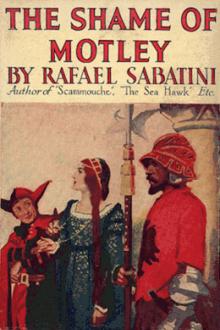
omentary return to the Fool'sestate from which I thought myself on the point of being for ever freed.
"I shall use the interview to induce his Excellency to submit a tenthbeatitude to the approval of our Holy Father: Blessed are the bearers ofgood tidings. Come on, Messer the seneschal."
I led the way, in my impatience forgetful of his great paunch and littlelegs, so that he was sorely tried to keep pace with me. Yet who wouldnot have been in haste, urged by such a spur as had I? Here, then, wasthe end of my shameful travesty. To-morrow a soldier's harness shouldreplace the motley of a jester; the name by which I should be known againto men would be that of Lazzaro Biancomonte, and no longer Boccadoro--theFool of the golden mouth.
Thus much had Madonna Lucrezia's promises led me to expect, and it waswith a soul full of joyous expectation that I entered the great man'scloset.
He received me in a manner calculated to set me at my ease, and yet therewas about him a something that overa
e the way is long, (I speak metaphorically,) and there is many a dirty step, many a high hill, much work to do; a wicked heart, world, and devil to overcome. I say there are many steps to be taken by those that intend to be saved, by running, or walking, in the steps of that faith of our father Abraham. Out of Egypt thou must go through the Red Sea; thou must run a long and tedious journey, through the vast howling wilderness, before thou come to the land of promise.
4. They that will go to heaven must run for it; because, as the way is so long, so _the time in which they are to get to the end of it is very uncertain_. The time present is the only time; thou hast no more time allotted thee than that thou now enjoyest. "Boast not thyself of to-morrow, for thou knowest not what a day may bring forth." Do not say, 'I have time enough to get to heaven seven years hence;' for I tell thee, the bell may toll for thee, before seven days more be ended. When death comes, away thou must go, whether thou

ah!" Jensen snorted contemptuously. "I can take care of myself. I know what I'm doin', I tell you."
"You may, but you don't act like it," was Wade's parting remark, as he turned his horse and rode off.
"Go to hell!" the Swede shouted after him.
Heading toward Crawling Water, the ranch owner rode rapidly over the sun-baked ground, too full of rage to take notice of anything except his own helplessness. The sting of Jensen's impudence lay in Wade's realization that to enlist the aid of the sheriff against the sheep man would be very difficult, if not altogether impossible. There was very little law in that region, and what little there was seemed, somehow, to have been taken under the direction of Race Moran.
It was now broad day and the prairie warmed to the blazing sun. Long, rolling stretches of grass, topped with rocks and alkaline sand, gave back a blinding glare like the reflection of a summer sea, from which arose a haze of gray dust like ocean mists over distant reaches. Far

assassination plot, and were as vehement of their denunciations of its authors as were the Whigs, remained staunch in their fidelity to "the king over the water," maintaining stoutly that his majesty knew nothing whatever of this foul plot, and that his cause was in no way affected by the misconduct of a few men, who happened to be among its adherents.
At Lynnwood things went on as usual. Charlie continued his studies, in a somewhat desultory way, having but small affection for books; kept up his fencing lesson diligently and learned to dance; quarrelled occasionally with his cousin Alured, spent a good deal of his time on horseback, and rode over, not unfrequently, to Rockley, choosing, as far as possible, the days and hours when he knew that Alured and his father were likely to be away. He went over partly for his own pleasure, but more in compliance with his father's wishes.
"My cousin seldom comes over, herself," the latter said. "I know, right well, that it is from no slackness of her own,

u to the death."
He had no answer for this. It was true. He had been brought up in a land of Indian wars and he had accepted without question the common view that the Sioux, the Crows, and the Cheyennes, with all their blood brothers, were menaces to civilization. The case for the natives he had never studied. How great a part broken pledges and callous injustice had done to drive the tribes to the war-path he did not know. Few of the actual frontiersmen were aware of the wrongs of the red men.
The young man's hands fell from her arms. Hard-eyed and grim, he looked her over from head to foot. The short skirt and smock of buckskin, the moccasins of buffalo hide, all dusty and travel-stained, told of life in a primitive country under the simplest and hardest conditions.
Yet the voice was clear and vibrant, the words well enunciated. She bloomed like a desert rose, had some quality of vital life that struck a spark from his imagination.
What manner of girl was she? Not by any possibil
I
A SCHEME OF REVOLUTION
FLUELLEN always breakfasted off cigarettes in bed, but when we others had finished our meal next morning he joined us in Briggs' room at the Metropole, and listened to the final discussion. He did not talk, but sat in a cane rocker, with a hundred box of cigarettes at his elbow, lighting each new one on the glowing stump of the last, and consuming exactly fifteen to the hour. But then his moustache was rather long, and he did not smoke the ends down very close. He was a big-boned, dark-faced fellow, with a great pucker of wrinkles, which perched between his eyebrows, and which only lifted when the risks of the expedition were touched upon. You could not say that he showed enthusiasm even then; he still looked ineffably bored and weary; but a glint lighted up in his black eyes (when in our talk at the table the chance of violent action was spread out before him) which hinted at a magazine of brazen recklessness stored up somewhere within his listless body, which would bl
e temper and disposition of your child may be affected by the nourishment it receives, I think it more likely to be injured by the milk of a married woman who will desert her own child for the sake of gain. The misfortune which has happened to this young woman is not always a proof of a bad heart, but of strong attachment, and the overweening confidence of simplicity."
"You are correct, Doctor," replied Mr Easy, "and her head proves that she is a modest young woman, with strong religious feeling, kindness of disposition, and every other requisite."
"The head may prove it all for what I know, Mr Easy, but her conduct tells another tale."
"She is well fitted for the situation, ma'am," continued the Doctor.
"And if you please, ma'am," rejoined Sarah, "it was such a little one."
"Shall I try the baby, ma'am?" said the monthly nurse, who had listened in silence. "It is fretting so, poor thing, and has its dear little fist right down its throat."
Dr Middleton gave the signa
"Order!" cried a merry-faced little man, who had brought his young daughter with him to see life, and who always modestly hid his face in his beer-mug after he had thus assisted the business.
"John Nightingale, William Thrush, Joseph Blackbird, Cecil Robin, and Thomas Linnet!" cried Friar Bacon.
"Here, sir!" and "Here, sir!" And Linnet, Robin, Blackbird, Thrush, and Nightingale, stood confessed.
We, the undersigned, declare, in effect, by this written paper, that each of us is responsible for the repayment of this pig-money by each of the other. "Sure you understand, Nightingale?"
"Ees, sur."
"Can you write your name, Nightingale?"
"Na, sur."
Nightingale's eye upon his name, as Friar Bacon wrote it, was a sight to consider in after years. Rather incredulous was Nightingale, with a hand at the corner of his mouth, and his head on one side, as to those drawings really meaning him. Doubtful was Nightingale whether any virtue had gone out of him in that committal t
wn account; and it was the cautious Stalky who found the track of his pugs on the very floor of their lair one peaceful afternoon when Stalky would fain have forgotten Prout and his works in a volume of Surtees and a new briar-wood pipe. Crusoe, at sight of the footprint, did not act more swiftly than Stalky. He removed the pipes, swept up all loose match-ends, and departed to warn Beetle and McTurk.
But it was characteristic of the boy that he did not approach his allies till he had met and conferred with little Hartopp, President of the Natural History Society, an institution which Stalky held in contempt, Hartopp was more than surprised when the boy meekly, as he knew how, begged to propose himself, Beetle, and McTurk as candidates; confessed to a long-smothered interest in first-flowerings, early butterflies, and new arrivals, and volunteered, if Mr. Hartopp saw fit, to enter on the new life at once. Being a master, Hartopp was suspicious; but he was also an enthusiast, and his gentle little soul h
omentary return to the Fool'sestate from which I thought myself on the point of being for ever freed.
"I shall use the interview to induce his Excellency to submit a tenthbeatitude to the approval of our Holy Father: Blessed are the bearers ofgood tidings. Come on, Messer the seneschal."
I led the way, in my impatience forgetful of his great paunch and littlelegs, so that he was sorely tried to keep pace with me. Yet who wouldnot have been in haste, urged by such a spur as had I? Here, then, wasthe end of my shameful travesty. To-morrow a soldier's harness shouldreplace the motley of a jester; the name by which I should be known againto men would be that of Lazzaro Biancomonte, and no longer Boccadoro--theFool of the golden mouth.
Thus much had Madonna Lucrezia's promises led me to expect, and it waswith a soul full of joyous expectation that I entered the great man'scloset.
He received me in a manner calculated to set me at my ease, and yet therewas about him a something that overa
e the way is long, (I speak metaphorically,) and there is many a dirty step, many a high hill, much work to do; a wicked heart, world, and devil to overcome. I say there are many steps to be taken by those that intend to be saved, by running, or walking, in the steps of that faith of our father Abraham. Out of Egypt thou must go through the Red Sea; thou must run a long and tedious journey, through the vast howling wilderness, before thou come to the land of promise.
4. They that will go to heaven must run for it; because, as the way is so long, so _the time in which they are to get to the end of it is very uncertain_. The time present is the only time; thou hast no more time allotted thee than that thou now enjoyest. "Boast not thyself of to-morrow, for thou knowest not what a day may bring forth." Do not say, 'I have time enough to get to heaven seven years hence;' for I tell thee, the bell may toll for thee, before seven days more be ended. When death comes, away thou must go, whether thou
ah!" Jensen snorted contemptuously. "I can take care of myself. I know what I'm doin', I tell you."
"You may, but you don't act like it," was Wade's parting remark, as he turned his horse and rode off.
"Go to hell!" the Swede shouted after him.
Heading toward Crawling Water, the ranch owner rode rapidly over the sun-baked ground, too full of rage to take notice of anything except his own helplessness. The sting of Jensen's impudence lay in Wade's realization that to enlist the aid of the sheriff against the sheep man would be very difficult, if not altogether impossible. There was very little law in that region, and what little there was seemed, somehow, to have been taken under the direction of Race Moran.
It was now broad day and the prairie warmed to the blazing sun. Long, rolling stretches of grass, topped with rocks and alkaline sand, gave back a blinding glare like the reflection of a summer sea, from which arose a haze of gray dust like ocean mists over distant reaches. Far
assassination plot, and were as vehement of their denunciations of its authors as were the Whigs, remained staunch in their fidelity to "the king over the water," maintaining stoutly that his majesty knew nothing whatever of this foul plot, and that his cause was in no way affected by the misconduct of a few men, who happened to be among its adherents.
At Lynnwood things went on as usual. Charlie continued his studies, in a somewhat desultory way, having but small affection for books; kept up his fencing lesson diligently and learned to dance; quarrelled occasionally with his cousin Alured, spent a good deal of his time on horseback, and rode over, not unfrequently, to Rockley, choosing, as far as possible, the days and hours when he knew that Alured and his father were likely to be away. He went over partly for his own pleasure, but more in compliance with his father's wishes.
"My cousin seldom comes over, herself," the latter said. "I know, right well, that it is from no slackness of her own,
u to the death."
He had no answer for this. It was true. He had been brought up in a land of Indian wars and he had accepted without question the common view that the Sioux, the Crows, and the Cheyennes, with all their blood brothers, were menaces to civilization. The case for the natives he had never studied. How great a part broken pledges and callous injustice had done to drive the tribes to the war-path he did not know. Few of the actual frontiersmen were aware of the wrongs of the red men.
The young man's hands fell from her arms. Hard-eyed and grim, he looked her over from head to foot. The short skirt and smock of buckskin, the moccasins of buffalo hide, all dusty and travel-stained, told of life in a primitive country under the simplest and hardest conditions.
Yet the voice was clear and vibrant, the words well enunciated. She bloomed like a desert rose, had some quality of vital life that struck a spark from his imagination.
What manner of girl was she? Not by any possibil