

when they are entirely divided, the rib-bones should becarved in the direction of the line from 5 to 6, and the brisket canbe helped by cutting slices from 3 to 4.
The carver should ask the guests whether they have a preference forthe brisket or ribs; and if there be a sweetbread served with thedish, as is frequently with this roast of veal, each person shouldreceive a piece.
Though veal and lamb contain less nutrition than beef and mutton, inproportion to their weight, they are often preferred to these lattermeats on account of their delicacy of texture and flavor. A wholebreast of veal weighs from nine to twelve pounds.
[Illustration]
A FILLET OF VEAL.
A fillet of veal is one of the prime roasts of veal; it is taken fromthe leg above the knuckle; a piece weighing from ten to twelve poundsis a good size and requires about four hours for roasting. Beforeroasting, it is dressed with a force meat or stuffing placed in thecavity from where the bone was taken out and the flap tightly
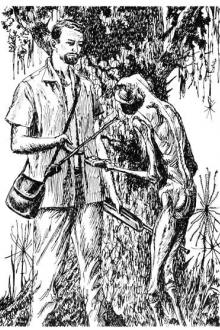
t to his feet, dug out the bandanna and mopped at his face. He heard the soft thud of the step behind him and turned his head. It was the tracker.
"It's all right, Sipar," he said. "You can quit worrying. I got it. We can go home now."
* * * * *
It had been a long, hard chase, longer than he had thought it might be. But it had been successful and that was the thing that counted. For the moment, the vua crop was safe.
He tucked the bandanna back into his pocket, went down the slope and started up the knoll. He reached the place where the Cytha had fallen. There were three small gouts of torn, mangled fur and flesh lying on the ground and there was nothing else.
He spun around and jerked his rifle up. Every nerve was screamingly alert. He swung his head, searching for the slightest movement, for some shape or color that was not the shape or color of the bush or grass or ground. But there was nothing. The heat droned in the hush of afternoon. There was not a breath of
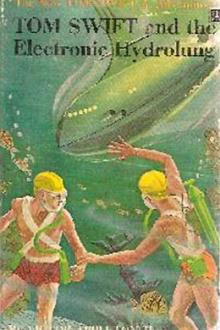
gave Tom a hug and greeted Bud warmly. Over the delicious dinner, the conversation turned to the mysterious thief missile.
"Who on earth could have fired it?" Sandy asked.
Tom shrugged. "No telling--yet. There's more than one unfriendly country which would give a lot for the data picked up on our Jupiter shot."
"You aren't expecting more trouble, are you?" Phyl put in uneasily.
Tom passed the question off lightly in order not to alarm his mother and the two girls. But inwardly he was none too sure of what his survey expedition might encounter in trying to locate the lost probe missile.
Ever since his first adventure in his Flying Lab, the youthful inventor had been involved in many daring exploits and thrilling situations. Time and again, Tom had had to combat enemy spies and vicious plotters bent on stealing the Swifts' scientific secrets.
His research projects had taken him far into outer space and into the depths of the ocean. With his atomic earth blaster, Tom ha

mits this question because he does not consider that it has any more bearing upon the essentials of religion, than have the theories we may hold about the relation of God and the moral law to the starry universe. The latter is a question for the theologian, the former for the psychologist. Whether we are mortal or immortaea of this book very roughly, these two antagonistic typical conceptions of God may be best contrasted by speaking of one of them as God-as-Nature or the Creator, and of the other as God-as-Christ or the Redeemer. One is the great Outward God; the other is the Inmost God. The first idea was perhaps developed most highly and completely in the God of Spinoza. It is a conception of God tending to pantheism, to an idea of a comprehensive God as ruling with justice rather than affection, to a conception of aloofness and awestriking worshipfulness. The second idea, which is opposed to this idea of an absolute God, is the God of the human heart. The writer would suggest that the great outline of the
years.
MYSELF: I don't think I shall want them cut out.
HORACE: Humph.
After a pause:
HORACE: There's a lot of good body cord-wood in that oak on the knoll.
MYSELF: Cord-wood! Why, that oak is the treasure of the whole farm, I have never seen a finer one. I could not think of cutting it.
HORACE: It will bring you fifteen or twenty dollars cash in hand.
MYSELF: But I rather have the oak.
HORACE: Humph.
So our conversation continued for some time. I let Horace know that I preferred rail fences, even old ones, to a wire fence, and that I thought a farm should not be too large, else it might keep one away from his friends. And what, I asked, is corn compared with a friend? Oh, I grew really oratorical! I gave it as my opinion that there should be vines around the house (Waste of time, said Horace), and that no farmer should permit anyone to paint medicine advertisements on his barn (Brings you ten dollars a year, said Horace), and that I proposed to

ger whether they were beauties or not. The Misses Gresham were made in the de Courcy mould, and were not on this account the less dear to their mother.
The two eldest, Augusta and Beatrice, lived, and were apparently likely to live. The four next faded and died one after another--all in the same sad year--and were laid in the neat, new cemetery at Torquay. Then came a pair, born at one birth, weak, delicate, frail little flowers, with dark hair and dark eyes, and thin, long, pale faces, with long, bony hands, and long bony feet, whom men looked on as fated to follow their sisters with quick steps. Hitherto, however, they had not followed them, nor had they suffered as their sisters had suffered; and some people at Greshamsbury attributed this to the fact that a change had been made in the family medical practitioner.
Then came the youngest of the flock, she whose birth we have said was not heralded with loud joy; for when she came into the world, four others, with pale temples, wan, worn cheeks,

The cruiser vanished back into hyperspace and he was alone in the observation bubble, ten thousand light-years beyond the galaxy's outermost sun. He looked out the windows at the gigantic sea of emptiness around him and wondered again what the danger had been that had so terrified the men before him.
Of one thing he was already certain; he would find that nothing was waiting outside the bubble to kill him. The first bubble attendant had committed suicide and the second was a mindless maniac on the Earthbound cruiser but it must have been something inside the bubble that had caused it. Or else they had imagined it all.
He went across the small room, his magnetized soles loud on the thin metal floor in the bubble's silence. He sat down in the single chair, his weight very slight in the feeble artificial gravity, and reviewed the known facts.
The bubble was a project of Earth's Galactic Observation Bureau, positioned

to let you in."
Horn and Muller both looked the young man over very carefully. He seemed perfectly innocent, and their suspicion that he might have turned the key in pretense only, soon vanished. It would have been a foolish suspicion anyway. If he were in league with the murderer, he could have let the latter escape with much more safety during the night. Horn let his eyes wander about the rooms again, and said slowly: "Then the murderer is still here--or else--"
"Or else?" asked the doctor.
"Or else we have a strange riddle to solve."
Johann had laid the pistol down again. Muller stretched forth his hand and took it up. He looked at it a moment, then handed it to the commissioner. "We have to do with a murder here. There was not a shot fired from this revolver, for every chamber is still loaded. And there is no other weapon in sight," said the detective quietly.
"Yes, he was murdered. This revolver is fully loaded. Let us begin the search at once." Horn was more excited th

rth of Italylike the plague; Venice and Genoa withered at the touch of this swarthyill-nourished boy. He cowed the soldiers in the field, and he outwittedthe statesmen in the council chamber. With a frenzy of energy he rushedto the east, and then, while men were still marvelling at the way inwhich he had converted Egypt into a French department, he was back againin Italy and had beaten Austria for the second time to the earth. Hetravelled as quickly as the rumour of his coming; and where he camethere were new victories, new combinations, the crackling of old systemsand the blurring of ancient lines of frontier. Holland, Savoy,Switzerland--they were become mere names upon the map. France waseating into Europe in every direction. They had made him Emperor, thisbeardless artillery officer, and without an effort he had crushed downthose Republicans before whom the oldest king and the proudest nobilityof Europe had been helpless. So it came about that we, who watched himdart from place to pla
when they are entirely divided, the rib-bones should becarved in the direction of the line from 5 to 6, and the brisket canbe helped by cutting slices from 3 to 4.
The carver should ask the guests whether they have a preference forthe brisket or ribs; and if there be a sweetbread served with thedish, as is frequently with this roast of veal, each person shouldreceive a piece.
Though veal and lamb contain less nutrition than beef and mutton, inproportion to their weight, they are often preferred to these lattermeats on account of their delicacy of texture and flavor. A wholebreast of veal weighs from nine to twelve pounds.
[Illustration]
A FILLET OF VEAL.
A fillet of veal is one of the prime roasts of veal; it is taken fromthe leg above the knuckle; a piece weighing from ten to twelve poundsis a good size and requires about four hours for roasting. Beforeroasting, it is dressed with a force meat or stuffing placed in thecavity from where the bone was taken out and the flap tightly
t to his feet, dug out the bandanna and mopped at his face. He heard the soft thud of the step behind him and turned his head. It was the tracker.
"It's all right, Sipar," he said. "You can quit worrying. I got it. We can go home now."
* * * * *
It had been a long, hard chase, longer than he had thought it might be. But it had been successful and that was the thing that counted. For the moment, the vua crop was safe.
He tucked the bandanna back into his pocket, went down the slope and started up the knoll. He reached the place where the Cytha had fallen. There were three small gouts of torn, mangled fur and flesh lying on the ground and there was nothing else.
He spun around and jerked his rifle up. Every nerve was screamingly alert. He swung his head, searching for the slightest movement, for some shape or color that was not the shape or color of the bush or grass or ground. But there was nothing. The heat droned in the hush of afternoon. There was not a breath of
gave Tom a hug and greeted Bud warmly. Over the delicious dinner, the conversation turned to the mysterious thief missile.
"Who on earth could have fired it?" Sandy asked.
Tom shrugged. "No telling--yet. There's more than one unfriendly country which would give a lot for the data picked up on our Jupiter shot."
"You aren't expecting more trouble, are you?" Phyl put in uneasily.
Tom passed the question off lightly in order not to alarm his mother and the two girls. But inwardly he was none too sure of what his survey expedition might encounter in trying to locate the lost probe missile.
Ever since his first adventure in his Flying Lab, the youthful inventor had been involved in many daring exploits and thrilling situations. Time and again, Tom had had to combat enemy spies and vicious plotters bent on stealing the Swifts' scientific secrets.
His research projects had taken him far into outer space and into the depths of the ocean. With his atomic earth blaster, Tom ha
mits this question because he does not consider that it has any more bearing upon the essentials of religion, than have the theories we may hold about the relation of God and the moral law to the starry universe. The latter is a question for the theologian, the former for the psychologist. Whether we are mortal or immortaea of this book very roughly, these two antagonistic typical conceptions of God may be best contrasted by speaking of one of them as God-as-Nature or the Creator, and of the other as God-as-Christ or the Redeemer. One is the great Outward God; the other is the Inmost God. The first idea was perhaps developed most highly and completely in the God of Spinoza. It is a conception of God tending to pantheism, to an idea of a comprehensive God as ruling with justice rather than affection, to a conception of aloofness and awestriking worshipfulness. The second idea, which is opposed to this idea of an absolute God, is the God of the human heart. The writer would suggest that the great outline of the
years.
MYSELF: I don't think I shall want them cut out.
HORACE: Humph.
After a pause:
HORACE: There's a lot of good body cord-wood in that oak on the knoll.
MYSELF: Cord-wood! Why, that oak is the treasure of the whole farm, I have never seen a finer one. I could not think of cutting it.
HORACE: It will bring you fifteen or twenty dollars cash in hand.
MYSELF: But I rather have the oak.
HORACE: Humph.
So our conversation continued for some time. I let Horace know that I preferred rail fences, even old ones, to a wire fence, and that I thought a farm should not be too large, else it might keep one away from his friends. And what, I asked, is corn compared with a friend? Oh, I grew really oratorical! I gave it as my opinion that there should be vines around the house (Waste of time, said Horace), and that no farmer should permit anyone to paint medicine advertisements on his barn (Brings you ten dollars a year, said Horace), and that I proposed to
ger whether they were beauties or not. The Misses Gresham were made in the de Courcy mould, and were not on this account the less dear to their mother.
The two eldest, Augusta and Beatrice, lived, and were apparently likely to live. The four next faded and died one after another--all in the same sad year--and were laid in the neat, new cemetery at Torquay. Then came a pair, born at one birth, weak, delicate, frail little flowers, with dark hair and dark eyes, and thin, long, pale faces, with long, bony hands, and long bony feet, whom men looked on as fated to follow their sisters with quick steps. Hitherto, however, they had not followed them, nor had they suffered as their sisters had suffered; and some people at Greshamsbury attributed this to the fact that a change had been made in the family medical practitioner.
Then came the youngest of the flock, she whose birth we have said was not heralded with loud joy; for when she came into the world, four others, with pale temples, wan, worn cheeks,
The cruiser vanished back into hyperspace and he was alone in the observation bubble, ten thousand light-years beyond the galaxy's outermost sun. He looked out the windows at the gigantic sea of emptiness around him and wondered again what the danger had been that had so terrified the men before him.
Of one thing he was already certain; he would find that nothing was waiting outside the bubble to kill him. The first bubble attendant had committed suicide and the second was a mindless maniac on the Earthbound cruiser but it must have been something inside the bubble that had caused it. Or else they had imagined it all.
He went across the small room, his magnetized soles loud on the thin metal floor in the bubble's silence. He sat down in the single chair, his weight very slight in the feeble artificial gravity, and reviewed the known facts.
The bubble was a project of Earth's Galactic Observation Bureau, positioned
to let you in."
Horn and Muller both looked the young man over very carefully. He seemed perfectly innocent, and their suspicion that he might have turned the key in pretense only, soon vanished. It would have been a foolish suspicion anyway. If he were in league with the murderer, he could have let the latter escape with much more safety during the night. Horn let his eyes wander about the rooms again, and said slowly: "Then the murderer is still here--or else--"
"Or else?" asked the doctor.
"Or else we have a strange riddle to solve."
Johann had laid the pistol down again. Muller stretched forth his hand and took it up. He looked at it a moment, then handed it to the commissioner. "We have to do with a murder here. There was not a shot fired from this revolver, for every chamber is still loaded. And there is no other weapon in sight," said the detective quietly.
"Yes, he was murdered. This revolver is fully loaded. Let us begin the search at once." Horn was more excited th
rth of Italylike the plague; Venice and Genoa withered at the touch of this swarthyill-nourished boy. He cowed the soldiers in the field, and he outwittedthe statesmen in the council chamber. With a frenzy of energy he rushedto the east, and then, while men were still marvelling at the way inwhich he had converted Egypt into a French department, he was back againin Italy and had beaten Austria for the second time to the earth. Hetravelled as quickly as the rumour of his coming; and where he camethere were new victories, new combinations, the crackling of old systemsand the blurring of ancient lines of frontier. Holland, Savoy,Switzerland--they were become mere names upon the map. France waseating into Europe in every direction. They had made him Emperor, thisbeardless artillery officer, and without an effort he had crushed downthose Republicans before whom the oldest king and the proudest nobilityof Europe had been helpless. So it came about that we, who watched himdart from place to pla