
neralogical andpaleontological nature, and by confining the field of view almostwholly to our own continent, space has been obtained to give towhat are deemed for beginners the essentials of the science afuller treatment than perhaps is common.
It is assumed that field work will be introduced with thecommencement of the study. The common rocks are therefore brieflydescribed in the opening chapters. The drift also receives earlymention, and teachers in the northern states who begin geology inthe fall may prefer to take up the chapter on the Pleistoceneimmediately after the chapter on glaciers.
Simple diagrams have been used freely, not only because they areoften clearer than any verbal statement, but also because theyreadily lend themselves to reproduction on the blackboard by thepupil. The text will suggest others which the pupil may invent. Itis hoped that the photographic views may also be used forexercises in the class room.
The generous aid of many friends is recognized with special

ll the world on his mountain-pile of history and romance. Longfellow, I believe, is not yet at the Oxbow, else the winged horse would neigh at him. But here in Lenox I should find our most truthful novelist [Miss Sedgwick], who has made the scenery and life of Berkshire all her own. On the hither side of Pittsfield sits Herman Melville, shaping out the gigantic conception of his 'White Whale,' while the gigantic shadow of Greylock looms upon him from his study window. Another bound of my flying steed would bring me to the door of Holmes, whom I mention last, because Pegasus would certainly unseat me the next minute, and claim the poet as his rider.'
While at Pittsfield, Mr. Melville was induced to enter the lecture field. From 1857 to 1860 he filled many engagements in the lyceums, chiefly speaking of his adventures in the South Seas. He lectured in cities as widely apart as Montreal, Chicago, Baltimore, and San Francisco, sailing to the last-named place in 1860, by way of Cape Horn, on the Meteor, com

months after birth, at a period of life when the nervous system is not completely developed, and it is impossible for the infant to coordinate its movements, mothers wasted several half-hours of the day "teaching baby to walk." Holding the little creature by the body, they watched the aimless movements of the tiny feet, and deluded themselves with the belief that the child was already making an effort to walk; and because it does actually by degrees begin to arch its feet and move its legs more boldly, the mother attributed its progress to her instruction. When finally the movement had been almost established--though not the equilibrium, and the resulting power to stand on the feet--mothers made use of certain straps with which they held up the baby's body, and thus made it walk on the ground with themselves; or, when they had no time to spare, they put the baby into a kind of bell-shaped basket, the broad base of which prevented it from turning over; they tied the infant into this, hanging its arms outside,

miled slowly, showing a row of very white, strong teeth.
"I know, auntie," she said. "No; I shouldn't think Laurie'll mind much. Perhaps he'll go back to town in the morning, too."
"No, my dear, he's staying till Thursday."
* * * * *
There fell again one of those pleasant silences that are possible in the country. Outside the garden, with the meadows beyond the village road, lay in that sweet September hush of sunlight and mellow color that seemed to embalm the house in peace. From the farm beyond the stable-yard came the crowing of a cock, followed by the liquid chuckle of a pigeon perched somewhere overhead among the twisted chimneys. And within this room all was equally at peace. The sunshine lay on table and polished floor, barred by the mullions of the windows, and stained here and there by the little Flemish emblems and coats that hung across the glass; while those two figures, so perfectly in place in their serenity and leisure, sat before the open fire-place and contemplate

--Partners and each other--Fitting in their different games--The man to oblige--The policy of the long-handicap man--How he drove and missed in the good old days--On laying your partner a stymie--A preliminary consideration of the round--Handicapping in foursomes--A too delicate reckoning of strokes given and received--A good foursome and the excitement thereof--A caddie killed and a hole lost--A compliment to a golfer.
CHAPTER XVIII
GOLF FOR LADIES 198
As to its being a ladies' game--A sport of freedom--The lady on the links--The American lady golfer--English ladies are improving--Where they fail, and why--Good pupils--The same game as the man's--No short swings for ladies--Clubs of too light weight--Their disadvantages--A common fault with the sex--Bad backward swings--The lady who will find out for herself--Foundations of a bad style--The way to success.
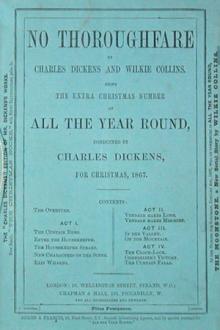
self as if I was cruel in going to be married and not helping you. It ain't kind. Now, is it kind, Poor Thing?"
"Sally! Hear me, my dear. My entreaty is for no help in the future. It applies to what is past. It is only to be told in two words."
"There! This is worse and worse," cries Sally, "supposing that I understand what two words you mean."
"You do understand. What are the names they have given my poor baby? I ask no more than that. I have read of the customs of the place. He has been christened in the chapel, and registered by some surname in the book. He was received last Monday evening. What have they called him?"
Down upon her knees in the foul mud of the by-way into which they have strayed--an empty street without a thoroughfare giving on the dark gardens of the Hospital--the lady would drop in her passionate entreaty, but that Sally prevents her.
"Don't! Don't! You make me feel as if I was setting myself up to be good. Let me look in your pretty face again. Put yo

crop upagain wherever the hair grew thin, lending him the appearance of abadly-singed pup.
His pet superstition was that, as long as he refrained from practisinghis profession in Paris, Paris would remain his impregnable Tower ofRefuge. The world owed Bourke a living, or he so considered; and it mustbe allowed that he made collections on account with tolerable regularityand success; but Paris was tax-exempt as long as Paris offered himimmunity from molestation.
Not only did Paris suit his tastes excellently, but there was no place,in Bourke's esteem, comparable with Troyon's for peace and quiet.Hence, the continuity of his patronage was never broken by trials ofrival hostelries; and Troyon's was always expecting Bourke for thesimple reason that he invariably arrived unexpectedly, with neitherwarning nor ostentation, to stop as long as he liked, whether a day ora week or a month, and depart in the same manner.
His daily routine, as Troyon's came to know it, varied but slightly: hebreakf

of the trouble, the invalidgets "well" only to drag out a miserable existence or to get veryill again.
Although any nervous suffering is worth while if it is the means ofteaching us how to avoid nervous strain, it certainly is farpreferable to avoid the strain without the extreme pain of a nervousbreakdown.
To point out many of these pernicious habits and to suggest apractical remedy for each and all of them is the aim of this book,and for that reason common examples in various phases of every-daylife are used as illustrations.
When there is no organic trouble there can be no doubt that _defectsof character, inherited or acquired, are at the root of all nervousillness._ If this can once be generally recognized and acknowledged,especially by the sufferers themselves, we are in a fair way towardeliminating such illness entirely.
The trouble is people suffer from mortification and an unwillingnessto look their bad habits in the face. They have not learned thathumiliation can be wholeso

ad all the way is like a circus," the young soldier observed, "and there isn't a thing to be seen when you get there. The naval airmen were all over the place at daybreak, and Captain Griffiths wasn't far behind them. You didn't leave much for the sightseers, sir," he concluded, turning to his neighbour.
"As Commandant of the place," Captain Griffiths replied, "I naturally had to have the Common searched. With the exception of the observation car, however, I think that I am betraying no confidences in telling you that we discovered nothing of interest."
"Do you suppose that the Zeppelin was in difficulties, as she was flying so low?" Helen enquired.
"It is a perfectly reasonable hypothesis," the Commandant assented. "Two patrol boats were sent out early this morning, in search of her. An old man whom I saw at Waburne declares that she passed like a long, black cloud, just over his head, and that he was almost deafened by the noise of the engines. Personally, I cannot believe that they wou

ND. The learned will read your book to ascertain what you haveto tell.
AUTHOR. Perhaps.
FRIEND. Women will read your book because they will see---
AUTHOR. My dear friend, I am old, I am attacked by a fit ofwisdom. Miserere mei.
FRIEND. Gourmands will read you because you do them justice, andassign them their suitable rank in society.
AUTHOR. Well, that is true. It is strange that they have so longbeen misunderstood; I look on the dear Gourmands with paternalaffection. They are so kind and their eyes are so bright.
FRIEND. Besides, did you not tell me such a book was needed inevery library.
AUTHOR. I did. It is the truth--and I would die sooner than denyit.
FRIEND: Ah! you are convinced! You will come home with me?
AUTHOR. Not so. If there be flowers in the author's path, thereare also thorns. The latter I leave to my heirs.
FRIEND. But then you disinherit your friends, acquaintances andcotemporaries. Dare you do so?
AUTHOR. My heirs! my heirs! I have heard that shades
neralogical andpaleontological nature, and by confining the field of view almostwholly to our own continent, space has been obtained to give towhat are deemed for beginners the essentials of the science afuller treatment than perhaps is common.
It is assumed that field work will be introduced with thecommencement of the study. The common rocks are therefore brieflydescribed in the opening chapters. The drift also receives earlymention, and teachers in the northern states who begin geology inthe fall may prefer to take up the chapter on the Pleistoceneimmediately after the chapter on glaciers.
Simple diagrams have been used freely, not only because they areoften clearer than any verbal statement, but also because theyreadily lend themselves to reproduction on the blackboard by thepupil. The text will suggest others which the pupil may invent. Itis hoped that the photographic views may also be used forexercises in the class room.
The generous aid of many friends is recognized with special
ll the world on his mountain-pile of history and romance. Longfellow, I believe, is not yet at the Oxbow, else the winged horse would neigh at him. But here in Lenox I should find our most truthful novelist [Miss Sedgwick], who has made the scenery and life of Berkshire all her own. On the hither side of Pittsfield sits Herman Melville, shaping out the gigantic conception of his 'White Whale,' while the gigantic shadow of Greylock looms upon him from his study window. Another bound of my flying steed would bring me to the door of Holmes, whom I mention last, because Pegasus would certainly unseat me the next minute, and claim the poet as his rider.'
While at Pittsfield, Mr. Melville was induced to enter the lecture field. From 1857 to 1860 he filled many engagements in the lyceums, chiefly speaking of his adventures in the South Seas. He lectured in cities as widely apart as Montreal, Chicago, Baltimore, and San Francisco, sailing to the last-named place in 1860, by way of Cape Horn, on the Meteor, com
months after birth, at a period of life when the nervous system is not completely developed, and it is impossible for the infant to coordinate its movements, mothers wasted several half-hours of the day "teaching baby to walk." Holding the little creature by the body, they watched the aimless movements of the tiny feet, and deluded themselves with the belief that the child was already making an effort to walk; and because it does actually by degrees begin to arch its feet and move its legs more boldly, the mother attributed its progress to her instruction. When finally the movement had been almost established--though not the equilibrium, and the resulting power to stand on the feet--mothers made use of certain straps with which they held up the baby's body, and thus made it walk on the ground with themselves; or, when they had no time to spare, they put the baby into a kind of bell-shaped basket, the broad base of which prevented it from turning over; they tied the infant into this, hanging its arms outside,
miled slowly, showing a row of very white, strong teeth.
"I know, auntie," she said. "No; I shouldn't think Laurie'll mind much. Perhaps he'll go back to town in the morning, too."
"No, my dear, he's staying till Thursday."
* * * * *
There fell again one of those pleasant silences that are possible in the country. Outside the garden, with the meadows beyond the village road, lay in that sweet September hush of sunlight and mellow color that seemed to embalm the house in peace. From the farm beyond the stable-yard came the crowing of a cock, followed by the liquid chuckle of a pigeon perched somewhere overhead among the twisted chimneys. And within this room all was equally at peace. The sunshine lay on table and polished floor, barred by the mullions of the windows, and stained here and there by the little Flemish emblems and coats that hung across the glass; while those two figures, so perfectly in place in their serenity and leisure, sat before the open fire-place and contemplate
--Partners and each other--Fitting in their different games--The man to oblige--The policy of the long-handicap man--How he drove and missed in the good old days--On laying your partner a stymie--A preliminary consideration of the round--Handicapping in foursomes--A too delicate reckoning of strokes given and received--A good foursome and the excitement thereof--A caddie killed and a hole lost--A compliment to a golfer.
CHAPTER XVIII
GOLF FOR LADIES 198
As to its being a ladies' game--A sport of freedom--The lady on the links--The American lady golfer--English ladies are improving--Where they fail, and why--Good pupils--The same game as the man's--No short swings for ladies--Clubs of too light weight--Their disadvantages--A common fault with the sex--Bad backward swings--The lady who will find out for herself--Foundations of a bad style--The way to success.
self as if I was cruel in going to be married and not helping you. It ain't kind. Now, is it kind, Poor Thing?"
"Sally! Hear me, my dear. My entreaty is for no help in the future. It applies to what is past. It is only to be told in two words."
"There! This is worse and worse," cries Sally, "supposing that I understand what two words you mean."
"You do understand. What are the names they have given my poor baby? I ask no more than that. I have read of the customs of the place. He has been christened in the chapel, and registered by some surname in the book. He was received last Monday evening. What have they called him?"
Down upon her knees in the foul mud of the by-way into which they have strayed--an empty street without a thoroughfare giving on the dark gardens of the Hospital--the lady would drop in her passionate entreaty, but that Sally prevents her.
"Don't! Don't! You make me feel as if I was setting myself up to be good. Let me look in your pretty face again. Put yo
crop upagain wherever the hair grew thin, lending him the appearance of abadly-singed pup.
His pet superstition was that, as long as he refrained from practisinghis profession in Paris, Paris would remain his impregnable Tower ofRefuge. The world owed Bourke a living, or he so considered; and it mustbe allowed that he made collections on account with tolerable regularityand success; but Paris was tax-exempt as long as Paris offered himimmunity from molestation.
Not only did Paris suit his tastes excellently, but there was no place,in Bourke's esteem, comparable with Troyon's for peace and quiet.Hence, the continuity of his patronage was never broken by trials ofrival hostelries; and Troyon's was always expecting Bourke for thesimple reason that he invariably arrived unexpectedly, with neitherwarning nor ostentation, to stop as long as he liked, whether a day ora week or a month, and depart in the same manner.
His daily routine, as Troyon's came to know it, varied but slightly: hebreakf
of the trouble, the invalidgets "well" only to drag out a miserable existence or to get veryill again.
Although any nervous suffering is worth while if it is the means ofteaching us how to avoid nervous strain, it certainly is farpreferable to avoid the strain without the extreme pain of a nervousbreakdown.
To point out many of these pernicious habits and to suggest apractical remedy for each and all of them is the aim of this book,and for that reason common examples in various phases of every-daylife are used as illustrations.
When there is no organic trouble there can be no doubt that _defectsof character, inherited or acquired, are at the root of all nervousillness._ If this can once be generally recognized and acknowledged,especially by the sufferers themselves, we are in a fair way towardeliminating such illness entirely.
The trouble is people suffer from mortification and an unwillingnessto look their bad habits in the face. They have not learned thathumiliation can be wholeso
ad all the way is like a circus," the young soldier observed, "and there isn't a thing to be seen when you get there. The naval airmen were all over the place at daybreak, and Captain Griffiths wasn't far behind them. You didn't leave much for the sightseers, sir," he concluded, turning to his neighbour.
"As Commandant of the place," Captain Griffiths replied, "I naturally had to have the Common searched. With the exception of the observation car, however, I think that I am betraying no confidences in telling you that we discovered nothing of interest."
"Do you suppose that the Zeppelin was in difficulties, as she was flying so low?" Helen enquired.
"It is a perfectly reasonable hypothesis," the Commandant assented. "Two patrol boats were sent out early this morning, in search of her. An old man whom I saw at Waburne declares that she passed like a long, black cloud, just over his head, and that he was almost deafened by the noise of the engines. Personally, I cannot believe that they wou
ND. The learned will read your book to ascertain what you haveto tell.
AUTHOR. Perhaps.
FRIEND. Women will read your book because they will see---
AUTHOR. My dear friend, I am old, I am attacked by a fit ofwisdom. Miserere mei.
FRIEND. Gourmands will read you because you do them justice, andassign them their suitable rank in society.
AUTHOR. Well, that is true. It is strange that they have so longbeen misunderstood; I look on the dear Gourmands with paternalaffection. They are so kind and their eyes are so bright.
FRIEND. Besides, did you not tell me such a book was needed inevery library.
AUTHOR. I did. It is the truth--and I would die sooner than denyit.
FRIEND: Ah! you are convinced! You will come home with me?
AUTHOR. Not so. If there be flowers in the author's path, thereare also thorns. The latter I leave to my heirs.
FRIEND. But then you disinherit your friends, acquaintances andcotemporaries. Dare you do so?
AUTHOR. My heirs! my heirs! I have heard that shades