
Ne,rozo ne estas birdo, rozo estas floro.
LESSON 2.
Every "describing" word, that is, every word which tells the kind orquality of a person or thing, ends in "a," as "granda", large; "rugxa",red.
(A describing word is called an ADJECTIVE).
VOCABULARY.
bEla : beautiful. jUna : young.blAnka : white. matUra : mature, ripe.blUa : blue. nOva : new.bOna : good. nUtra : nutritious.fidEla : faithful. pUra : pure, clean.fOrta : strong. rIcxa : rich.frEsxa : fresh. sAna : well (healthy).
cxiElo : sky, heaven. nEgxo : snow.fEsto : holiday. pAno : bread.frauxlIno : maiden lady, Miss papEro : paper.hOmo : man (human being). tAblo : table.hUndo : dog. vIno : wine.infAno : child.
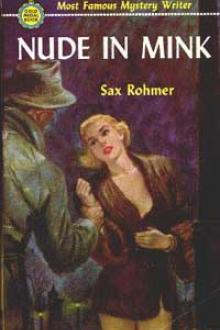
ing a painted ceiling. Oriental rugs and skins of animals were strewn about the marble floor. Beside a square pool guarded by a figure of Pan, banks of mimosa flowered and filled the air with their heavy swooning perfume.
There was a semi-circular recess, like a shrine, approached by three marble steps and veiled by silk curtains of rosy pink.
The existence of this singular apartment was destined to arouse keen curiosity in certain quarters (and before long) and to provoke equally keen incredulity in others.
A high, sweet note, that of a bell or of a silver gong, split the hushed silence, hitherto unbroken except for faint stirrings of lily leaves in the pool when one of several large golden orfe swimming there disturbed them.
Almost noiselessly, a bronze door was opened at the head of a short flight of marble steps. The handrail also was bronze, terminating in a newel post representing a sphinx. A man came down, slowly. He was a man of slight and graceful build. His leisurely move

he samovar has been on the table fortwo hours, and they are all out walking!
VOITSKI. All right, don't get excited; here they come.
Voices are heard approaching. SEREBRAKOFF, HELENA, SONIA, andTELEGIN come in from the depths of the garden, returning fromtheir walk.
SEREBRAKOFF. Superb! Superb! What beautiful views!
TELEGIN. They are wonderful, your Excellency.
SONIA. To-morrow we shall go into the woods, shall we, papa?
VOITSKI. Ladies and gentlemen, tea is ready.
SEREBRAKOFF. Won't you please be good enough to send my tea intothe library? I still have some work to finish.
SONIA. I am sure you will love the woods.
HELENA, SEREBRAKOFF, and SONIA go into the house. TELEGIN sitsdown at the table beside MARINA.
VOITSKI. There goes our learned scholar on a hot, sultry day likethis, in his overcoat and goloshes and carrying an umbrella!
ASTROFF. He is trying to take good care of his health.
VOITSKI. How lovely she is! How lovely! I have never in my lifeseen a more beautifu

at he is hardly even a caricaturist; that he is something very like a realist. Those comic monstrosities which the critics found incredible will be found to be the immense majority of the citizens of this country. We shall find that Sweedlepipe cuts our hair and Pumblechook sells our cereals; that Sam Weller blacks our boots and Tony Weller drives our omnibus. For the exaggerated notion of the exaggerations of Dickens (as was admirably pointed out by my old friend and enemy Mr. Blatchford in a Clarion review) is very largely due to our mixing with only one social class, whose conventions are very strict, and to whose affectations we are accustomed. In cabmen, in cobblers, in charwomen, individuality is often pushed to the edge of insanity. But as long as the Thackerayan platform of gentility stood firm all this was, comparatively speaking, concealed. For the English, of all nations, have the most uniform upper class and the most varied democracy. In France it is the peasants who are solid to uniformi

llen reiteration. Far away and more faintly sounded a whisper of different timbre: thrum, throom, thrum! Back and forth went the vibrations as the throbbing drums spoke to each other. What tales did they carry? What monstrous secrets whispered across the sullen, shadowy reaches of the unmapped jungle?
"This, you are sure, is the bay where the Spanish ship put in?"
"Yes, Senhor; the Negro swears this is the bay where the white man left the ship alone and went into the jungle."
Kane nodded grimly.
"Then put me ashore here, alone. Wait seven days; then if I have not returned and if you have no word of me, set sail wherever you will."
"Yes, Senhor."
The waves slapped lazily against the sides of the boat that carried Kane ashore. The village that he sought was on the river bank but set back from the bay shore, the jungle hiding it from sight of the ship.
Kane had adopted what seemed the most hazardous course, that of going ashore by night, for the

ed. We were at war.
There was no craft near us, and our surface speed is nearly twice that of our submerged, so I blew out the tanks and our whale-back came over the surface. All night we were steering south-west, making an average of eighteen knots. At about five in the morning, as I stood alone upon my tiny bridge, I saw, low down in the west, the scattered lights of the Norfolk coast. "Ah, Johnny, Johnny Bull," I said, as I looked at them, "you are going to have your lesson, and I am to be your master. It is I who have been chosen to teach you that one cannot live under artificial conditions and yet act as if they were natural ones. More foresight, Johnny, and less party politics--that is my lesson to you." And then I had a wave of pity, too, when I thought of those vast droves of helpless people, Yorkshire miners, Lancashire spinners, Birmingham metal-workers, the dockers and workers of London, over whose little homes I would bring the shadow of starvation. I seemed to see all those wasted eager ha
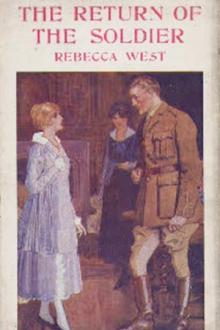
gish insect food that I felt the moment degrading.
Kitty was, I felt, being a little too clever over it.
"How is he wounded?" she asked.
The caller traced a pattern on the carpet with her blunt toe.
"I don't know how to put it; he's not exactly wounded. A shell burst--"
"Concussion?" suggested Kitty.
She answered with an odd glibness and humility, as though tendering us a term she had long brooded over without arriving at comprehension, and hoping that our superior intelligences would make something of it:
"Shell-shock." Our faces did not illumine, so she dragged on lamely, "Anyway, he's not well." Again she played with her purse. Her face was visibly damp.
"Not well? Is he dangerously ill?"
"Oh, no." She was too kind to harrow us. "Not dangerously ill."
Kitty brutally permitted a silence to fall. Our caller could not bear it, and broke it in a voice that nervousness had turned to a funny, diffident croak.
"He's in the Queen Mary Hos

am, Gentlemen,Yours obediently,Richard F. Burton.
Bodleian Library, August 5th, 1888
Contents of the Fifteenth Volume.
1. The History of the King's Son of Sind and the Lady Fatimah2. History of the Lovers of Syria3. History of Al-Hajjaj Bin Yusuf and the Young Sayyid4. Night Adventure of Harun Al-Rashid and the Youth Manjaba. Story of the Darwaysh and the Barber's Boy and theGreedy Sultanb. Tale of the Simpleton HusbandNote Concerning the "Tirrea Bede," Night 6555. The Loves of Al-Hayfa and Yusuf6. The Three Princes of China7. The Righteous Wazir Wrongfully Gaoled8. The Cairene Youth, the Barber and the Captain9. The Goodwife of Cairo and Her Four Gallantsa. The Tailor and the Lady and the Captainb. The Syrian and the Three Women of Cairoc. The Lady With Two Coyntesd. The Whorish Wife Who Vaunted Her Virtue10

shoulders. Its fellow on the other side of the legs is prepared in exactly the same manner; and the second trestle is a duplicate of the first, with the exception that the directions of the struts are reversed relatively to the C piece, to preserve the symmetry--which, however, is not an important point.
[Illustration: FIG. 5.--End elevation of joiner's bench.]
Back and Front.--The only operation to be performed on the front piece B and the back G is the notching of them both on the inside faces at the centre to take the ends of the bearer F, which performs the important function of preventing any bending of the top planks. Lay the boards together, top edges and ends level, and mark them at the same time. The square is then used on the faces to give the limits for the notches, which should be 1/4 inch deep and chiselled out carefully.
Draw cross lines with your square 3 inches from each end of both pieces, on the inside, to show where the legs are to be. Bore holes in the boards for the

e Rest of His Days o. The King's Son and the Merchant's Wife p. The Page Who Feigned to Know the Speech of Birds q. The Lady and Her Five Suitors r. The Three Wishes, or the Man Who Longed to see the Night of Power s. The Stolen Necklace t. The Two Pigeons u. Prince Behram and the Princess Al-Datma v. The House With the Belvedere w. The King's Son and the Ifrit's Mistress x. The Sandal-Wood Merchant and the Sharpers y. The Debauchee and the Three-Year-Old Child z. The Stolen Purse aa. The Fox and the Folk 136. Judar and His Brethren 137. The History of Gharib and His Brother Ajib
The Book Of The THOUSAND NIGHTS AND A NIGHT Sindbad The Seaman[FN#1] and Sindbad The Landsman.
There lived in the city of Baghdad, during the reign of the Commander of the Faithful, Harun al-Rashid, a man named Sindbád the Hammál,[FN#2] one in poor case who bore burdens on his head for hire. It happened to him one day of great heat that whilst he was carrying a heavy load, he became exceeding wea
Ne,rozo ne estas birdo, rozo estas floro.
LESSON 2.
Every "describing" word, that is, every word which tells the kind orquality of a person or thing, ends in "a," as "granda", large; "rugxa",red.
(A describing word is called an ADJECTIVE).
VOCABULARY.
bEla : beautiful. jUna : young.blAnka : white. matUra : mature, ripe.blUa : blue. nOva : new.bOna : good. nUtra : nutritious.fidEla : faithful. pUra : pure, clean.fOrta : strong. rIcxa : rich.frEsxa : fresh. sAna : well (healthy).
cxiElo : sky, heaven. nEgxo : snow.fEsto : holiday. pAno : bread.frauxlIno : maiden lady, Miss papEro : paper.hOmo : man (human being). tAblo : table.hUndo : dog. vIno : wine.infAno : child.
ing a painted ceiling. Oriental rugs and skins of animals were strewn about the marble floor. Beside a square pool guarded by a figure of Pan, banks of mimosa flowered and filled the air with their heavy swooning perfume.
There was a semi-circular recess, like a shrine, approached by three marble steps and veiled by silk curtains of rosy pink.
The existence of this singular apartment was destined to arouse keen curiosity in certain quarters (and before long) and to provoke equally keen incredulity in others.
A high, sweet note, that of a bell or of a silver gong, split the hushed silence, hitherto unbroken except for faint stirrings of lily leaves in the pool when one of several large golden orfe swimming there disturbed them.
Almost noiselessly, a bronze door was opened at the head of a short flight of marble steps. The handrail also was bronze, terminating in a newel post representing a sphinx. A man came down, slowly. He was a man of slight and graceful build. His leisurely move
he samovar has been on the table fortwo hours, and they are all out walking!
VOITSKI. All right, don't get excited; here they come.
Voices are heard approaching. SEREBRAKOFF, HELENA, SONIA, andTELEGIN come in from the depths of the garden, returning fromtheir walk.
SEREBRAKOFF. Superb! Superb! What beautiful views!
TELEGIN. They are wonderful, your Excellency.
SONIA. To-morrow we shall go into the woods, shall we, papa?
VOITSKI. Ladies and gentlemen, tea is ready.
SEREBRAKOFF. Won't you please be good enough to send my tea intothe library? I still have some work to finish.
SONIA. I am sure you will love the woods.
HELENA, SEREBRAKOFF, and SONIA go into the house. TELEGIN sitsdown at the table beside MARINA.
VOITSKI. There goes our learned scholar on a hot, sultry day likethis, in his overcoat and goloshes and carrying an umbrella!
ASTROFF. He is trying to take good care of his health.
VOITSKI. How lovely she is! How lovely! I have never in my lifeseen a more beautifu
at he is hardly even a caricaturist; that he is something very like a realist. Those comic monstrosities which the critics found incredible will be found to be the immense majority of the citizens of this country. We shall find that Sweedlepipe cuts our hair and Pumblechook sells our cereals; that Sam Weller blacks our boots and Tony Weller drives our omnibus. For the exaggerated notion of the exaggerations of Dickens (as was admirably pointed out by my old friend and enemy Mr. Blatchford in a Clarion review) is very largely due to our mixing with only one social class, whose conventions are very strict, and to whose affectations we are accustomed. In cabmen, in cobblers, in charwomen, individuality is often pushed to the edge of insanity. But as long as the Thackerayan platform of gentility stood firm all this was, comparatively speaking, concealed. For the English, of all nations, have the most uniform upper class and the most varied democracy. In France it is the peasants who are solid to uniformi
llen reiteration. Far away and more faintly sounded a whisper of different timbre: thrum, throom, thrum! Back and forth went the vibrations as the throbbing drums spoke to each other. What tales did they carry? What monstrous secrets whispered across the sullen, shadowy reaches of the unmapped jungle?
"This, you are sure, is the bay where the Spanish ship put in?"
"Yes, Senhor; the Negro swears this is the bay where the white man left the ship alone and went into the jungle."
Kane nodded grimly.
"Then put me ashore here, alone. Wait seven days; then if I have not returned and if you have no word of me, set sail wherever you will."
"Yes, Senhor."
The waves slapped lazily against the sides of the boat that carried Kane ashore. The village that he sought was on the river bank but set back from the bay shore, the jungle hiding it from sight of the ship.
Kane had adopted what seemed the most hazardous course, that of going ashore by night, for the
ed. We were at war.
There was no craft near us, and our surface speed is nearly twice that of our submerged, so I blew out the tanks and our whale-back came over the surface. All night we were steering south-west, making an average of eighteen knots. At about five in the morning, as I stood alone upon my tiny bridge, I saw, low down in the west, the scattered lights of the Norfolk coast. "Ah, Johnny, Johnny Bull," I said, as I looked at them, "you are going to have your lesson, and I am to be your master. It is I who have been chosen to teach you that one cannot live under artificial conditions and yet act as if they were natural ones. More foresight, Johnny, and less party politics--that is my lesson to you." And then I had a wave of pity, too, when I thought of those vast droves of helpless people, Yorkshire miners, Lancashire spinners, Birmingham metal-workers, the dockers and workers of London, over whose little homes I would bring the shadow of starvation. I seemed to see all those wasted eager ha
gish insect food that I felt the moment degrading.
Kitty was, I felt, being a little too clever over it.
"How is he wounded?" she asked.
The caller traced a pattern on the carpet with her blunt toe.
"I don't know how to put it; he's not exactly wounded. A shell burst--"
"Concussion?" suggested Kitty.
She answered with an odd glibness and humility, as though tendering us a term she had long brooded over without arriving at comprehension, and hoping that our superior intelligences would make something of it:
"Shell-shock." Our faces did not illumine, so she dragged on lamely, "Anyway, he's not well." Again she played with her purse. Her face was visibly damp.
"Not well? Is he dangerously ill?"
"Oh, no." She was too kind to harrow us. "Not dangerously ill."
Kitty brutally permitted a silence to fall. Our caller could not bear it, and broke it in a voice that nervousness had turned to a funny, diffident croak.
"He's in the Queen Mary Hos
am, Gentlemen,Yours obediently,Richard F. Burton.
Bodleian Library, August 5th, 1888
Contents of the Fifteenth Volume.
1. The History of the King's Son of Sind and the Lady Fatimah2. History of the Lovers of Syria3. History of Al-Hajjaj Bin Yusuf and the Young Sayyid4. Night Adventure of Harun Al-Rashid and the Youth Manjaba. Story of the Darwaysh and the Barber's Boy and theGreedy Sultanb. Tale of the Simpleton HusbandNote Concerning the "Tirrea Bede," Night 6555. The Loves of Al-Hayfa and Yusuf6. The Three Princes of China7. The Righteous Wazir Wrongfully Gaoled8. The Cairene Youth, the Barber and the Captain9. The Goodwife of Cairo and Her Four Gallantsa. The Tailor and the Lady and the Captainb. The Syrian and the Three Women of Cairoc. The Lady With Two Coyntesd. The Whorish Wife Who Vaunted Her Virtue10
shoulders. Its fellow on the other side of the legs is prepared in exactly the same manner; and the second trestle is a duplicate of the first, with the exception that the directions of the struts are reversed relatively to the C piece, to preserve the symmetry--which, however, is not an important point.
[Illustration: FIG. 5.--End elevation of joiner's bench.]
Back and Front.--The only operation to be performed on the front piece B and the back G is the notching of them both on the inside faces at the centre to take the ends of the bearer F, which performs the important function of preventing any bending of the top planks. Lay the boards together, top edges and ends level, and mark them at the same time. The square is then used on the faces to give the limits for the notches, which should be 1/4 inch deep and chiselled out carefully.
Draw cross lines with your square 3 inches from each end of both pieces, on the inside, to show where the legs are to be. Bore holes in the boards for the
e Rest of His Days o. The King's Son and the Merchant's Wife p. The Page Who Feigned to Know the Speech of Birds q. The Lady and Her Five Suitors r. The Three Wishes, or the Man Who Longed to see the Night of Power s. The Stolen Necklace t. The Two Pigeons u. Prince Behram and the Princess Al-Datma v. The House With the Belvedere w. The King's Son and the Ifrit's Mistress x. The Sandal-Wood Merchant and the Sharpers y. The Debauchee and the Three-Year-Old Child z. The Stolen Purse aa. The Fox and the Folk 136. Judar and His Brethren 137. The History of Gharib and His Brother Ajib
The Book Of The THOUSAND NIGHTS AND A NIGHT Sindbad The Seaman[FN#1] and Sindbad The Landsman.
There lived in the city of Baghdad, during the reign of the Commander of the Faithful, Harun al-Rashid, a man named Sindbád the Hammál,[FN#2] one in poor case who bore burdens on his head for hire. It happened to him one day of great heat that whilst he was carrying a heavy load, he became exceeding wea