
call her superstitious. She has an odd belief in dreams and we have not been able to laugh it out of her. I must own, too, that some of her dreams--but there, it would not do to let Gilbert hear me hinting such heresy. What have you found of much interest, Susan?" Susan had given an exclamation. "Listen to this, Mrs. Dr. dear. 'Mrs. Sophia Crawford has given up her house at Lowbridge and will make her home in future with her niece, Mrs. Albert Crawford.' Why that is my own cousin Sophia, Mrs. Dr. dear. We quarrelled when we were children over who should get a Sunday-school card with the words 'God is Love,' wreathed in rosebuds, on it, and have never spoken to each other since. And now she is coming to live right across the road from us." "You will have to make up the old quarrel, Susan. It will never do to be at outs with your neighbours." "Cousin Sophia began the quarrel, so she can begin the making up also, Mrs. Dr. dear," said Susan loftily. "If she does I hope I am a good enough Christian to meet her ha

there rang out overhead a startling cry from the crow's-nest:
"Something ahead, sir--can't make it out."
The first officer sprang to the engine-room telegraph and grasped the lever. "Sing out what you see," he roared.
"Hard aport, sir--ship on the starboard tack--dead ahead," came the cry.
"Port your wheel--hard over," repeated the first officer to the quartermaster at the helm--who answered and obeyed. Nothing as yet could be seen from the bridge. The powerful steering-engine in the stern ground the rudder over; but before three degrees on the compass card were traversed by the lubber's-point, a seeming thickening of the darkness and fog ahead resolved itself into the square sails of a deep-laden ship, crossing the Titan's bow, not half her length away.
"H--l and d--" growled the first officer. "Steady on your course, quartermaster," he shouted. "Stand from under on deck." He turned a lever which closed compartments, pushed a button marked--"Captain's Room," and cr
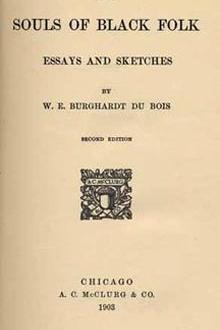
youth shrunk into tasteless sycophancy, or into silent hatred of the pale world about them and mocking distrust of everything white; or wasted itself in a bitter cry, Why did God make me an outcast and a stranger in mine own house? The shades of the prison-house closed round about us all: walls strait and stubborn to the whitest, but relentlessly narrow, tall, and unscalable to sons of night who must plod darkly on in resignation, or beat unavailing palms against the stone, or steadily, half hopelessly, watch the streak of blue above.
After the Egyptian and Indian, the Greek and Roman, the Teuton and Mongolian, the Negro is a sort of seventh son, born with a veil, and gifted with second-sight in this American world, --a world which yields him no true self-consciousness, but only lets him see himself through the revelation of the other world. It is a peculiar sensation, this double-consciousness, this sense of always looking at one's self through the eyes of others, of measuring one's soul by the tape o

's picture, who keeps his heart open that he may catch every noble impulse and everything which may inspire him, will be sure to live a successful life; there are no ifs or ands about it. If he has his health, nothing can keep him from success.
Zion's Herald says that Isaac Rich, who gave one million and three quarters to found Boston University of the Methodist Episcopal Church, began business thus: at eighteen he went from Cape Cod to Boston with three or four dollars in his possession, and looked about for something to do, rising early, walking far, observing closely, reflecting much. Soon he had an idea: he bought three bushels of oysters, hired a wheelbarrow, found a piece of board, bought six small plates, six iron forks, a three-cent pepper-box, and one or two other things. He was at the oyster-boat buying his oysters at three o'clock in the morning, wheeled them three miles, set up his board near a market, and began business. He sold out his oysters as fast as he could get them, at a g

on them. Could I be one of their flattering panders, I would hang on their ears like a horseleech, till I were full, and then drop off. I pray, leave me. Who would rely upon these miserable dependencies, in expectation to be advanc'd to-morrow? What creature ever fed worse than hoping Tantalus? Nor ever died any man more fearfully than he that hoped for a pardon. There are rewards for hawks and dogs when they have done us service; but for a soldier that hazards his limbs in a battle, nothing but a kind of geometry is his last supportation.
DELIO. Geometry?
BOSOLA. Ay, to hang in a fair pair of slings, take his latter swing in the world upon an honourable pair of crutches, from hospital to hospital. Fare ye well, sir: and yet do not you scorn us; for places in the court are but like beds in the hospital, where this man's head lies at that man's foot, and so lower and lower. [Exit.]
DELIO. I knew this fellow seven years in the galleys For a notorious murder; and 'twas thought The cardinal


No matter how exciting a tale we might be rehearsing, the mere shifting of a cloud shadow in the landscape near by was sufficient to change our impulses; and soon we were all chasing the great shadows that played among the hills. We shouted and whooped in the chase; laughing and calling to one another, we were like little sportive nymphs on that Dakota sea of rolling green.
On one occasion I forgot the cloud shadow in a strange notion to catch up with my own shadow. Standing straight and still, I began to glide after it, putting out one foot cautiously. When, with the greatest care, I set my foot in advance of myself, my shadow crept onward too. Then again I tried it; this time with the other foot. Still again my shadow escaped me. I began to run; and away flew my shadow, always just a step beyond me. Faster and faster I ran, setting my teeth and clenching my fists, determined to overtake my own fleet shadow. But ever swifter it glided before me, while I was growing breathless and hot

en thought ofvery much else except the harmony and good comradeship which bless people whoare suited to each other. He had been disappointed in no respect; they hadtoiled and gathered like ants; they were confidential partners in the homelybusiness and details of the farm; nothing was wasted, not even time. Thelittle farmhouse abounded in comfort, and was a model of neatness and order.If it and its surroundings were devoid of grace and ornament, they were notmissed, for neither of its occupants had ever been accustomed to such things.The years which passed so uneventfully only cemented the union and increasedthe sense of mutual dependence. They would have been regarded as exceedinglymatter-of-fact and undemonstrative, but they were kind to each other andunderstood each other. Feeling that they were slowly yet surely gettingahead, they looked forward to an old age of rest and a sufficiency for theirsimple needs. Then, before he could realize the truth, he was left alone ather wintry grave;

says it would hurt Aunt Martha's feelings. Anne dearie,believe me, the state of that manse is something terrible.Everything is thick with dust and nothing is ever in its place.And we had painted and papered it all so nice before they came."
"There are four children, you say?" asked Anne, beginning tomother them already in her heart.
"Yes. They run up just like the steps of a stair. Gerald's theoldest. He's twelve and they call him Jerry. He's a clever boy.Faith is eleven. She is a regular tomboy but pretty as apicture, I must say."
"She looks like an angel but she is a holy terror for mischief,Mrs. Dr. dear," said Susan solemnly. "I was at the manse onenight last week and Mrs. James Millison was there, too. She hadbrought them up a dozen eggs and a little pail of milk--a VERYlittle pail, Mrs. Dr. dear. Faith took them and whisked down thecellar with them. Near the bottom of the stairs she caught hertoe and fell the rest of the way, milk and eggs and all. You canimagine the re

is largely built, and it will not take us long to discover that Bushido does not stand on a lesser pedestal. If fighting in itself, be it offensive or defensive, is, as Quakers rightly testify, brutal and wrong, we can still say with Lessing, "We know from what failings our virtue springs."[3] "Sneaks" and "cowards" are epithets of the worst opprobrium to healthy, simple natures. Childhood begins life with these notions, and knighthood also; but, as life grows larger and its relations many-sided, the early faith seeks sanction from higher authority and more rational sources for its own justification, satisfaction and development. If military interests had operated alone, without higher moral support, how far short of chivalry would the ideal of knighthood have fallen! In Europe, Christianity, interpreted with concessions convenient to chivalry, infused it nevertheless with spiritual data. "Religion, war and glory were the three souls of a perfect Christian knight," says Lamartine. In Japan there were
call her superstitious. She has an odd belief in dreams and we have not been able to laugh it out of her. I must own, too, that some of her dreams--but there, it would not do to let Gilbert hear me hinting such heresy. What have you found of much interest, Susan?" Susan had given an exclamation. "Listen to this, Mrs. Dr. dear. 'Mrs. Sophia Crawford has given up her house at Lowbridge and will make her home in future with her niece, Mrs. Albert Crawford.' Why that is my own cousin Sophia, Mrs. Dr. dear. We quarrelled when we were children over who should get a Sunday-school card with the words 'God is Love,' wreathed in rosebuds, on it, and have never spoken to each other since. And now she is coming to live right across the road from us." "You will have to make up the old quarrel, Susan. It will never do to be at outs with your neighbours." "Cousin Sophia began the quarrel, so she can begin the making up also, Mrs. Dr. dear," said Susan loftily. "If she does I hope I am a good enough Christian to meet her ha
there rang out overhead a startling cry from the crow's-nest:
"Something ahead, sir--can't make it out."
The first officer sprang to the engine-room telegraph and grasped the lever. "Sing out what you see," he roared.
"Hard aport, sir--ship on the starboard tack--dead ahead," came the cry.
"Port your wheel--hard over," repeated the first officer to the quartermaster at the helm--who answered and obeyed. Nothing as yet could be seen from the bridge. The powerful steering-engine in the stern ground the rudder over; but before three degrees on the compass card were traversed by the lubber's-point, a seeming thickening of the darkness and fog ahead resolved itself into the square sails of a deep-laden ship, crossing the Titan's bow, not half her length away.
"H--l and d--" growled the first officer. "Steady on your course, quartermaster," he shouted. "Stand from under on deck." He turned a lever which closed compartments, pushed a button marked--"Captain's Room," and cr
youth shrunk into tasteless sycophancy, or into silent hatred of the pale world about them and mocking distrust of everything white; or wasted itself in a bitter cry, Why did God make me an outcast and a stranger in mine own house? The shades of the prison-house closed round about us all: walls strait and stubborn to the whitest, but relentlessly narrow, tall, and unscalable to sons of night who must plod darkly on in resignation, or beat unavailing palms against the stone, or steadily, half hopelessly, watch the streak of blue above.
After the Egyptian and Indian, the Greek and Roman, the Teuton and Mongolian, the Negro is a sort of seventh son, born with a veil, and gifted with second-sight in this American world, --a world which yields him no true self-consciousness, but only lets him see himself through the revelation of the other world. It is a peculiar sensation, this double-consciousness, this sense of always looking at one's self through the eyes of others, of measuring one's soul by the tape o
's picture, who keeps his heart open that he may catch every noble impulse and everything which may inspire him, will be sure to live a successful life; there are no ifs or ands about it. If he has his health, nothing can keep him from success.
Zion's Herald says that Isaac Rich, who gave one million and three quarters to found Boston University of the Methodist Episcopal Church, began business thus: at eighteen he went from Cape Cod to Boston with three or four dollars in his possession, and looked about for something to do, rising early, walking far, observing closely, reflecting much. Soon he had an idea: he bought three bushels of oysters, hired a wheelbarrow, found a piece of board, bought six small plates, six iron forks, a three-cent pepper-box, and one or two other things. He was at the oyster-boat buying his oysters at three o'clock in the morning, wheeled them three miles, set up his board near a market, and began business. He sold out his oysters as fast as he could get them, at a g
on them. Could I be one of their flattering panders, I would hang on their ears like a horseleech, till I were full, and then drop off. I pray, leave me. Who would rely upon these miserable dependencies, in expectation to be advanc'd to-morrow? What creature ever fed worse than hoping Tantalus? Nor ever died any man more fearfully than he that hoped for a pardon. There are rewards for hawks and dogs when they have done us service; but for a soldier that hazards his limbs in a battle, nothing but a kind of geometry is his last supportation.
DELIO. Geometry?
BOSOLA. Ay, to hang in a fair pair of slings, take his latter swing in the world upon an honourable pair of crutches, from hospital to hospital. Fare ye well, sir: and yet do not you scorn us; for places in the court are but like beds in the hospital, where this man's head lies at that man's foot, and so lower and lower. [Exit.]
DELIO. I knew this fellow seven years in the galleys For a notorious murder; and 'twas thought The cardinal
No matter how exciting a tale we might be rehearsing, the mere shifting of a cloud shadow in the landscape near by was sufficient to change our impulses; and soon we were all chasing the great shadows that played among the hills. We shouted and whooped in the chase; laughing and calling to one another, we were like little sportive nymphs on that Dakota sea of rolling green.
On one occasion I forgot the cloud shadow in a strange notion to catch up with my own shadow. Standing straight and still, I began to glide after it, putting out one foot cautiously. When, with the greatest care, I set my foot in advance of myself, my shadow crept onward too. Then again I tried it; this time with the other foot. Still again my shadow escaped me. I began to run; and away flew my shadow, always just a step beyond me. Faster and faster I ran, setting my teeth and clenching my fists, determined to overtake my own fleet shadow. But ever swifter it glided before me, while I was growing breathless and hot
en thought ofvery much else except the harmony and good comradeship which bless people whoare suited to each other. He had been disappointed in no respect; they hadtoiled and gathered like ants; they were confidential partners in the homelybusiness and details of the farm; nothing was wasted, not even time. Thelittle farmhouse abounded in comfort, and was a model of neatness and order.If it and its surroundings were devoid of grace and ornament, they were notmissed, for neither of its occupants had ever been accustomed to such things.The years which passed so uneventfully only cemented the union and increasedthe sense of mutual dependence. They would have been regarded as exceedinglymatter-of-fact and undemonstrative, but they were kind to each other andunderstood each other. Feeling that they were slowly yet surely gettingahead, they looked forward to an old age of rest and a sufficiency for theirsimple needs. Then, before he could realize the truth, he was left alone ather wintry grave;
says it would hurt Aunt Martha's feelings. Anne dearie,believe me, the state of that manse is something terrible.Everything is thick with dust and nothing is ever in its place.And we had painted and papered it all so nice before they came."
"There are four children, you say?" asked Anne, beginning tomother them already in her heart.
"Yes. They run up just like the steps of a stair. Gerald's theoldest. He's twelve and they call him Jerry. He's a clever boy.Faith is eleven. She is a regular tomboy but pretty as apicture, I must say."
"She looks like an angel but she is a holy terror for mischief,Mrs. Dr. dear," said Susan solemnly. "I was at the manse onenight last week and Mrs. James Millison was there, too. She hadbrought them up a dozen eggs and a little pail of milk--a VERYlittle pail, Mrs. Dr. dear. Faith took them and whisked down thecellar with them. Near the bottom of the stairs she caught hertoe and fell the rest of the way, milk and eggs and all. You canimagine the re
is largely built, and it will not take us long to discover that Bushido does not stand on a lesser pedestal. If fighting in itself, be it offensive or defensive, is, as Quakers rightly testify, brutal and wrong, we can still say with Lessing, "We know from what failings our virtue springs."[3] "Sneaks" and "cowards" are epithets of the worst opprobrium to healthy, simple natures. Childhood begins life with these notions, and knighthood also; but, as life grows larger and its relations many-sided, the early faith seeks sanction from higher authority and more rational sources for its own justification, satisfaction and development. If military interests had operated alone, without higher moral support, how far short of chivalry would the ideal of knighthood have fallen! In Europe, Christianity, interpreted with concessions convenient to chivalry, infused it nevertheless with spiritual data. "Religion, war and glory were the three souls of a perfect Christian knight," says Lamartine. In Japan there were