
s going on," I said, "and I am busy. Could you perhaps come another day?"
At once he turned to go; but as he reached the door he hesitated, and said: "May I not see the little one, sir, for a moment?" It was his belief that Mini was still the same. He had pictured her running to him as she used, calling "O Cabuliwallah! Cabuliwallah!" He had imagined too that they would laugh and talk together, just as of old. In fact, in memory of former days he had brought, carefully wrapped up in paper, a few almonds and raisins and grapes, obtained somehow from a countryman; for his own little fund was dispersed.
I said again: "There is a ceremony in the house, and you will not be able to see any one to-day."
The man's face fell. He looked wistfully at me for a moment, then said "Good morning," and went out.
I felt a little sorry, and would have called him back, but I found he was returning of his own accord. He came close up to me holding out his offerings with the words: "I brought these few
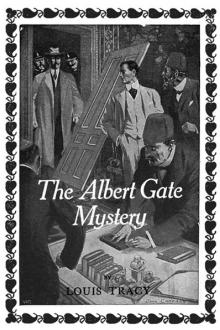
most remarkable affair I have ever been engaged in. That pleases me. Pheasant-shooting is a serious business, governed by the calendar and arranged by the head-keeper."
An electric bell summoned Smith. The barrister handed him the telegram and a sovereign.
"Read that message," he said. "Ponder over it. Send it, and give the change of the sovereign to Mrs. Smith's brother, with my compliments and regrets."
CHAPTER II
MEHEMET ALI'S NOTE
Then he turned to Lord Fairholme.
"Just one question," he said, "before I send you off to bed. No, you must not protest. I want you to meet me here this evening at seven, with your brain clear and your nerves restored by a good, sound sleep. We will dine, here or elsewhere, and act subsequently. But at this moment I want to know the name of the person most readily accessible who can tell me all about Mr. Talbot's connection with the Sultan's agent."
"His sister, undoubt

to have? What clothing, if any, do you wish me to wear? What name would you like me to answer to?"
Mike looked at the clock on the wall. It was 3:20 PM. He counted off six hours on his fingers—9:20. He sat down on the white sofa that was almost never used and looked at the shapely nude robot. With a wry smile, he realized that he could sit and stare at it for the next six hours, or he could get up and do something. He went back to the family room, picked up the texTee, and flipped open Moby Dick, but he didn't read any more of it. Instead he turned the select dial to the bookstore and typed in "names". The titles of half a dozen books appeared including "The Name Book", "The Secret Universe of Names", and "The Baby Name Wizard". He selected the last book of the six: "Virtue Names". It took about twenty seconds for the book to download to the texTee. Looking back to the screen, Mike turned to the first page of the name book. The first name was Agape. Agape? The book said that it had something to

dently schoolrooms, for desks, maps, blackboards, and books were scattered about. An open fire burned on the hearth, and several indolent lads lay on their backs before it, discussing a new cricket-ground, with such animation that their boots waved in the air. A tall youth was practising on the flute in one corner, quite undisturbed by the racket all about him. Two or three others were jumping over the desks, pausing, now and then, to get their breath and laugh at the droll sketches of a little wag who was caricaturing the whole household on a blackboard.
In the room on the left a long supper-table was seen, set forth with great pitchers of new milk, piles of brown and white bread, and perfect stacks of the shiny gingerbread so dear to boyish souls. A flavor of toast was in the air, also suggestions of baked apples, very tantalizing to one hungry little nose and stomach.
The hall, however, presented the most inviting prospect of all, for a brisk game of tag was going on in the upper entry. One l

r, so that the little body presented a shapelessappearance, as, with its small feet shod in thick, nailedmountain-shoes, it slowly and laboriously plodded its way up inthe heat. The two must have left the valley a good hour's walkbehind them, when they came to the hamlet known as Dorfli, whichis situated half-way up the mountain. Here the wayfarers met withgreetings from all sides, some calling to them from windows, somefrom open doors, others from outside, for the elder girl was nowin her old home. She did not, however, pause in her walk torespond to her friends' welcoming cries and questions, but passedon without stopping for a moment until she reached the last ofthe scattered houses of the hamlet. Here a voice called to herfrom the door: "Wait a moment, Dete; if you are going up higher,I will come with you."
The girl thus addressed stood still, and the child immediatelylet go her hand and seated herself on the ground.
"Are you tired, Heidi?" asked her companion.
"No, I am hot," answe

s controlled by her it was coldly received and blindly rejected by the governing powers, and there was left only the slower, subtler, but none the less sure, process of working its way among the people to burst in time in rebellion and the destruction of the conservative forces that would repress it.
In the opening years of the nineteenth century the friar orders in the Philippines had reached the apogee of their power and usefulness. Their influence was everywhere felt and acknowledged, while the country still prospered under the effects of the vigorous and progressive administrations of Anda and Vargas in the preceding century. Native levies had fought loyally under Spanish leadership against Dutch and British invaders, or in suppressing local revolts among their own people, which were always due to some specific grievance, never directed definitely against the Spanish sovereignty. The Philippines were shut off from contact with any country but Spain, and even this communication was restricted and ca

ets with sweets war not, joy delights in joy:
Why lov'st thou that which thou receiv'st not gladly,
Or else receiv'st with pleasure thine annoy?
If the true concord of well-tuned sounds,
By unions married, do offend thine ear,
They do but sweetly chide thee, who confounds
In singleness the parts that thou shouldst bear.
Mark how one string, sweet husband to another,
Strikes each in each by mutual ordering;
Resembling sire and child and happy mother,
Who, all in one, one pleasing note do sing:
Whose speechless song being many, seeming one,
Sings this to thee: 'Thou single wilt prove none.'
IX
Is it for fear to wet a widow's eye,
That thou consum'st thy self in single life?
Ah! if thou issueless shalt hap to die,
The world will wail thee like a makeless wife;
The world will be thy widow and still weep
That thou no form of thee hast left behind,
When every private widow well may keep
By children's eyes, her husband's shape

the New Jardeen Incident."
A frozen silence followed the last five words. Hunter thought, So that's what the little weasel was fishing for....
Rockford quietly laid down his fork. Val's face turned grim. Lyla looked up in quick alarm and said to Narf:
"Let's not--"
"Don't misunderstand me, gentlemen," Narf's loud voice went on. "I believe the commander of the Terran cruiser wouldn't have ordered it to fire upon the Verdam cruiser over a neutral world such as New Jardeen if he had been his rational self. Cold-war battle nerves. So he shot down the Verdam cruiser and its nuclear converters exploded when it fell in the center of Colony City. Force of a hydrogen bomb--forty thousand innocent people gone in a microsecond. Not the commander's fault, really--fault of the military system that failed to screen out its unstable officers."
"Yes, your lordship. But is it possible"--Sonig spoke very thoughtfully--"for a political power, which is of such a nature that i
rances, bondage to works, and the fruition and seed of works.
The Soul of the Master, the Lord, is of the same nature as the soul in us; but we still bear the burden of many evils, we are in bondage through our former works, we are under the dominance of sorrow. The Soul of the Master is free from sin and servitude and sorrow.
25. In the Master is the perfect seed of Omniscience.
The Soul of the Master is in essence one with the Oversoul, and therefore partaker of the Oversoul's all-wisdom and all-power. All spiritual attainment rests on this, and is possible because the soul and the Oversoul are One.
26. He is the Teacher of all who have gone before, since he is not limited by Time.
From the beginning, the Oversoul has been the Teacher of all souls, which, by their entrance into the Oversoul, by realizing their oneness with the Oversoul, have inherited the kingdom of the Light. For the Oversoul is before Time, and Time, father of all else, is one of His children.
27.

to him a high measure of sexual activity.
The peculiarity of this emotional and sexual life viewed in connection with Leonardo's double nature as an artist and investigator can be grasped only in one way. Of the biographers to whom psychological viewpoints are often very foreign, only one, Edm. Solmi, has to my knowledge approached the solution of the riddle. But a writer, Dimitri Sergewitsch Merejkowski, who selected Leonardo as the hero of a great historical novel has based his delineation on such an understanding of this unusual man, and if not in dry words he gave unmistakable utterance in plastic expression in the manner of a poet.[16] Solmi judges Leonardo as follows: "But the unrequited desire to understand everything surrounding him, and with cold reflection to discover the deepest secret of everything that is perfect, has condemned Leonardo's works to remain forever unfinished."[17] In an essay of the Conferenze Fiorentine the utterances of Leonardo are cited, which show his confession of fai
s going on," I said, "and I am busy. Could you perhaps come another day?"
At once he turned to go; but as he reached the door he hesitated, and said: "May I not see the little one, sir, for a moment?" It was his belief that Mini was still the same. He had pictured her running to him as she used, calling "O Cabuliwallah! Cabuliwallah!" He had imagined too that they would laugh and talk together, just as of old. In fact, in memory of former days he had brought, carefully wrapped up in paper, a few almonds and raisins and grapes, obtained somehow from a countryman; for his own little fund was dispersed.
I said again: "There is a ceremony in the house, and you will not be able to see any one to-day."
The man's face fell. He looked wistfully at me for a moment, then said "Good morning," and went out.
I felt a little sorry, and would have called him back, but I found he was returning of his own accord. He came close up to me holding out his offerings with the words: "I brought these few
most remarkable affair I have ever been engaged in. That pleases me. Pheasant-shooting is a serious business, governed by the calendar and arranged by the head-keeper."
An electric bell summoned Smith. The barrister handed him the telegram and a sovereign.
"Read that message," he said. "Ponder over it. Send it, and give the change of the sovereign to Mrs. Smith's brother, with my compliments and regrets."
CHAPTER II
MEHEMET ALI'S NOTE
Then he turned to Lord Fairholme.
"Just one question," he said, "before I send you off to bed. No, you must not protest. I want you to meet me here this evening at seven, with your brain clear and your nerves restored by a good, sound sleep. We will dine, here or elsewhere, and act subsequently. But at this moment I want to know the name of the person most readily accessible who can tell me all about Mr. Talbot's connection with the Sultan's agent."
"His sister, undoubt
to have? What clothing, if any, do you wish me to wear? What name would you like me to answer to?"
Mike looked at the clock on the wall. It was 3:20 PM. He counted off six hours on his fingers—9:20. He sat down on the white sofa that was almost never used and looked at the shapely nude robot. With a wry smile, he realized that he could sit and stare at it for the next six hours, or he could get up and do something. He went back to the family room, picked up the texTee, and flipped open Moby Dick, but he didn't read any more of it. Instead he turned the select dial to the bookstore and typed in "names". The titles of half a dozen books appeared including "The Name Book", "The Secret Universe of Names", and "The Baby Name Wizard". He selected the last book of the six: "Virtue Names". It took about twenty seconds for the book to download to the texTee. Looking back to the screen, Mike turned to the first page of the name book. The first name was Agape. Agape? The book said that it had something to
dently schoolrooms, for desks, maps, blackboards, and books were scattered about. An open fire burned on the hearth, and several indolent lads lay on their backs before it, discussing a new cricket-ground, with such animation that their boots waved in the air. A tall youth was practising on the flute in one corner, quite undisturbed by the racket all about him. Two or three others were jumping over the desks, pausing, now and then, to get their breath and laugh at the droll sketches of a little wag who was caricaturing the whole household on a blackboard.
In the room on the left a long supper-table was seen, set forth with great pitchers of new milk, piles of brown and white bread, and perfect stacks of the shiny gingerbread so dear to boyish souls. A flavor of toast was in the air, also suggestions of baked apples, very tantalizing to one hungry little nose and stomach.
The hall, however, presented the most inviting prospect of all, for a brisk game of tag was going on in the upper entry. One l
r, so that the little body presented a shapelessappearance, as, with its small feet shod in thick, nailedmountain-shoes, it slowly and laboriously plodded its way up inthe heat. The two must have left the valley a good hour's walkbehind them, when they came to the hamlet known as Dorfli, whichis situated half-way up the mountain. Here the wayfarers met withgreetings from all sides, some calling to them from windows, somefrom open doors, others from outside, for the elder girl was nowin her old home. She did not, however, pause in her walk torespond to her friends' welcoming cries and questions, but passedon without stopping for a moment until she reached the last ofthe scattered houses of the hamlet. Here a voice called to herfrom the door: "Wait a moment, Dete; if you are going up higher,I will come with you."
The girl thus addressed stood still, and the child immediatelylet go her hand and seated herself on the ground.
"Are you tired, Heidi?" asked her companion.
"No, I am hot," answe
s controlled by her it was coldly received and blindly rejected by the governing powers, and there was left only the slower, subtler, but none the less sure, process of working its way among the people to burst in time in rebellion and the destruction of the conservative forces that would repress it.
In the opening years of the nineteenth century the friar orders in the Philippines had reached the apogee of their power and usefulness. Their influence was everywhere felt and acknowledged, while the country still prospered under the effects of the vigorous and progressive administrations of Anda and Vargas in the preceding century. Native levies had fought loyally under Spanish leadership against Dutch and British invaders, or in suppressing local revolts among their own people, which were always due to some specific grievance, never directed definitely against the Spanish sovereignty. The Philippines were shut off from contact with any country but Spain, and even this communication was restricted and ca
ets with sweets war not, joy delights in joy:
Why lov'st thou that which thou receiv'st not gladly,
Or else receiv'st with pleasure thine annoy?
If the true concord of well-tuned sounds,
By unions married, do offend thine ear,
They do but sweetly chide thee, who confounds
In singleness the parts that thou shouldst bear.
Mark how one string, sweet husband to another,
Strikes each in each by mutual ordering;
Resembling sire and child and happy mother,
Who, all in one, one pleasing note do sing:
Whose speechless song being many, seeming one,
Sings this to thee: 'Thou single wilt prove none.'
IX
Is it for fear to wet a widow's eye,
That thou consum'st thy self in single life?
Ah! if thou issueless shalt hap to die,
The world will wail thee like a makeless wife;
The world will be thy widow and still weep
That thou no form of thee hast left behind,
When every private widow well may keep
By children's eyes, her husband's shape
the New Jardeen Incident."
A frozen silence followed the last five words. Hunter thought, So that's what the little weasel was fishing for....
Rockford quietly laid down his fork. Val's face turned grim. Lyla looked up in quick alarm and said to Narf:
"Let's not--"
"Don't misunderstand me, gentlemen," Narf's loud voice went on. "I believe the commander of the Terran cruiser wouldn't have ordered it to fire upon the Verdam cruiser over a neutral world such as New Jardeen if he had been his rational self. Cold-war battle nerves. So he shot down the Verdam cruiser and its nuclear converters exploded when it fell in the center of Colony City. Force of a hydrogen bomb--forty thousand innocent people gone in a microsecond. Not the commander's fault, really--fault of the military system that failed to screen out its unstable officers."
"Yes, your lordship. But is it possible"--Sonig spoke very thoughtfully--"for a political power, which is of such a nature that i
rances, bondage to works, and the fruition and seed of works.
The Soul of the Master, the Lord, is of the same nature as the soul in us; but we still bear the burden of many evils, we are in bondage through our former works, we are under the dominance of sorrow. The Soul of the Master is free from sin and servitude and sorrow.
25. In the Master is the perfect seed of Omniscience.
The Soul of the Master is in essence one with the Oversoul, and therefore partaker of the Oversoul's all-wisdom and all-power. All spiritual attainment rests on this, and is possible because the soul and the Oversoul are One.
26. He is the Teacher of all who have gone before, since he is not limited by Time.
From the beginning, the Oversoul has been the Teacher of all souls, which, by their entrance into the Oversoul, by realizing their oneness with the Oversoul, have inherited the kingdom of the Light. For the Oversoul is before Time, and Time, father of all else, is one of His children.
27.
to him a high measure of sexual activity.
The peculiarity of this emotional and sexual life viewed in connection with Leonardo's double nature as an artist and investigator can be grasped only in one way. Of the biographers to whom psychological viewpoints are often very foreign, only one, Edm. Solmi, has to my knowledge approached the solution of the riddle. But a writer, Dimitri Sergewitsch Merejkowski, who selected Leonardo as the hero of a great historical novel has based his delineation on such an understanding of this unusual man, and if not in dry words he gave unmistakable utterance in plastic expression in the manner of a poet.[16] Solmi judges Leonardo as follows: "But the unrequited desire to understand everything surrounding him, and with cold reflection to discover the deepest secret of everything that is perfect, has condemned Leonardo's works to remain forever unfinished."[17] In an essay of the Conferenze Fiorentine the utterances of Leonardo are cited, which show his confession of fai