
ter constitute "character," each of them as a "moral virtue" (literally "a goodness of character"), and upon them primarily depends the realisation of happiness. This is the case at least for the great majority of men, and for all men their possession is an indispensable basis of the best, i e, the most desirable life. They form the chief or central subject-matter of the Ethics.
Perhaps the truest way of conceiving Aristotle's meaning here is to regard a moral virtue as a form of obedience to a maxim or rule of conduct accepted by the agent as valid for a class of recurrent situations in human life. Such obedience requires knowledge of the rule and acceptance of it as the rule of the agent's own actions, but not necessarily knowledge of its ground or of its systematic connexion with other similarly known and similarly accepted rules (It may be remarked that the Greek word usually translated "reason," means in almost all cases in the Ethics such a rule, and not the fa

is, Colonel Lamon and others, and he promptly chose Colonel Lamon, who alone accompanied him on his journey from Harrisburg to Philadelphia and thence to Washington.
Before leaving the room Governor Curtin asked Colonel Lamon whether he was armed, and he answered by exhibiting a brace of fine pistols, a huge bowie knife, a black jack, and a pair of brass knuckles. Curtin answered: "You'll do," and they were started on their journey after all the telegraph wires had been cut. We awaited through what seemed almost an endless night, until the east was purpled with the coming of another day, when Colonel Scott, who had managed the whole scheme, reunited the wires and soon received from Colonel Lamon this dispatch: "Plums delivered nuts safely," which gave us the intensely gratifying information that Lincoln had arrived in Washington.
Of all the Presidents of the United States, and indeed of all the great statesmen who have made their indelible impress upon the policy of the Republic, Abraham Lincoln

t. I was homesick, and Aunt could never bear to hear of those things. It was before your marriage, and all the kinder, for you were the queen of the night, yet had a word for poor little me."
Mrs. Snowdon was pale to the lips, and Maurice impatiently tapped the arm of his chair, while the girl innocently chatted on.
"I am sorry the general is such an invalid; yet I dare say you find great happiness in taking care of him. It is so pleasant to be of use to those we love." And as she spoke, Octavia leaned over her cousin to hand him the glove he had dropped.
The affectionate smile that accompanied the act made the color deepen again in Mrs. Snowdon's cheek, and lit a spark in her softened eyes. Her lips curled and her voice was sweetly sarcastic as she answered, "Yes, it is charming to devote one's life to these dear invalids, and find one's reward in their gratitude. Youth, beauty, health, and happiness are small sacrifices if one wins a little comfort for the poor sufferers."
The gi
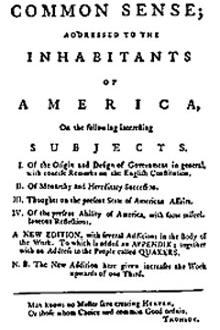
by the combination, they have an undoubted privilege to inquire into the pretensions of both, and equally to reject the usurpations of either.
In the following sheets, the author hath studiously avoided every thing which is personal among ourselves. Compliments as well as censure to individuals make no part thereof. The wise, and the worthy, need not the triumph of a pamphlet; and those whose sentiments are injudicious, or unfriendly, will cease of themselves unless too much pains are bestowed upon their conversion.
The cause of America is in a great measure the cause of all mankind. Many circumstances have, and will arise, which are not local, but universal, and through which the principles of all Lovers of Mankind are affected, and in the Event of which, their Affections are interested. The laying of a Country desolate with Fire and Sword, declaring War against the natural rights of all Mankind, and extirpating the Defenders thereof from the Face of the Earth, is the Concern of every Man to wh

- Introduction
- Story Of King Shahryar and His Brother
- a. Tale of the Bull and the Ass
- 1. Tale of the Trader and the Jinni
- a. The First Shaykh's Story
- b. The Second Shaykh's Story
- c. The Third Shaykh's Story
- 2. The Fisherman and the Jinni
- a. Tale of the Wazir and the Sage Duban
- ab. Story of King Sindibad and His Falcon
- ac. Tale of the Husband and the Parrot
- ad. Tale of the Prince and the Ogress
- b. Tale of the Ensorcelled Prince
- a. Tale of the Wazir and the Sage Duban
- 3. The Porter and the Three Ladies of Baghdad
- a. The First Kalandar's Tale
- b. The Second Kalandar's Tale
- ba. Tale of the Envier and the Envied
- c. The Third Kalandar's Tale
- d. The Eldest Lady's Tale
- e. Tale of the Portress
- Conclusion of the Story of the Porter and the Three Ladies
- 4. Tale of the Three Apples
- 5. Tale of Nur Al-din Ali and his Son
- 6. The Hunchback's Tale
- a. The Nazarene Broker's Story
- b. The Reeve's Tale
- c. Tale of the Jewish Doctor
- d. Tale of the Tailor
- e. The Barber's Tale of Himself
- ea. The Barber's Tale of his First Brother
- eb. The Barber's Tale of his Second Brother
- ec. The Barber's Tale of his Third Brother
- ed. The Barber's Tale of his Fourth Brother
- ee. The Barber's Tale of his Fifth Brother
- ef. The Barber's Tale of his Sixth Brother
- The End of the Tailor's Tale
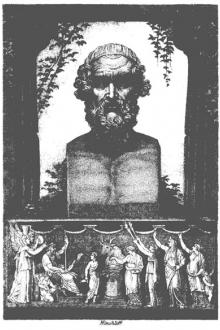
o fight bravely with men? For I did not come hither to fight on account of the warlike Trojans, seeing that they are blameless as respects me. Since they have never driven away my oxen, nor my horses either nor ever injured my crops in fertile and populous Phthia: for very many shadowy mountains, and the resounding sea, are between us. But thee, O most shameless man, we follow, that thou mayest rejoice; seeking satisfaction from the Trojans for Menelaus, and for thy pleasure, shameless one! for which things thou hast neither respect nor care. And now thou hast threatened that thou wilt in person wrest from me my prize, for which I have toiled much, and which the sons of the Greeks have given me. Whenever the Greeks sacked a well-inhabited city of the Trojans, I never have had a prize equal to thine; although my hands perform the greater portion of the tumultuous conflict, yet when the division [of spoil] may come, a much greater prize is given to thee, while I come to my ships, when I am fatigued with fightin
not these items, but rather the tools used create such items. After all, wire, metal tubes, planks, and bricks don't magically appear; rather they are created and formed as entities unto themselves. On a similar note, graphics don't magically appear on the screen -- typically they consist of lower-level graphics primatives (lines, rectangles, and individual pixels, for example).
So the graphics library, then, can be thought of as the low-level graphics primatives used to build more complex objects (spheres, boxes, complex polygons, etc.). Those complex objects are then used to build even more complicated shapes and figures.
The graphics library installed was the freeware implementation of OpenGL called Mesa.
2.2. The Graphics Modeller
Since the graphics renderer is, ideally, completely hidden from the end-user, we'll deal with that last (besides which, modelling is the next logical step in keeping with my house-building analogy). However, when it comes to the actual i
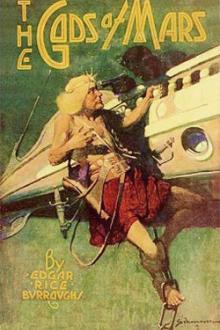
sult of its peculiar method of feeding, which consists in cropping off the tender vegetation with its razorlike talons and sucking it up from its two mouths, which lie one in the palm of each hand, through its arm-like throats.
In addition to the features which I have already described, the beast was equipped with a massive tail about six feet in length, quite round where it joined the body, but tapering to a flat, thin blade toward the end, which trailed at right angles to the ground.
By far the most remarkable feature of this most remarkable creature, however, were the two tiny replicas of it, each about six inches in length, which dangled, one on either side, from its armpits. They were suspended by a small stem which seemed to grow from the exact tops of their heads to where it connected them with the body of the adult.
Whether they were the young, or merely portions of a composite creature, I did not know.
As I had been scrutinizing this weird monstrosity the balance of the he

o or three large brick-and-stone homesteads, withwell-walled orchards and ornamental weathercocks, standing closeupon the road, and lifting more imposing fronts than the rectory,which peeped from among the trees on the other side of thechurchyard:--a village which showed at once the summits of itssocial life, and told the practised eye that there was no great parkand manor-house in the vicinity, but that there were several chiefsin Raveloe who could farm badly quite at their ease, drawing enoughmoney from their bad farming, in those war times, to live in arollicking fashion, and keep a jolly Christmas, Whitsun, and Eastertide.
It was fifteen years since Silas Marner had first come to Raveloe;he was then simply a pallid young man, with prominent short-sightedbrown eyes, whose appearance would have had nothing strange forpeople of average culture and experience, but for the villagers nearwhom he had come to settle it had mysterious peculiarities whichcorresponded with the exceptional nature of
ent to put Lord Goring into a class quite by himself. But he is developing charmingly!
LORD CAVERSHAM. Into what?
MABEL CHILTERN. [With a little curtsey.] I hope to let you know very soon, Lord Caversham!
MASON. [Announcing guests.] Lady Markby. Mrs. Cheveley.
[Enter LADY MARKBY and MRS. CHEVELEY. LADY MARKBY is a pleasant, kindly, popular woman, with gray hair e la marquise and good lace. MRS. CHEVELEY, who accompanies her, is tall and rather slight. Lips very thin and highly-coloured, a line of scarlet on a pallid face. Venetian red hair, aquiline nose, and long throat. Rouge accentuates the natural paleness of her complexion. Gray-green eyes that move restlessly. She is in heliotrope, with diamonds. She looks rather like an orchid, and makes great demands on one's curiosity. In all her movements she is extremely graceful. A work of art, on the whole, but showing the influence of too many schools.]
LADY MARKBY. Good evening, dear Gertrude! So kind of you to let me bring my
ter constitute "character," each of them as a "moral virtue" (literally "a goodness of character"), and upon them primarily depends the realisation of happiness. This is the case at least for the great majority of men, and for all men their possession is an indispensable basis of the best, i e, the most desirable life. They form the chief or central subject-matter of the Ethics.
Perhaps the truest way of conceiving Aristotle's meaning here is to regard a moral virtue as a form of obedience to a maxim or rule of conduct accepted by the agent as valid for a class of recurrent situations in human life. Such obedience requires knowledge of the rule and acceptance of it as the rule of the agent's own actions, but not necessarily knowledge of its ground or of its systematic connexion with other similarly known and similarly accepted rules (It may be remarked that the Greek word usually translated "reason," means in almost all cases in the Ethics such a rule, and not the fa
is, Colonel Lamon and others, and he promptly chose Colonel Lamon, who alone accompanied him on his journey from Harrisburg to Philadelphia and thence to Washington.
Before leaving the room Governor Curtin asked Colonel Lamon whether he was armed, and he answered by exhibiting a brace of fine pistols, a huge bowie knife, a black jack, and a pair of brass knuckles. Curtin answered: "You'll do," and they were started on their journey after all the telegraph wires had been cut. We awaited through what seemed almost an endless night, until the east was purpled with the coming of another day, when Colonel Scott, who had managed the whole scheme, reunited the wires and soon received from Colonel Lamon this dispatch: "Plums delivered nuts safely," which gave us the intensely gratifying information that Lincoln had arrived in Washington.
Of all the Presidents of the United States, and indeed of all the great statesmen who have made their indelible impress upon the policy of the Republic, Abraham Lincoln
t. I was homesick, and Aunt could never bear to hear of those things. It was before your marriage, and all the kinder, for you were the queen of the night, yet had a word for poor little me."
Mrs. Snowdon was pale to the lips, and Maurice impatiently tapped the arm of his chair, while the girl innocently chatted on.
"I am sorry the general is such an invalid; yet I dare say you find great happiness in taking care of him. It is so pleasant to be of use to those we love." And as she spoke, Octavia leaned over her cousin to hand him the glove he had dropped.
The affectionate smile that accompanied the act made the color deepen again in Mrs. Snowdon's cheek, and lit a spark in her softened eyes. Her lips curled and her voice was sweetly sarcastic as she answered, "Yes, it is charming to devote one's life to these dear invalids, and find one's reward in their gratitude. Youth, beauty, health, and happiness are small sacrifices if one wins a little comfort for the poor sufferers."
The gi
by the combination, they have an undoubted privilege to inquire into the pretensions of both, and equally to reject the usurpations of either.
In the following sheets, the author hath studiously avoided every thing which is personal among ourselves. Compliments as well as censure to individuals make no part thereof. The wise, and the worthy, need not the triumph of a pamphlet; and those whose sentiments are injudicious, or unfriendly, will cease of themselves unless too much pains are bestowed upon their conversion.
The cause of America is in a great measure the cause of all mankind. Many circumstances have, and will arise, which are not local, but universal, and through which the principles of all Lovers of Mankind are affected, and in the Event of which, their Affections are interested. The laying of a Country desolate with Fire and Sword, declaring War against the natural rights of all Mankind, and extirpating the Defenders thereof from the Face of the Earth, is the Concern of every Man to wh
- Introduction
- Story Of King Shahryar and His Brother
- a. Tale of the Bull and the Ass
- 1. Tale of the Trader and the Jinni
- a. The First Shaykh's Story
- b. The Second Shaykh's Story
- c. The Third Shaykh's Story
- 2. The Fisherman and the Jinni
- a. Tale of the Wazir and the Sage Duban
- ab. Story of King Sindibad and His Falcon
- ac. Tale of the Husband and the Parrot
- ad. Tale of the Prince and the Ogress
- b. Tale of the Ensorcelled Prince
- a. Tale of the Wazir and the Sage Duban
- 3. The Porter and the Three Ladies of Baghdad
- a. The First Kalandar's Tale
- b. The Second Kalandar's Tale
- ba. Tale of the Envier and the Envied
- c. The Third Kalandar's Tale
- d. The Eldest Lady's Tale
- e. Tale of the Portress
- Conclusion of the Story of the Porter and the Three Ladies
- 4. Tale of the Three Apples
- 5. Tale of Nur Al-din Ali and his Son
- 6. The Hunchback's Tale
- a. The Nazarene Broker's Story
- b. The Reeve's Tale
- c. Tale of the Jewish Doctor
- d. Tale of the Tailor
- e. The Barber's Tale of Himself
- ea. The Barber's Tale of his First Brother
- eb. The Barber's Tale of his Second Brother
- ec. The Barber's Tale of his Third Brother
- ed. The Barber's Tale of his Fourth Brother
- ee. The Barber's Tale of his Fifth Brother
- ef. The Barber's Tale of his Sixth Brother
- The End of the Tailor's Tale
o fight bravely with men? For I did not come hither to fight on account of the warlike Trojans, seeing that they are blameless as respects me. Since they have never driven away my oxen, nor my horses either nor ever injured my crops in fertile and populous Phthia: for very many shadowy mountains, and the resounding sea, are between us. But thee, O most shameless man, we follow, that thou mayest rejoice; seeking satisfaction from the Trojans for Menelaus, and for thy pleasure, shameless one! for which things thou hast neither respect nor care. And now thou hast threatened that thou wilt in person wrest from me my prize, for which I have toiled much, and which the sons of the Greeks have given me. Whenever the Greeks sacked a well-inhabited city of the Trojans, I never have had a prize equal to thine; although my hands perform the greater portion of the tumultuous conflict, yet when the division [of spoil] may come, a much greater prize is given to thee, while I come to my ships, when I am fatigued with fightin
not these items, but rather the tools used create such items. After all, wire, metal tubes, planks, and bricks don't magically appear; rather they are created and formed as entities unto themselves. On a similar note, graphics don't magically appear on the screen -- typically they consist of lower-level graphics primatives (lines, rectangles, and individual pixels, for example).
So the graphics library, then, can be thought of as the low-level graphics primatives used to build more complex objects (spheres, boxes, complex polygons, etc.). Those complex objects are then used to build even more complicated shapes and figures.
The graphics library installed was the freeware implementation of OpenGL called Mesa.
2.2. The Graphics Modeller
Since the graphics renderer is, ideally, completely hidden from the end-user, we'll deal with that last (besides which, modelling is the next logical step in keeping with my house-building analogy). However, when it comes to the actual i
sult of its peculiar method of feeding, which consists in cropping off the tender vegetation with its razorlike talons and sucking it up from its two mouths, which lie one in the palm of each hand, through its arm-like throats.
In addition to the features which I have already described, the beast was equipped with a massive tail about six feet in length, quite round where it joined the body, but tapering to a flat, thin blade toward the end, which trailed at right angles to the ground.
By far the most remarkable feature of this most remarkable creature, however, were the two tiny replicas of it, each about six inches in length, which dangled, one on either side, from its armpits. They were suspended by a small stem which seemed to grow from the exact tops of their heads to where it connected them with the body of the adult.
Whether they were the young, or merely portions of a composite creature, I did not know.
As I had been scrutinizing this weird monstrosity the balance of the he
o or three large brick-and-stone homesteads, withwell-walled orchards and ornamental weathercocks, standing closeupon the road, and lifting more imposing fronts than the rectory,which peeped from among the trees on the other side of thechurchyard:--a village which showed at once the summits of itssocial life, and told the practised eye that there was no great parkand manor-house in the vicinity, but that there were several chiefsin Raveloe who could farm badly quite at their ease, drawing enoughmoney from their bad farming, in those war times, to live in arollicking fashion, and keep a jolly Christmas, Whitsun, and Eastertide.
It was fifteen years since Silas Marner had first come to Raveloe;he was then simply a pallid young man, with prominent short-sightedbrown eyes, whose appearance would have had nothing strange forpeople of average culture and experience, but for the villagers nearwhom he had come to settle it had mysterious peculiarities whichcorresponded with the exceptional nature of
ent to put Lord Goring into a class quite by himself. But he is developing charmingly!
LORD CAVERSHAM. Into what?
MABEL CHILTERN. [With a little curtsey.] I hope to let you know very soon, Lord Caversham!
MASON. [Announcing guests.] Lady Markby. Mrs. Cheveley.
[Enter LADY MARKBY and MRS. CHEVELEY. LADY MARKBY is a pleasant, kindly, popular woman, with gray hair e la marquise and good lace. MRS. CHEVELEY, who accompanies her, is tall and rather slight. Lips very thin and highly-coloured, a line of scarlet on a pallid face. Venetian red hair, aquiline nose, and long throat. Rouge accentuates the natural paleness of her complexion. Gray-green eyes that move restlessly. She is in heliotrope, with diamonds. She looks rather like an orchid, and makes great demands on one's curiosity. In all her movements she is extremely graceful. A work of art, on the whole, but showing the influence of too many schools.]
LADY MARKBY. Good evening, dear Gertrude! So kind of you to let me bring my