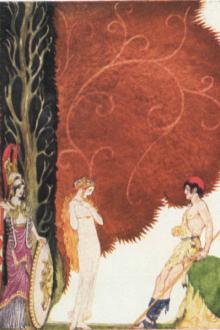
council made up of the chief men of this land of Ithaka. I shall go tothe council and speak there. I shall ask that you leave this house ofmine and feast on goods that you yourselves have gathered. Let the chiefmen judge whether I speak in fairness to you or not. If you do not heedwhat I will say openly at the council, before all the chief men of ourland, then let it be on your own heads what will befall you.'
All the wooers marvelled that Telemachus spoke so boldly. And one said,'Because his father, Odysseus, was king, this youth thinks he should beking by inheritance. But may Zeus, the god, never grant that he beking.'
Then said Telemachus, 'If the god Zeus should grant that I be King, I amready to take up the Kingship of the land of Ithaka with all its toilsand all its dangers.' And when Telemachus said that he looked like ayoung king indeed.
But they sat in peace and listened to what the minstrel sang. And whenevening came the wooers left the hall and went each to his own house.Tele

ched him I could catch the tones of his full, sonorous voice, and see his waving, outstretched arms. In his right hand he held the looped sceptre which, by his express wish I send to you with the drawings. I could see the flash of the jewels strung upon the wires, and in the great stillness, hear the tinkling of its golden bells.
"Presently, too, I seemed to become aware of another presence, and now you will understand why I desire and must ask that my identity should be suppressed. Naturally enough I do not wish to be mixed up with a superstitious tale which is, on the face of it, impossible and absurd. Yet under all the circumstances I think it right to tell you that I saw, or thought I saw, something gather in the shadow of the central dolmen, or emerge from its rude chamber--I know not which for certain--something bright and glorious which gradually took the form of a woman upon whose forehead burned a star-like fire.
"At any rate the vision or reflection, or whatever it was, startled me so

having succeeded in catching the name of "Charles Bovary," having had it dictated to him, spelt out, and re-read, at once ordered the poor devil to go and sit down on the punishment form at the foot of the master's desk. He got up, but before going hesitated.
"What are you looking for?" asked the master.
"My c-a-p," timidly said the "new fellow," casting troubled looks round him.
"Five hundred lines for all the class!" shouted in a furious voice stopped, like the Quos ego*, a fresh outburst. "Silence!" continued the master indignantly, wiping his brow with his handkerchief, which he had just taken from his cap. "As to you, 'new boy,' you will conjugate 'ridiculus sum'** twenty times."
Then, in a gentler tone, "Come, you'll find your cap again; it hasn't been stolen."
*A quotation from the Aeneid signifying a threat.
**I am ridiculous.
Quiet was restored. Heads bent over desks, and the "new fellow" remained for two hours in an exemplary attitude, although from t

uty clung to her father in terror, which became all the greater when she saw how frightened he was. But when the Beast really appeared, though she trembled at the sight of him, she made a great effort to hide her horror, and saluted him respectfully.
This evidently pleased the Beast. After looking at her he said, in a tone that might have struck terror into the boldest heart, though he did not seem to be angry:
"Good-evening, old man. Good-evening, Beauty."
The merchant was too terrified to reply, but Beauty answered sweetly:
"Good-evening, Beast."
"Have you come willingly?" asked the Beast. "Will you be content to stay here when your father goes away?"
Beauty answered bravely that she was quite prepared to stay.
"I am pleased with you," said the Beast. "As you have come of your own accord, you may stay. As for you, old man," he added, turning to the merchant, "at sunrise to-morrow you will take your departure. When the bell rings get up quickly and eat your br

ring accidents, was an adventure for volunteers.
The population of the United States was stabilized at forty-million souls.
One bright morning in the Chicago Lying-in Hospital, a man named Edward K. Wehling, Jr., waited for his wife to give birth. He was the only man waiting. Not many people were born a day any more.
Wehling was fifty-six, a mere stripling in a population whose average age was one hundred and twenty-nine.
X-rays had revealed that his wife was going to have triplets. The children would be his first.
Young Wehling was hunched in his chair, his head in his hand. He was so rumpled, so still and colorless as to be virtually invisible. His camouflage was perfect, since the waiting room had a disorderly and demoralized air, too. Chairs and ashtrays had been moved away from the walls. The floor was paved with spattered dropcloths.
The room was being redecorated. It was being redecorated as a memorial to a man who had voluntee

like to see my father allowing any of us to go to the theatre; he'd sooner have killed us, any day. However, I went for an hour or so and saw Nastasia Philipovna, and I never slept a wink all night after. Next morning my father happened to give me two government loan bonds to sell, worth nearly five thousand roubles each. 'Sell them,' said he, 'and then take seven thousand five hundred roubles to the office, give them to the cashier, and bring me back the rest of the ten thousand, without looking in anywhere on the way; look sharp, I shall be waiting for you.' Well, I sold the bonds, but I didn't take the seven thousand roubles to the office; I went straight to the English shop and chose a pair of earrings, with a diamond the size of a nut in each. They cost four hundred roubles more than I had, so I gave my name, and they trusted me. With the earrings I went at once to Zaleshoff's. 'Come on!' I said, 'come on to Nastasia Philipovna's,' and off we went without more ado. I tell you I hadn't a notion of what w

The Purloined Letter
The Thousand-and-Second Tale of Scheherezade
A Descent into the Maelström
Von Kempelen and his Discovery
Mesmeric Revelation
The Facts in the Case of M. Valdemar
The Black Cat
The Fall of the House of Usher
Silence -- a Fable
The Masque of the Red Death
The Cask of Amontillado
The Imp of the Perverse
The Island of the Fay
The Assignation
The Pit and the Pendulum
The Premature Burial
The Domain of Arnheim
Landor's Cottage
William Wilson
The Tell-Tale Heart
Berenice
Eleonora

successive Gaol Lane and King Street of other periods - he would look upward to the east and see the arched flight of steps to which the highway had to resort in climbing the slope, and downward to the west, glimpsing the old brick colonial schoolhouse that smiles across the road at the ancient Sign of Shakespeare's Head where the Providence Gazette and Country-Journal was printed before the Revolution. Then came the exquisite First Baptist Church of 1775, luxurious with its matchless Gibbs steeple, and the Georgian roofs and cupolas hovering by. Here and to the southward the neighbourhood became better, flowering at last into a marvellous group of early mansions; but still the little ancient lanes led off down the precipice to the west, spectral in their many-gabled archaism and dipping to a riot of iridescent decay where the wicked old water-front recalls its proud East India days amidst polyglot vice and squalor, rotting wharves, and blear-eyed ship-chandleries, with such surviving alley names as Packet, B
ecrets.
After all, Theseus damn well was.
*
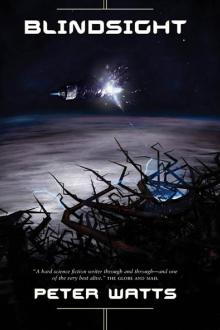
She'd taken us a good fifteen AUs towards our destination before something scared her off course. Then she'd skidded north like a startled cat and started climbing: a wild high three-gee burn off the ecliptic, thirteen hundred tonnes of momentum bucking against Newton's First. She'd emptied her Penn tanks, bled dry her substrate mass, squandered a hundred forty days' of fuel in hours. Then a long cold coast through the abyss, years of stingy accounting, the thrust of every antiproton weighed against the drag of sieving it from the void. Teleportation isn't magic: the Icarus stream couldn't send us the actual antimatter it made, only the quantum specs. Theseus had to filterfeed the raw material from space, one ion at a time. For long dark years she'd made do on pure inertia, hording every swallowed atom. Then a flip; ionizing lasers strafing the space ahead; a ramscoop thrown wide in a hard brake. The weight of a trillion trilli

r guided by the example of Christ in the treatment of enemies; therefore they cannot be agreeable to the will of God, and therefore their overthrow by a spiritual regeneration of their subjects is inevitable.
"We regard as unchristian and unlawful not only all wars, whether offensive or defensive, but all preparations for war; every naval ship, every arsenal, every fortification, we regard as unchristian and unlawful; the existence of any kind of standing army, all military chieftains, all monuments commemorative of victory over a fallen foe, all trophies won in battle, all celebrations in honor of military exploits, all appropriations for defense by arms; we regard as unchristian and unlawful every edict of government requiring of its subjects military service.
"Hence we deem it unlawful to bear arms, and we cannot hold any office which imposes on its incumbent the obligation to compel men to do right on pain of imprisonment or death. We therefore voluntarily exclude ourselves from every legisl
council made up of the chief men of this land of Ithaka. I shall go tothe council and speak there. I shall ask that you leave this house ofmine and feast on goods that you yourselves have gathered. Let the chiefmen judge whether I speak in fairness to you or not. If you do not heedwhat I will say openly at the council, before all the chief men of ourland, then let it be on your own heads what will befall you.'
All the wooers marvelled that Telemachus spoke so boldly. And one said,'Because his father, Odysseus, was king, this youth thinks he should beking by inheritance. But may Zeus, the god, never grant that he beking.'
Then said Telemachus, 'If the god Zeus should grant that I be King, I amready to take up the Kingship of the land of Ithaka with all its toilsand all its dangers.' And when Telemachus said that he looked like ayoung king indeed.
But they sat in peace and listened to what the minstrel sang. And whenevening came the wooers left the hall and went each to his own house.Tele
ched him I could catch the tones of his full, sonorous voice, and see his waving, outstretched arms. In his right hand he held the looped sceptre which, by his express wish I send to you with the drawings. I could see the flash of the jewels strung upon the wires, and in the great stillness, hear the tinkling of its golden bells.
"Presently, too, I seemed to become aware of another presence, and now you will understand why I desire and must ask that my identity should be suppressed. Naturally enough I do not wish to be mixed up with a superstitious tale which is, on the face of it, impossible and absurd. Yet under all the circumstances I think it right to tell you that I saw, or thought I saw, something gather in the shadow of the central dolmen, or emerge from its rude chamber--I know not which for certain--something bright and glorious which gradually took the form of a woman upon whose forehead burned a star-like fire.
"At any rate the vision or reflection, or whatever it was, startled me so
having succeeded in catching the name of "Charles Bovary," having had it dictated to him, spelt out, and re-read, at once ordered the poor devil to go and sit down on the punishment form at the foot of the master's desk. He got up, but before going hesitated.
"What are you looking for?" asked the master.
"My c-a-p," timidly said the "new fellow," casting troubled looks round him.
"Five hundred lines for all the class!" shouted in a furious voice stopped, like the Quos ego*, a fresh outburst. "Silence!" continued the master indignantly, wiping his brow with his handkerchief, which he had just taken from his cap. "As to you, 'new boy,' you will conjugate 'ridiculus sum'** twenty times."
Then, in a gentler tone, "Come, you'll find your cap again; it hasn't been stolen."
*A quotation from the Aeneid signifying a threat.
**I am ridiculous.
Quiet was restored. Heads bent over desks, and the "new fellow" remained for two hours in an exemplary attitude, although from t
uty clung to her father in terror, which became all the greater when she saw how frightened he was. But when the Beast really appeared, though she trembled at the sight of him, she made a great effort to hide her horror, and saluted him respectfully.
This evidently pleased the Beast. After looking at her he said, in a tone that might have struck terror into the boldest heart, though he did not seem to be angry:
"Good-evening, old man. Good-evening, Beauty."
The merchant was too terrified to reply, but Beauty answered sweetly:
"Good-evening, Beast."
"Have you come willingly?" asked the Beast. "Will you be content to stay here when your father goes away?"
Beauty answered bravely that she was quite prepared to stay.
"I am pleased with you," said the Beast. "As you have come of your own accord, you may stay. As for you, old man," he added, turning to the merchant, "at sunrise to-morrow you will take your departure. When the bell rings get up quickly and eat your br
ring accidents, was an adventure for volunteers.
The population of the United States was stabilized at forty-million souls.
One bright morning in the Chicago Lying-in Hospital, a man named Edward K. Wehling, Jr., waited for his wife to give birth. He was the only man waiting. Not many people were born a day any more.
Wehling was fifty-six, a mere stripling in a population whose average age was one hundred and twenty-nine.
X-rays had revealed that his wife was going to have triplets. The children would be his first.
Young Wehling was hunched in his chair, his head in his hand. He was so rumpled, so still and colorless as to be virtually invisible. His camouflage was perfect, since the waiting room had a disorderly and demoralized air, too. Chairs and ashtrays had been moved away from the walls. The floor was paved with spattered dropcloths.
The room was being redecorated. It was being redecorated as a memorial to a man who had voluntee
like to see my father allowing any of us to go to the theatre; he'd sooner have killed us, any day. However, I went for an hour or so and saw Nastasia Philipovna, and I never slept a wink all night after. Next morning my father happened to give me two government loan bonds to sell, worth nearly five thousand roubles each. 'Sell them,' said he, 'and then take seven thousand five hundred roubles to the office, give them to the cashier, and bring me back the rest of the ten thousand, without looking in anywhere on the way; look sharp, I shall be waiting for you.' Well, I sold the bonds, but I didn't take the seven thousand roubles to the office; I went straight to the English shop and chose a pair of earrings, with a diamond the size of a nut in each. They cost four hundred roubles more than I had, so I gave my name, and they trusted me. With the earrings I went at once to Zaleshoff's. 'Come on!' I said, 'come on to Nastasia Philipovna's,' and off we went without more ado. I tell you I hadn't a notion of what w
The Purloined Letter
The Thousand-and-Second Tale of Scheherezade
A Descent into the Maelström
Von Kempelen and his Discovery
Mesmeric Revelation
The Facts in the Case of M. Valdemar
The Black Cat
The Fall of the House of Usher
Silence -- a Fable
The Masque of the Red Death
The Cask of Amontillado
The Imp of the Perverse
The Island of the Fay
The Assignation
The Pit and the Pendulum
The Premature Burial
The Domain of Arnheim
Landor's Cottage
William Wilson
The Tell-Tale Heart
Berenice
Eleonora
successive Gaol Lane and King Street of other periods - he would look upward to the east and see the arched flight of steps to which the highway had to resort in climbing the slope, and downward to the west, glimpsing the old brick colonial schoolhouse that smiles across the road at the ancient Sign of Shakespeare's Head where the Providence Gazette and Country-Journal was printed before the Revolution. Then came the exquisite First Baptist Church of 1775, luxurious with its matchless Gibbs steeple, and the Georgian roofs and cupolas hovering by. Here and to the southward the neighbourhood became better, flowering at last into a marvellous group of early mansions; but still the little ancient lanes led off down the precipice to the west, spectral in their many-gabled archaism and dipping to a riot of iridescent decay where the wicked old water-front recalls its proud East India days amidst polyglot vice and squalor, rotting wharves, and blear-eyed ship-chandleries, with such surviving alley names as Packet, B
ecrets.
After all, Theseus damn well was.
*
She'd taken us a good fifteen AUs towards our destination before something scared her off course. Then she'd skidded north like a startled cat and started climbing: a wild high three-gee burn off the ecliptic, thirteen hundred tonnes of momentum bucking against Newton's First. She'd emptied her Penn tanks, bled dry her substrate mass, squandered a hundred forty days' of fuel in hours. Then a long cold coast through the abyss, years of stingy accounting, the thrust of every antiproton weighed against the drag of sieving it from the void. Teleportation isn't magic: the Icarus stream couldn't send us the actual antimatter it made, only the quantum specs. Theseus had to filterfeed the raw material from space, one ion at a time. For long dark years she'd made do on pure inertia, hording every swallowed atom. Then a flip; ionizing lasers strafing the space ahead; a ramscoop thrown wide in a hard brake. The weight of a trillion trilli
r guided by the example of Christ in the treatment of enemies; therefore they cannot be agreeable to the will of God, and therefore their overthrow by a spiritual regeneration of their subjects is inevitable.
"We regard as unchristian and unlawful not only all wars, whether offensive or defensive, but all preparations for war; every naval ship, every arsenal, every fortification, we regard as unchristian and unlawful; the existence of any kind of standing army, all military chieftains, all monuments commemorative of victory over a fallen foe, all trophies won in battle, all celebrations in honor of military exploits, all appropriations for defense by arms; we regard as unchristian and unlawful every edict of government requiring of its subjects military service.
"Hence we deem it unlawful to bear arms, and we cannot hold any office which imposes on its incumbent the obligation to compel men to do right on pain of imprisonment or death. We therefore voluntarily exclude ourselves from every legisl