
ly little bows and little arrows that looked like children's playthings, but upon these tiny arrows there was a small drop of poison which would kill an elephant or a man as quickly and as surely as a Winchester rifle. Their defense was by means of poison and traps. They would steal through the darkness of the forest and, waiting in ambush, let fly their deadly arrows before they could be discovered. They dug ditches and carefully covered them over with leaves. They fixed spikes in the ground and tipped them with the most deadly poison, and then covered them. Into these ditches and on these spikes man and beast would fall or step to their death.
A lady once writing to a young man in the navy who was almost a stranger, thought "Shall I close this as anybody would, or shall I say a word for my Master?" and, lifting up her heart for a moment, she wrote, telling him that his constant change of scene and place was an apt illustration of the word, "Here we have no continuing city," and asked if he c
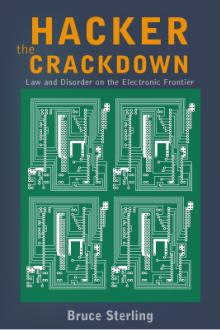
adand do that, I am giving you express permission right now. Enjoyyourself.
You can put the book on disks and give the disks away, aslong as you don't take any money for it.
But this book is not public domain. You can't copyrightit in your own name. I own the copyright. Attempts to piratethis book and make money from selling it may involve you in aserious litigative snarl. Believe me, for the pittance you mightwring out of such an action, it's really not worth it. This bookdon't "belong" to you. In an odd but very genuine way, I feel itdoesn't "belong" to me, either. It's a book about the people ofcyberspace, and distributing it in this way is the best way Iknow to actually make this information available, freely andeasily, to all the people of cyberspace--including people faroutside the borders of the United States, who otherwise may neverhave a chance to see any edition of the book, and who may perhapslearn something useful from this strange story of distant,obscure, but por

in it in a gaseous state. About it at great distances circle not only our earth, but certain kindred bodies called the planets. These shine in the sky because they reflect the light of the sun; they are near enough for us to note their movements quite easily. Night by night their positions change with regard to the fixed stars.
It is well to understand how empty is space. If, as we have said, the sun were a ball nine feet across, our earth would, in proportion, be the size of a one-inch ball, and. at a distance of 323 yards from the sun. The moon would be a speck the size of a small pea, thirty inches from the earth. Nearer to the sun than the earth would be two other very similar specks, the planets Mercury and Venus, at a distance of 125 and 250 yards respectively. Beyond the earth would come the planets Mars, Jupiter, Saturn, Uranus, and Neptune, at distances of 500, 1,680, 3,000, 6,000, and 9,500 yards respectively. There would also be a certain number of very much smaller specks, flying about amon

"I wonder," said the mother, wearily, when they neared the door, "if they've got any coal?"
"Don't worry," said Jennie. "If they haven't I'll go."
"A man run us away," was almost the first greeting that the perturbed George offered when the mother made her inquiry about the coal. "I got a little, though." he added. "I threw it off a car."
Mrs. Gerhardt only smiled, but Jennie laughed.
"How is Veronica?" she inquired.
"She seems to be sleeping," said the father. "I gave her medicine again at five."
While the scanty meal was being prepared the mother went to the sick child's bedside, taking up another long night's vigil quite as a matter of course.
While the supper was being eaten Sebastian offered a suggestion, and his larger experience in social and commercial matters made his proposition worth considering. Though only a car-builder's apprentice, without any education except such as pertained to Lutheran doctrine, to which he objected very strongly, he was

as ripped open by the Bulgarian soldiers, after they had subjected her to as much cruelty as a damsel could survive; they knocked the Baron, her father, on the head for attempting to defend her; My Lady, her mother, was cut in pieces; my poor pupil was served just in the same manner as his sister; and as for the castle, they have not left one stone upon another; they have destroyed all the ducks, and sheep, the barns, and the trees; but we have had our revenge, for the Abares have done the very same thing in a neighboring barony, which belonged to a Bulgarian lord."
At hearing this, Candide fainted away a second time, but, not withstanding, having come to himself again, he said all that it became him to say; he inquired into the cause and effect, as well as into the sufficing reason that had reduced Pangloss to so miserable a condition.
"Alas," replied the preceptor, "it was love; love, the comfort of the human species; love, the preserver of the universe; the soul of all sensible beings; love!

only differed on some point of science," he thought; and being a man of no scientific passions (except in the matter of conveyancing), he even added: "It is nothing worse than that!" He gave his friend a few seconds to recover his composure, and then approached the question he had come to put. "Did you ever come across a protege of his--one Hyde?" he asked.
"Hyde?" repeated Lanyon. "No. Never heard of him. Since my time."
That was the amount of information that the lawyer carried back with him to the great, dark bed on which he tossed to and fro, until the small hours of the morning began to grow large. It was a night of little ease to his toiling mind, toiling in mere darkness and beseiged by questions.
Six o'clock struck on the bells of the church that was so conveniently near to Mr. Utterson's dwelling, and still he was digging at the problem. Hitherto it had touched him on the intellectual side alone; but now his imagination also was engaged, or rather enslaved; and as he lay and toss

ow about it, except that she would be better at the bottom of the river than remaining with her benefactress. So the poor child exchanged a benefactress for a benefactor. Fyodor Pavlovitch did not get a penny this time, for the general's widow was furious. She gave them nothing and cursed them both. But he had not reckoned on a dowry; what allured him was the remarkable beauty of the innocent girl, above all her innocent appearance, which had a peculiar attraction for a vicious profligate, who had hitherto admired only the coarser types of feminine beauty.
"Those innocent eyes slit my soul up like a razor," he used to say afterwards, with his loathsome snigger. In a man so depraved this might, of course, mean no more than sensual attraction. As he had received no dowry with his wife, and had, so to speak, taken her "from the halter," he did not stand on ceremony with her. Making her feel that she had "wronged" him, he took advantage of her phenomenal meekness and submissiveness to trample on the elemen

s can bemade, what is their order of precedence, which can be debated, what istheir effect, etc., the common law of the land is settled by thepractice of the U. S. House of Representatives, and not by that of theEnglish Parliament, the U. S. Senate, or any other body.
While in extreme cases there is no difficulty in deciding the questionas to whether the practice of Congress determines the commonparliamentary law, yet between these extremes there must necessarily bea large number of doubtful cases upon which there would be greatdifference of opinion, and to avoid the serious difficulties alwaysarising from a lack of definiteness in the law, every deliberativeassembly should imitate our legislative bodies in adopting Rules ofOrder for the conduct of their business.* [Where the practice ofCongress differs from that of Parliament upon a material point, thecommon law of this country follows the practice of Congress. Thus inevery American deliberative assembly having no rules for conductingbusin
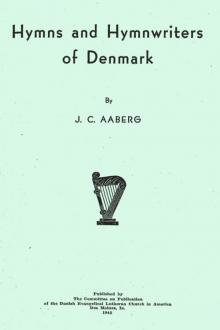
blacken his name and secure his removal, instigated a suit against him for having mismanaged an inheritance left to his children by his first wife. The children themselves appeared in his defence, however, and expressed their complete satisfaction with his administration of their property; and the trumped up charge was wholly disproved. But his enemies still wanted to have him removed and, choosing a new method of attack, forwarded a petition to the king in which they claimed that "Master Hans Chrestensen Sthen because of weakness and old age was incompetent to discharge his duties as a pastor", and asked for his removal to the parishes of Tygelse and Klagstrup. Though the king is reported to have granted the petition, other things seem to have intervened to prevent its execution, and the ill-used pastor appears to have remained at Malmø until his death, the date of which is unknown.
Sthen's fame as a poet and hymnwriter rests mainly on two thin volumes of poetry. A Small Handbook, Containi

as to the Tao have the happiness of attaining to it; those with whom he agrees as to its manifestation have the happiness of attaining to it; and those with whom he agrees in their failure have also the happiness of attaining (to the Tao). (But) when there is not faith sufficient (on his part), a want of faith (in him) ensues (on the part of the others).
24. He who stands on his tiptoes does not stand firm; he who stretches his legs does not walk (easily). (So), he who displays himself does not shine; he who asserts his own views is not distinguished; he who vaunts himself does not find his merit acknowledged; he who is self- conceited has no superiority allowed to him. Such conditions, viewed from the standpoint of the Tao, are like remnants of food, or a tumour on the body, which all dislike. Hence those who pursue (the course) of the Tao do not adopt and allow them.
25. 1. There was something undefined and complete, coming into existence before Heaven and Earth. How still it was and formless,
ly little bows and little arrows that looked like children's playthings, but upon these tiny arrows there was a small drop of poison which would kill an elephant or a man as quickly and as surely as a Winchester rifle. Their defense was by means of poison and traps. They would steal through the darkness of the forest and, waiting in ambush, let fly their deadly arrows before they could be discovered. They dug ditches and carefully covered them over with leaves. They fixed spikes in the ground and tipped them with the most deadly poison, and then covered them. Into these ditches and on these spikes man and beast would fall or step to their death.
A lady once writing to a young man in the navy who was almost a stranger, thought "Shall I close this as anybody would, or shall I say a word for my Master?" and, lifting up her heart for a moment, she wrote, telling him that his constant change of scene and place was an apt illustration of the word, "Here we have no continuing city," and asked if he c
adand do that, I am giving you express permission right now. Enjoyyourself.
You can put the book on disks and give the disks away, aslong as you don't take any money for it.
But this book is not public domain. You can't copyrightit in your own name. I own the copyright. Attempts to piratethis book and make money from selling it may involve you in aserious litigative snarl. Believe me, for the pittance you mightwring out of such an action, it's really not worth it. This bookdon't "belong" to you. In an odd but very genuine way, I feel itdoesn't "belong" to me, either. It's a book about the people ofcyberspace, and distributing it in this way is the best way Iknow to actually make this information available, freely andeasily, to all the people of cyberspace--including people faroutside the borders of the United States, who otherwise may neverhave a chance to see any edition of the book, and who may perhapslearn something useful from this strange story of distant,obscure, but por
in it in a gaseous state. About it at great distances circle not only our earth, but certain kindred bodies called the planets. These shine in the sky because they reflect the light of the sun; they are near enough for us to note their movements quite easily. Night by night their positions change with regard to the fixed stars.
It is well to understand how empty is space. If, as we have said, the sun were a ball nine feet across, our earth would, in proportion, be the size of a one-inch ball, and. at a distance of 323 yards from the sun. The moon would be a speck the size of a small pea, thirty inches from the earth. Nearer to the sun than the earth would be two other very similar specks, the planets Mercury and Venus, at a distance of 125 and 250 yards respectively. Beyond the earth would come the planets Mars, Jupiter, Saturn, Uranus, and Neptune, at distances of 500, 1,680, 3,000, 6,000, and 9,500 yards respectively. There would also be a certain number of very much smaller specks, flying about amon
"I wonder," said the mother, wearily, when they neared the door, "if they've got any coal?"
"Don't worry," said Jennie. "If they haven't I'll go."
"A man run us away," was almost the first greeting that the perturbed George offered when the mother made her inquiry about the coal. "I got a little, though." he added. "I threw it off a car."
Mrs. Gerhardt only smiled, but Jennie laughed.
"How is Veronica?" she inquired.
"She seems to be sleeping," said the father. "I gave her medicine again at five."
While the scanty meal was being prepared the mother went to the sick child's bedside, taking up another long night's vigil quite as a matter of course.
While the supper was being eaten Sebastian offered a suggestion, and his larger experience in social and commercial matters made his proposition worth considering. Though only a car-builder's apprentice, without any education except such as pertained to Lutheran doctrine, to which he objected very strongly, he was
as ripped open by the Bulgarian soldiers, after they had subjected her to as much cruelty as a damsel could survive; they knocked the Baron, her father, on the head for attempting to defend her; My Lady, her mother, was cut in pieces; my poor pupil was served just in the same manner as his sister; and as for the castle, they have not left one stone upon another; they have destroyed all the ducks, and sheep, the barns, and the trees; but we have had our revenge, for the Abares have done the very same thing in a neighboring barony, which belonged to a Bulgarian lord."
At hearing this, Candide fainted away a second time, but, not withstanding, having come to himself again, he said all that it became him to say; he inquired into the cause and effect, as well as into the sufficing reason that had reduced Pangloss to so miserable a condition.
"Alas," replied the preceptor, "it was love; love, the comfort of the human species; love, the preserver of the universe; the soul of all sensible beings; love!
only differed on some point of science," he thought; and being a man of no scientific passions (except in the matter of conveyancing), he even added: "It is nothing worse than that!" He gave his friend a few seconds to recover his composure, and then approached the question he had come to put. "Did you ever come across a protege of his--one Hyde?" he asked.
"Hyde?" repeated Lanyon. "No. Never heard of him. Since my time."
That was the amount of information that the lawyer carried back with him to the great, dark bed on which he tossed to and fro, until the small hours of the morning began to grow large. It was a night of little ease to his toiling mind, toiling in mere darkness and beseiged by questions.
Six o'clock struck on the bells of the church that was so conveniently near to Mr. Utterson's dwelling, and still he was digging at the problem. Hitherto it had touched him on the intellectual side alone; but now his imagination also was engaged, or rather enslaved; and as he lay and toss
ow about it, except that she would be better at the bottom of the river than remaining with her benefactress. So the poor child exchanged a benefactress for a benefactor. Fyodor Pavlovitch did not get a penny this time, for the general's widow was furious. She gave them nothing and cursed them both. But he had not reckoned on a dowry; what allured him was the remarkable beauty of the innocent girl, above all her innocent appearance, which had a peculiar attraction for a vicious profligate, who had hitherto admired only the coarser types of feminine beauty.
"Those innocent eyes slit my soul up like a razor," he used to say afterwards, with his loathsome snigger. In a man so depraved this might, of course, mean no more than sensual attraction. As he had received no dowry with his wife, and had, so to speak, taken her "from the halter," he did not stand on ceremony with her. Making her feel that she had "wronged" him, he took advantage of her phenomenal meekness and submissiveness to trample on the elemen
s can bemade, what is their order of precedence, which can be debated, what istheir effect, etc., the common law of the land is settled by thepractice of the U. S. House of Representatives, and not by that of theEnglish Parliament, the U. S. Senate, or any other body.
While in extreme cases there is no difficulty in deciding the questionas to whether the practice of Congress determines the commonparliamentary law, yet between these extremes there must necessarily bea large number of doubtful cases upon which there would be greatdifference of opinion, and to avoid the serious difficulties alwaysarising from a lack of definiteness in the law, every deliberativeassembly should imitate our legislative bodies in adopting Rules ofOrder for the conduct of their business.* [Where the practice ofCongress differs from that of Parliament upon a material point, thecommon law of this country follows the practice of Congress. Thus inevery American deliberative assembly having no rules for conductingbusin
blacken his name and secure his removal, instigated a suit against him for having mismanaged an inheritance left to his children by his first wife. The children themselves appeared in his defence, however, and expressed their complete satisfaction with his administration of their property; and the trumped up charge was wholly disproved. But his enemies still wanted to have him removed and, choosing a new method of attack, forwarded a petition to the king in which they claimed that "Master Hans Chrestensen Sthen because of weakness and old age was incompetent to discharge his duties as a pastor", and asked for his removal to the parishes of Tygelse and Klagstrup. Though the king is reported to have granted the petition, other things seem to have intervened to prevent its execution, and the ill-used pastor appears to have remained at Malmø until his death, the date of which is unknown.
Sthen's fame as a poet and hymnwriter rests mainly on two thin volumes of poetry. A Small Handbook, Containi
as to the Tao have the happiness of attaining to it; those with whom he agrees as to its manifestation have the happiness of attaining to it; and those with whom he agrees in their failure have also the happiness of attaining (to the Tao). (But) when there is not faith sufficient (on his part), a want of faith (in him) ensues (on the part of the others).
24. He who stands on his tiptoes does not stand firm; he who stretches his legs does not walk (easily). (So), he who displays himself does not shine; he who asserts his own views is not distinguished; he who vaunts himself does not find his merit acknowledged; he who is self- conceited has no superiority allowed to him. Such conditions, viewed from the standpoint of the Tao, are like remnants of food, or a tumour on the body, which all dislike. Hence those who pursue (the course) of the Tao do not adopt and allow them.
25. 1. There was something undefined and complete, coming into existence before Heaven and Earth. How still it was and formless,