Description
Edgar Allan Poe is one of the primary figures of American nineteenth-century literature. His writing was heavily influenced by Romanticism ideals of emotion and feeling, and although mostly known for his Gothic-tinged horror, his tales jump between many different genres, including science-fiction, satire, humor, mystery, and even early detective fiction.
Poe mostly wrote short stories and poems, published in magazines and periodicals like the Southern Literary Messenger and Graham’s Magazine, although he also turned his hand to essays and novels (including The Narrative of Arthur Gordon Pym of Nantucket). He was one of the first American writers to pursue writing as a career, but was better received in France than in his native country. He struggled to make ends meet and resorted to work as a literary critic. His reputation suffered a further blow after his unfortunately early death in 1849 at the age of 40, when a rival not only wrote an extremely unflattering obituary, but bought the rights to his work and published a compilation with a hit piece for an introduction. This undeserved reputation took many decades to fade, but didn’t hinder praise from other notable authors including Arthur Conan Doyle and H. P. Lovecraft.
Collected here are all of Poe’s short fiction stories, in order of their original magazine publication. Notable stories include “The Gold-Bug,” “The Black Cat,” “The Fall of the House of Usher,” “The Masque of the Red Death,” “The Pit and the Pendulum,” “The Murders in the Rue Morgue,” and many more.

Description
After defeating enemies in battle, Roman citizens celebrate in the streets as Julius Caesar and his entourage make their way through the city. As Caesar passes a soothsayer, he receives an ominous warning: “Beware the ides of March,” which he immediately disregards. Meanwhile, some of his closest followers are convinced their leader has become too powerful and plot his removal. Plutarch’s Lives of the Noble Grecians and Romans was Shakespeare’s primary source for Julius Caesar.
This Standard Ebooks production is based on William George Clark and William Aldis Wright’s 1887 Victoria edition, which is taken from the Globe edition.

Description
King Lear is a tragedy by Shakespeare, written about 1605 or 1606. Shakespeare based it on the legendary King Leir of the Britons, whose story is outlined in Geoffrey of Monmouth’s pseudohistorical History of the Kings of Britain (written in about 1136).
The play tells the tale of the aged King Lear who is passing on the control of his kingdom to his three daughters. He asks each of them to express their love for him, and the first two, Goneril and Regan do so effusively, saying they love him above all things. But his youngest daughter, Cordelia, is compelled to be truthful and says that she must reserve some love for her future husband. Lear, enraged, cuts her off without any inheritance.
The secondary plot deals with the machinations of Edmund, the bastard son of the Earl of Gloucester, who manages to convince his father that his legitimate son Edgar is plotting against him.
After Lear steps down from power, he finds that his elder daughters have no real respect or love for him, and treat him and his followers as a nuisance. They allow the raging Lear to wander out into a storm, hoping to be rid of him, and conspire with Edmund to overthrow the Earl of Gloucester.
The play is a moving study of the perils of old age and the true meaning of filial love. It ends tragically with the deaths of both Cordelia and Lear—so tragically, in fact, that performances during the Restoration period sometimes substituted a happy ending. In modern times, though, King Lear is performed as written and generally regarded as one of Shakespeare’s best plays.
This Standard Ebooks production is based on William George Clark and William Aldis Wright’s 1887 Victoria edition, which is taken from the Globe edition.

Description
Some Do Not … opens at the cusp of World War I. Christopher Tietjens, a government statistician, and his friend Vincent Macmaster, an aspiring literary critic, are visiting the English countryside. Tietjens, preoccupied with his disastrous marriage, meets Valentine Wannop, a suffragette, during a round of golf. As their love story develops, the novel explores the horrors of the war without the narrative ever entering the battlefield.
The characters are complex and nuanced. Tietjens is an old-fashioned man even by the standards of his day; he’s concerned with honor and doing the right thing, but he lives in a society that only pays those values lip service. Yet he himself isn’t free of a thread of hypocrisy: he won’t leave his deeply unhappy marriage because that would be the wrong way to act, but the reader is left wondering if he tolerates his situation simply because he married up in class. He wants to do to the noble and right thing, but does that mean going to war?
The men and women around him each have their individual motivations, and they are often conniving and unlikable in their aspirations even as the propaganda of England at war paints the country as a moral and heroic one. The delicate interplay of each character’s subtleties paints a rich portrait of 1920s English society, as the romantic ideals of right and wrong clash with notions of ambition and practicality.
The prose is unapologetically modernist: unannounced time shifts combine with a stream-of-consciousness style that can often be dense. Yet Ford’s portrayal of shell shock, the politics of women in the 1920s, and the moral greyness of wartime is groundbreaking. The book, and its complete tetralogy—called Parade’s End—has garnered praise from critics and authors alike, with Anthony Burgess calling it “the finest novel about the First World War” and William Carlos Williams stating that the novels “constitute the English prose masterpiece of their time.”

Description
Sun Tzu’s ancient treatise on the art of war has exerted enormous influence over both Asian and Western soldiers, covering subjects ranging from morale and discipline to the correct use of spies. Despite questions about the historicity of the author, the text has stood the test of time and remains widely read by strategists, politicians, and even business leaders today.
Though Dr. Lionel Giles was not the first to translate Sun Tzu into English, he was the first to do so in a systematic and scholarly manner. His translation was unequaled until the mid-20th century, and remains relevant today due to his copious notes.
Description
Initially published in The Strand Magazine, which explains its episodic nature, Five Children and It was later collected into a book. Like many of E. Nesbit’s works, it has proven popular with children and adults to this day. It has been adapted into a TV series, a musical, a film, and even an anime series.
In this story, five siblings encounter an ancient magical creature in a gravel pit. The Psammead, as it calls itself, grants each of them a wish per day, with the restriction that it ends at sunset. As expected, all of the children’s wishes go comically wrong, and it’s up to them to solve the problems they created.
E. Nesbit’s enduring popularity is due in large part to the way she addresses children. Like Lewis Carrol and Kenneth Grahame, she engages children seriously, tapping into their imagination without any condescension. C. S. Lewis admired her, and the grumpy (but kind) sand-sorcerer Psamathos in Roverandom, a story J. R. R. Tolkien wrote for his own children, bears a striking resemblance to the Psammead—indeed, an early version of the story featured the creature itself!
Description
In the time of a devastating pandemic, seven women and three men withdraw to a country estate outside Florence to give themselves a diversion from the death around them. Once there, they decide to spend some time each day telling stories, each of the ten to tell one story each day. They do this for ten days, with a few other days of rest in between, resulting in the 100 stories of the Decameron.
The Decameron was written after the Black Plague spread through Italy in 1348. Most of the tales did not originate with Boccaccio; some of them were centuries old already in his time, but Boccaccio imbued them all with his distinctive style. The stories run the gamut from tragedy to comedy, from lewd to inspiring, and sometimes all of those at once. They also provide a detailed picture of daily life in fourteenth-century Italy.

Description
The sons of the Roland family, Pierre and Jean, return home in the lull between the completion of their studies and the start of their professional careers, bringing the Roland family back together again, in a way. This peace, though, is broken when the younger brother Jean is left a life-changing inheritance by Maréchel, an old family friend—and Pierre is left with nothing. Despite the happiness in the rest of the family, unanswered questions start gnawing at Pierre.
Pierre and Jean was Guy de Maupassant’s shortest novel, and is often acclaimed as his greatest. The setting for the novel is the scenery of de Maupassant’s childhood, and it is, accordingly, richly described. It was serialized in Nouvelle Revue in 1887 before being published as a complete novel in 1888; this edition is based on the 1902 translation by Clara Bell.
Description
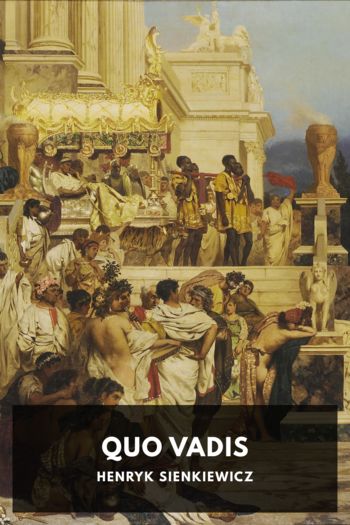
Quo Vadis: A Narrative of the Time of Nero was first published in Polish as Quo vadis. Powieść z czasów Nerona. Among Henryk Sienkiewicz’s inspirations was the painting Nero’s Torches (Pochodnie Nerona) by fellow Pole Henryk Siemiradzki; the painting, which depicts cruel persecution of Christians, serves as the cover art for this ebook edition. Sienkiewicz incorporates extensive historical detail into the plot, and notable historical figures serve as prominent characters, including the apostles Simon Peter and Paul of Tarsus, Gaius Petronius Arbiter, Ofonius Tigellinus, and the infamous Nero himself. Sienkiewicz used the historical basis of the novel as an opportunity to describe in detail the lives of the citizenry under Nero’s cruel and erratic rule.
Sienkiewicz was awarded the 1905 Nobel Prize in Literature in part for his authorship of Quo Vadis. The book was exceedingly popular both domestically and internationally: it was translated into more than 50 languages, sold 800,000 copies in the U.S. within a period of eighteenth months, and was the best selling book of 1900 in France.
The plot of Quo Vadis follows the love story of Marcus Vinicius and Lygia. He is a young, charming, up-and-coming Roman patrician; she is a high-ranking hostage, a former princess of a country conquered by Rome. Vinicius’s immediate infatuation with Lygia is complicated by her devout Christianity, a faith barely tolerated in Rome of the time. As the painting that inspired the novel foreshadows, Rome burns in a great fire, and Christians receive the blame. The subsequent persecution of the Christians in Rome serves as the main obstacle between the two lovers.
Sienkiewicz portrays a pro-Christian narrative throughout the book, with the apostles Peter and Paul serving as spiritual mentors to both Vinicius and Lygia. The novel’s title translates to “Where are you going, Lord?”, a quote from the apocryphal Christian text the Acts of Peter, which depicts Peter’s death. The text describes how while fleeing Rome, Peter asks a vision of Jesus the titular question, to which Jesus replies that he is returning to Rome to lead the Christians since Peter, their leader, is deserting them. Peter then realizes he must turn back and remain with his people, despite the cost. Quo Vadis depicts this exchange, along with Paul’s fate and the deaths of Nero and Petronius, Vinicius’s wise and worldly uncle and mentor. Sienkiewicz contrasts Petronius’s and Nero’s hedonism with Vinicius’s and Lygia’s journey to a deeper faith in their God, and with Peter and Paul’s faithful martyrdom, to great effect. As such, the novel is not just a love story, but also a thoughtful reflection on how one’s way of living affects how they see death.
Description
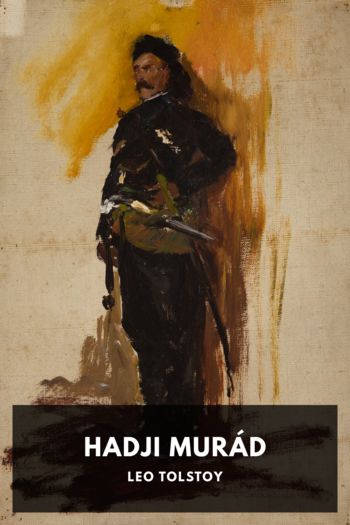
In this short novel, Tolstoy fictionalizes the final days of Hadji Murád, a legendary Avar separatist who fought against, and later with, Russia, as the Russian Empire was struggling to annex Chechnya and the surrounding land in the late 1840s.
The novel opens with the narrator finding a thistle crushed in a blooming field, which reminds him of Hadji Murád and his tragic tale. As the narrator recounts the story, the reader is quickly thrust into the rich, colorful history of the Caucuses, and its people’s fight against Russian imperialism.
Hadji Murád is portrayed as a legendary and imposing, yet friendly and approachable figure. Despite his reputation, it seems that his best days are behind him; as the novel opens, Murád is fleeing Shamil, a powerful imam who has captured Murád’s family. Murád finds himself thrust between the invading Russians on one side, and Shamil’s vengeance on the other.
As Murád and his tiny but loyal group of warriors try to forge alliances in their attempt to rescue Murád’s family, they quickly find themselves politically outclassed. The Russians are Murád’s enemies, yet only they can help him in his struggle against Shamil; and after years of losses incurred by Murád’s guerrilla tactics, the Russians would like his help but cannot trust him. Shamil, on the other hand, is a deep link to the region’s complex web of tribal blood feuds, vengeances, reprisals, and quarrels over honor. He’s one of the few powers left standing between the Russians and their control of the Caucuses, but Murád, having crossed him, can’t rescue his family from Shamil’s clutches without the help of the Russians.
Murád’s impossible position, the contradiction between his legendary past and his limping, dignified, and ultimately powerless present, and the struggle against a mighty empire by a people torn by internecine conflict, form the major thematic threads of the novel.
The novel was one of the last that Tolstoy finished before his death, and was only published posthumously in 1912. Tolstoy himself served in the Crimean War, and the war scenes portrayed in the novel echo his personal experiences. As the story progresses, Tolstoy characterizes various real-life historical personalities besides Hadji Murád and Shamil, including Emperor Nicholas I, Mikhail Loris-Melikov, and Count Vorontsov-Dashkov, making this a fascinating piece of historical fiction. Despite this being such a late entry in Tolstoy’s corpus, it has been highly praised by critics both contemporary and modern, with the famous critic Harold Bloom going so far as to say that Hadji Murád is “my personal touchstone for the sublime of prose fiction, to me the best story in the world, or at least the best I have ever read.”
Description
Edgar Allan Poe is one of the primary figures of American nineteenth-century literature. His writing was heavily influenced by Romanticism ideals of emotion and feeling, and although mostly known for his Gothic-tinged horror, his tales jump between many different genres, including science-fiction, satire, humor, mystery, and even early detective fiction.
Poe mostly wrote short stories and poems, published in magazines and periodicals like the Southern Literary Messenger and Graham’s Magazine, although he also turned his hand to essays and novels (including The Narrative of Arthur Gordon Pym of Nantucket). He was one of the first American writers to pursue writing as a career, but was better received in France than in his native country. He struggled to make ends meet and resorted to work as a literary critic. His reputation suffered a further blow after his unfortunately early death in 1849 at the age of 40, when a rival not only wrote an extremely unflattering obituary, but bought the rights to his work and published a compilation with a hit piece for an introduction. This undeserved reputation took many decades to fade, but didn’t hinder praise from other notable authors including Arthur Conan Doyle and H. P. Lovecraft.
Collected here are all of Poe’s short fiction stories, in order of their original magazine publication. Notable stories include “The Gold-Bug,” “The Black Cat,” “The Fall of the House of Usher,” “The Masque of the Red Death,” “The Pit and the Pendulum,” “The Murders in the Rue Morgue,” and many more.
Description
After defeating enemies in battle, Roman citizens celebrate in the streets as Julius Caesar and his entourage make their way through the city. As Caesar passes a soothsayer, he receives an ominous warning: “Beware the ides of March,” which he immediately disregards. Meanwhile, some of his closest followers are convinced their leader has become too powerful and plot his removal. Plutarch’s Lives of the Noble Grecians and Romans was Shakespeare’s primary source for Julius Caesar.
This Standard Ebooks production is based on William George Clark and William Aldis Wright’s 1887 Victoria edition, which is taken from the Globe edition.
Description
King Lear is a tragedy by Shakespeare, written about 1605 or 1606. Shakespeare based it on the legendary King Leir of the Britons, whose story is outlined in Geoffrey of Monmouth’s pseudohistorical History of the Kings of Britain (written in about 1136).
The play tells the tale of the aged King Lear who is passing on the control of his kingdom to his three daughters. He asks each of them to express their love for him, and the first two, Goneril and Regan do so effusively, saying they love him above all things. But his youngest daughter, Cordelia, is compelled to be truthful and says that she must reserve some love for her future husband. Lear, enraged, cuts her off without any inheritance.
The secondary plot deals with the machinations of Edmund, the bastard son of the Earl of Gloucester, who manages to convince his father that his legitimate son Edgar is plotting against him.
After Lear steps down from power, he finds that his elder daughters have no real respect or love for him, and treat him and his followers as a nuisance. They allow the raging Lear to wander out into a storm, hoping to be rid of him, and conspire with Edmund to overthrow the Earl of Gloucester.
The play is a moving study of the perils of old age and the true meaning of filial love. It ends tragically with the deaths of both Cordelia and Lear—so tragically, in fact, that performances during the Restoration period sometimes substituted a happy ending. In modern times, though, King Lear is performed as written and generally regarded as one of Shakespeare’s best plays.
This Standard Ebooks production is based on William George Clark and William Aldis Wright’s 1887 Victoria edition, which is taken from the Globe edition.
Description
Some Do Not … opens at the cusp of World War I. Christopher Tietjens, a government statistician, and his friend Vincent Macmaster, an aspiring literary critic, are visiting the English countryside. Tietjens, preoccupied with his disastrous marriage, meets Valentine Wannop, a suffragette, during a round of golf. As their love story develops, the novel explores the horrors of the war without the narrative ever entering the battlefield.
The characters are complex and nuanced. Tietjens is an old-fashioned man even by the standards of his day; he’s concerned with honor and doing the right thing, but he lives in a society that only pays those values lip service. Yet he himself isn’t free of a thread of hypocrisy: he won’t leave his deeply unhappy marriage because that would be the wrong way to act, but the reader is left wondering if he tolerates his situation simply because he married up in class. He wants to do to the noble and right thing, but does that mean going to war?
The men and women around him each have their individual motivations, and they are often conniving and unlikable in their aspirations even as the propaganda of England at war paints the country as a moral and heroic one. The delicate interplay of each character’s subtleties paints a rich portrait of 1920s English society, as the romantic ideals of right and wrong clash with notions of ambition and practicality.
The prose is unapologetically modernist: unannounced time shifts combine with a stream-of-consciousness style that can often be dense. Yet Ford’s portrayal of shell shock, the politics of women in the 1920s, and the moral greyness of wartime is groundbreaking. The book, and its complete tetralogy—called Parade’s End—has garnered praise from critics and authors alike, with Anthony Burgess calling it “the finest novel about the First World War” and William Carlos Williams stating that the novels “constitute the English prose masterpiece of their time.”
Description
Sun Tzu’s ancient treatise on the art of war has exerted enormous influence over both Asian and Western soldiers, covering subjects ranging from morale and discipline to the correct use of spies. Despite questions about the historicity of the author, the text has stood the test of time and remains widely read by strategists, politicians, and even business leaders today.
Though Dr. Lionel Giles was not the first to translate Sun Tzu into English, he was the first to do so in a systematic and scholarly manner. His translation was unequaled until the mid-20th century, and remains relevant today due to his copious notes.
Description
Initially published in The Strand Magazine, which explains its episodic nature, Five Children and It was later collected into a book. Like many of E. Nesbit’s works, it has proven popular with children and adults to this day. It has been adapted into a TV series, a musical, a film, and even an anime series.
In this story, five siblings encounter an ancient magical creature in a gravel pit. The Psammead, as it calls itself, grants each of them a wish per day, with the restriction that it ends at sunset. As expected, all of the children’s wishes go comically wrong, and it’s up to them to solve the problems they created.
E. Nesbit’s enduring popularity is due in large part to the way she addresses children. Like Lewis Carrol and Kenneth Grahame, she engages children seriously, tapping into their imagination without any condescension. C. S. Lewis admired her, and the grumpy (but kind) sand-sorcerer Psamathos in Roverandom, a story J. R. R. Tolkien wrote for his own children, bears a striking resemblance to the Psammead—indeed, an early version of the story featured the creature itself!
Description
In the time of a devastating pandemic, seven women and three men withdraw to a country estate outside Florence to give themselves a diversion from the death around them. Once there, they decide to spend some time each day telling stories, each of the ten to tell one story each day. They do this for ten days, with a few other days of rest in between, resulting in the 100 stories of the Decameron.
The Decameron was written after the Black Plague spread through Italy in 1348. Most of the tales did not originate with Boccaccio; some of them were centuries old already in his time, but Boccaccio imbued them all with his distinctive style. The stories run the gamut from tragedy to comedy, from lewd to inspiring, and sometimes all of those at once. They also provide a detailed picture of daily life in fourteenth-century Italy.
Description
The sons of the Roland family, Pierre and Jean, return home in the lull between the completion of their studies and the start of their professional careers, bringing the Roland family back together again, in a way. This peace, though, is broken when the younger brother Jean is left a life-changing inheritance by Maréchel, an old family friend—and Pierre is left with nothing. Despite the happiness in the rest of the family, unanswered questions start gnawing at Pierre.
Pierre and Jean was Guy de Maupassant’s shortest novel, and is often acclaimed as his greatest. The setting for the novel is the scenery of de Maupassant’s childhood, and it is, accordingly, richly described. It was serialized in Nouvelle Revue in 1887 before being published as a complete novel in 1888; this edition is based on the 1902 translation by Clara Bell.
Description
Quo Vadis: A Narrative of the Time of Nero was first published in Polish as Quo vadis. Powieść z czasów Nerona. Among Henryk Sienkiewicz’s inspirations was the painting Nero’s Torches (Pochodnie Nerona) by fellow Pole Henryk Siemiradzki; the painting, which depicts cruel persecution of Christians, serves as the cover art for this ebook edition. Sienkiewicz incorporates extensive historical detail into the plot, and notable historical figures serve as prominent characters, including the apostles Simon Peter and Paul of Tarsus, Gaius Petronius Arbiter, Ofonius Tigellinus, and the infamous Nero himself. Sienkiewicz used the historical basis of the novel as an opportunity to describe in detail the lives of the citizenry under Nero’s cruel and erratic rule.
Sienkiewicz was awarded the 1905 Nobel Prize in Literature in part for his authorship of Quo Vadis. The book was exceedingly popular both domestically and internationally: it was translated into more than 50 languages, sold 800,000 copies in the U.S. within a period of eighteenth months, and was the best selling book of 1900 in France.
The plot of Quo Vadis follows the love story of Marcus Vinicius and Lygia. He is a young, charming, up-and-coming Roman patrician; she is a high-ranking hostage, a former princess of a country conquered by Rome. Vinicius’s immediate infatuation with Lygia is complicated by her devout Christianity, a faith barely tolerated in Rome of the time. As the painting that inspired the novel foreshadows, Rome burns in a great fire, and Christians receive the blame. The subsequent persecution of the Christians in Rome serves as the main obstacle between the two lovers.
Sienkiewicz portrays a pro-Christian narrative throughout the book, with the apostles Peter and Paul serving as spiritual mentors to both Vinicius and Lygia. The novel’s title translates to “Where are you going, Lord?”, a quote from the apocryphal Christian text the Acts of Peter, which depicts Peter’s death. The text describes how while fleeing Rome, Peter asks a vision of Jesus the titular question, to which Jesus replies that he is returning to Rome to lead the Christians since Peter, their leader, is deserting them. Peter then realizes he must turn back and remain with his people, despite the cost. Quo Vadis depicts this exchange, along with Paul’s fate and the deaths of Nero and Petronius, Vinicius’s wise and worldly uncle and mentor. Sienkiewicz contrasts Petronius’s and Nero’s hedonism with Vinicius’s and Lygia’s journey to a deeper faith in their God, and with Peter and Paul’s faithful martyrdom, to great effect. As such, the novel is not just a love story, but also a thoughtful reflection on how one’s way of living affects how they see death.
Description
In this short novel, Tolstoy fictionalizes the final days of Hadji Murád, a legendary Avar separatist who fought against, and later with, Russia, as the Russian Empire was struggling to annex Chechnya and the surrounding land in the late 1840s.
The novel opens with the narrator finding a thistle crushed in a blooming field, which reminds him of Hadji Murád and his tragic tale. As the narrator recounts the story, the reader is quickly thrust into the rich, colorful history of the Caucuses, and its people’s fight against Russian imperialism.
Hadji Murád is portrayed as a legendary and imposing, yet friendly and approachable figure. Despite his reputation, it seems that his best days are behind him; as the novel opens, Murád is fleeing Shamil, a powerful imam who has captured Murád’s family. Murád finds himself thrust between the invading Russians on one side, and Shamil’s vengeance on the other.
As Murád and his tiny but loyal group of warriors try to forge alliances in their attempt to rescue Murád’s family, they quickly find themselves politically outclassed. The Russians are Murád’s enemies, yet only they can help him in his struggle against Shamil; and after years of losses incurred by Murád’s guerrilla tactics, the Russians would like his help but cannot trust him. Shamil, on the other hand, is a deep link to the region’s complex web of tribal blood feuds, vengeances, reprisals, and quarrels over honor. He’s one of the few powers left standing between the Russians and their control of the Caucuses, but Murád, having crossed him, can’t rescue his family from Shamil’s clutches without the help of the Russians.
Murád’s impossible position, the contradiction between his legendary past and his limping, dignified, and ultimately powerless present, and the struggle against a mighty empire by a people torn by internecine conflict, form the major thematic threads of the novel.
The novel was one of the last that Tolstoy finished before his death, and was only published posthumously in 1912. Tolstoy himself served in the Crimean War, and the war scenes portrayed in the novel echo his personal experiences. As the story progresses, Tolstoy characterizes various real-life historical personalities besides Hadji Murád and Shamil, including Emperor Nicholas I, Mikhail Loris-Melikov, and Count Vorontsov-Dashkov, making this a fascinating piece of historical fiction. Despite this being such a late entry in Tolstoy’s corpus, it has been highly praised by critics both contemporary and modern, with the famous critic Harold Bloom going so far as to say that Hadji Murád is “my personal touchstone for the sublime of prose fiction, to me the best story in the world, or at least the best I have ever read.”