































worldlibraryebooks.com - Read eBooks online. Best free library

To understand allmysteries, to have all knowledge, to be able to comprehend with allsaints, is a great work; enough to crush the spirit, and to stretch thestrings of the most capacious, widened soul that breatheth on this sideglory, be they notwithstanding exceedingly enlarged by revelation.Paul, when he was caught up to heaven, saw that which was unlawful,because impossible, for man to utter. And saith Christ to thereasoning Pharisee, "If I have told you earthly things, and ye believenot, how shall you believe if I tell you of heavenly things?" It isgreat lewdness, and also insufferable arrogancy, to come to the Word ofGod, as conceiting already that whatever thou readest must either bythee be understood, or of itself fall to the ground as a senselesserror. But God is wiser than man, wherefore fear thou him, and trembleat his word, saying still, with godly suspicion of thine own infirmity,What I see not, teach thou me; and, Thou art God only wise; but as forme, I am as a beast before thee.

f High Mass had just been sung there, and--"
He cut me short, and there was a certain grave solemnity in his manner that struck me almost with awe.
"I know you are a railer," he said, and the phrase coming from this mild old gentleman astonished, me unutterably. "You are a railer and a bitter railer; I have read articles that you have written, and I know your contempt and your hatred for those you call Protestants in your derision; though your grandfather, the vicar of Caerleon-on-Usk, called himself Protestant and was proud of it, and your great-grand-uncle Hezekiah, ffeiriad coch yr Castletown--the Red Priest of Castletown--was a great man with the Methodists in his day, and the people flocked by their thousands when he administered the Sacrament. I was born and brought up in Glamorganshire, and old men have wept as they told me of the weeping and contrition that there was when the Red Priest broke the Bread and raised the Cup. But you are a railer, and see nothing but the outside and

rate from behind into the branchial cavity. Now these crabs, which have become more or less estranged from the water, belong to the most different families--the Raninidae (Ranina), Eriphinae (Eriphia gonagra), Grapsoidae (Aratus, Sesarma, etc.), Ocypodidae (Gelasimus, Ocypoda), etc., and the separation of these families must doubtless be referred to a much earlier period than the habit of leaving the water displayed by some of their members. The arrangements connected with aerial respiration, therefore, could not be inherited from a common ancestor, and could scarcely be accordant in their construction. If there were any such accordance not referable to accidental resemblance among them, it would have to be laid in the scale as evidence against the correctness of Darwin's views. I shall show hereafter how in this case the result, far from presenting such contradictions, was rather in the most complete harmony with what might be predicted from Darwin's theory.
(FIGURE 1. Melita exilii n. sp., male, enla

" said Uncle Dick, after a time. "I doubt if we could do it all the way by boat by September. But I'll see your teacher, here in St. Louis, where we're all going to winter this year, and arrange with him to let you study outside for the first few weeks of the fall term in case we don't get back. You'll have to work while you travel, understand that."
The boys all agreed to this and gave their promise to do their best, if only they could be allowed to make this wonderful trip over the first and greatest exploring trail of the West.
"It can perhaps be arranged," said Uncle Dick.
"You mean, it has been arranged!" said Rob. "You've spoken to our school principal!"
"Well, yes, then! And you can cut off a little from the spring term, too. But it's all on condition that you come back also with a knowledge of that much history, additional to your regular studies."
"Oh, agreed to that!" said Rob; while John and Jesse began to drop their books and eagerly come closer to their older gu

Griselda wondered, if this were so, how it was that Miss Grizzel took such liberties with them herself, but she said nothing.
"Here is my last summer's pot-pourri," continued Miss Grizzel, touching a great china jar on a little stand, close beside the cabinet. "You may smell it, my dear."
Nothing loth, Griselda buried her round little nose in the fragrant leaves.
"It's lovely," she said. "May I smell it whenever I like, Aunt Grizzel?"
"We shall see," replied her aunt. "It isn't every little girl, you know, that we could trust to come into the great saloon alone."
"No," said Griselda meekly.
Miss Grizzel led the way to a door opposite to that by which they had entered. She opened it and passed through, Griselda following, into a small ante-room.
"It is on the stroke of ten," said Miss Grizzel, consulting her watch; "now, my dear, you shall make acquaintance with our cuckoo."
The cuckoo "that lived in a clock!" Griselda gazed round her eagerly
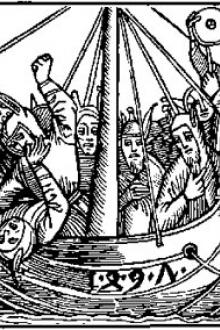
paved the way for the Reformation. Brandt's fools are represented as contemptible and loathsome rather than _foolish_, and what he calls follies might be more correctly described as sins and vices.
"The 'Ship of Fools' is written in the dialect of Swabia, and consists of vigorous, resonant, and rhyming iambic quadrameters. It is divided into 113 sections, each of which, with the exception of a short introduction and two concluding pieces, treats independently of a certain class of fools or vicious persons; and we are only occasionally reminded of the fundamental idea by an allusion to the ship. No folly of the century is left uncensured. The poet attacks with noble zeal the failings and extravagances of his age, and applies his lash unsparingly even to the dreaded Hydra of popery and monasticism, to combat which the Hercules of Wittenberg had not yet kindled his firebrands. But the poet's object was not merely to reprove and to animadvert; he instructs also, and shows the fools the way to the land of w

: "No; if it happened to strike on that train anywhere, itmight spoil one of the folds. I can't risk it." A ring is heard atthe apartment door. They spring to their feet simultaneously.
MRS. ROBERTS: "There's Aunt Mary now!" She calls into thevestibule, "Aunt Mary!"
DR. LAWTON, putting aside the vestibule portiere, with affectedtimidity: "Very sorry. Merely a father."
MRS. ROBERTS: "Oh! Dr. Lawton? I am so glad to see you!" Shegives him her hand: "I thought it was my aunt. We can't understandwhy she hasn't come. Why! where's Miss Lawton?"
LAWTON: "That is precisely what I was going to ask you."
MRS. ROBERTS: "Why, she isn't here."
LAWTON: "So it seems. I left her with the carriage at the door whenI started to walk here. She called after me down the stairs that shewould be ready in three seconds, and begged me to hurry, so that wecould come in together, and not let people know I'd saved half adollar by walking."
MRS. ROBERTS: "SHE'S been detained too!"
ROB

lems that have interested thoughtful men, shows how some of these have been solved, and points the way to the solution of others. It studies educational systems, selecting the good, and rejecting the bad, and introducing the student directly to the pedagogical questions that have influenced the world. For these reasons, the study of education should begin with its history.
Karl Schmidt says: "The history of the world is the history of the development of the human soul. The manner of this development is the same in the race as in the individual; the same law, because the same divine thought, rules in the individual, in a people, and in humanity. Humanity has, as the individual, its stages of progress, and it unfolds itself in them. The individual as a child is not a rational being; he becomes rational. The child has not yet the mastery over himself, but his environment is his master; he belongs not to himself, but to his surroundings. The oriental peoples are the child of humanity.... Classical

