













worldlibraryebooks.com - Read eBooks online. Best free library

Description
At the height of belle époque Europe, an American couple—the narrator John Dowell and his wife Florence–and a British couple–Leonora and the titular “good soldier” Edward Ashburnham—meet and become firm friends. Travelling and socialising together, it’s a full nine years before the cracks start to show, but when they do the whole edifice starts tumbling to reveal the secrecy and lies concealed within.
The Good Soldier is a classic example of the unreliable narrator genre. With a charitable view, everything John Dowell retells is plausible, but it doesn’t take much critical thinking to reframe the story’s events as something entirely more sinister.
The novel is now frequently ranked by critics as one of the great pieces of twentieth-century literature. Ford Madox Ford, already published many times over by this novel’s release, and along with collaborations with both Joseph Conrad and Ernest Hemingway, went on to create and edit the influential literature journals The English Review and The Transatlantic Review.

Description
The Airlords of Han, the sequel to Armageddon 2419 A.D., continues the adventures of Buck Rogers, the famous sci-fi adventure hero of early comics and radio shows. Originally published in Amazing Stories in 1929, in the 1960s this novella was later combined with Nowlan’s original piece and re-published under the title Armageddon 2419 A.D..
In it Buck Rogers and his wife, Wilma Deering, lead Americans in a conclusive battle with the evil Han Empire. The story reflects the “Yellow Peril” mindset at the time of its writing, and successfully predicts many future technologies, including bazookas, night-vision devices, and paratroopers.
Description
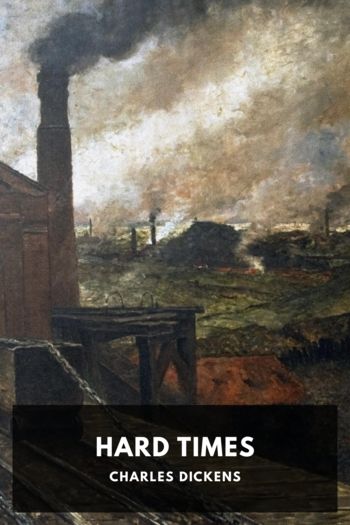
Hard Times (originally Hard Times—For These Times) was published in 1854, and is the shortest novel Charles Dickens ever published. It’s set in Coketown, a fictional mill-town set in the north of England. One of the major themes of the book is the miserable treatment of workers in the mills, and the resistance to their unionization by the mill owners, typified by the character Josiah Bounderby, who absurdly asserts that the workers live a near-idyllic life but they all “expect to be set up in a coach and six, and to be fed on turtle soup and venison, with a gold spoon.” The truth, of course, is far different.
The other major topic which Dickens tackles in this novel is the rationalist movement in schooling and the denigration of imagination and fantasy. It begins with the words “Now, what I want is, Facts,” spoken by the wealthy magnate Thomas Gradgrind, who is supervising a class at a model school he has opened. This indeed is Gradgrind’s entire philosophy. “Teach these boys and girls nothing but Facts. Facts alone are wanted in life. Plant nothing else, and root out everything else.” He is supported and encouraged in this approach by his friend Bounderby. Grandgrind raises his own children on these principles, and, as we discover, in doing so blights their lives.
The novel also follows the story of a particular mill-worker, Stephen Blackpool, who leads a tragic life. He is burdened with an alcoholic, slatternly wife, who is mostly absent from his life, but who returns at irregular intervals to trouble him. This existing marriage, and the near-impossibility of divorce for someone of his class, prevents him marrying Rachael, who is the light of his life. Dickens depicts Stephen as representing the nobility of honest work, and contrasts his character with that of the self-satisfied humbug Josiah Bounderby who represents the worst aspects of capitalism.

Description
On the unexplored jungle world of Jumala, former pilot turned safari guide Ras Hume schemes to collect the reward for finding a missing heir to a fortune. A busboy from local dive bar is brainwashed into believing he is the missing heir, but he soon begins to doubt his own memories.
This standalone story was originally published in 1961 as part of a double title paperback by Ace Books along with an abridged version of The Beast Master, and again in 1968 paired with the short novel Voodoo Planet, all by Andre Norton.

Description
Miss Rachel Vinrace, aged twenty-four and previously interested only in music, is on a voyage both literal and metaphorical. An ocean cruise with her father leaves her for the summer at her Aunt’s villa in an unnamed South American country, where she meets the English inhabitants of the local town’s hotel. As the season progresses she starts to become entangled in their own lives and passions, and through those burgeoning acquaintances and friendships the discovery of her own nature grows.
The Voyage Out is Virginia Woolf’s first novel and was a labour of love, taking her five years to complete. Even though heavy editing was required to reduce some of the more politically charged themes before its publication in 1915, it still bemused some contemporary critics and even garnered accusations of “reckless femininity.” Time however has proved kinder, with the book demonstrating the key points of Woolf’s future style. It even has the first appearance of Clarissa Dalloway, the titular protagonist of Woolf’s later and more famous novel Mrs. Dalloway.

Description
Voodoo Planet is the third in a series of novels featuring the adventures of Dane Thorson and the spaceship Solar Queen, written in the 1950s by Andre Norton under her male pseudonym, Andrew North. In this installment, Dane and his shipmates land on the safari planet Khatka, settled by African refugees of an atomic race war on Earth. They soon face off with a witch doctor seeking to take over the planet.
This short work was originally published as a double title paperback by Ace Books in 1959 along with a reprint of Plague Ship, the second novel in the series. Norton followed it with a sequel ten years later and then co-authored a revival of the series in the 1990s.

Description
Giovanna and Costantino Ledda are a happily married young Sardinian couple living a contented village existence with their small child and extended family. But after Costantino is wrongly convicted of murdering his uncle and imprisoned, the now‐impoverished Giovanna reluctantly divorces him under a newly enacted divorce law and marries Brontu Dejas, a wealthy but cruel drunkard who has always coveted her. While enduring a slave’s existence within this new marriage as well as the community’s derision of her as the “wife with two husbands,” the broken Giovanna is unexpectedly reunited with an embittered Costantino after his exoneration and early release from prison, and the two resume their now‐illicit relationship.
An exploration of hypocrisy, expiation, and the human disruption of a supernatural order that remorselessly reasserts itself, After the Divorce is set in an insular society of ancient, religious roots grappling with the intrusion of modern, secular social mores and is among the earliest of the serious works on which Grazia Deledda’s literary reputation is based. Deledda—the first Italian woman to win the Nobel Prize for Literature—critiqued the social norms of her native Sardinia through verismo depictions of the struggles of the lower classes, into which she wove elements of her own personal tragedies.

Description
Eminent Victorians consists of four short biographies by Lytton Strachey of Victorians who were famous in their day: Cardinal Manning, a powerful cleric; Florence Nightingale, founder of modern nursing; Thomas Arnold, founder of the modern-day English public school style; and General Gordon, a popular officer of the British Army.
In Strachey’s day, these people were considered heroes and paragons of Victorian morality and ethics. But instead of lengthy, glowing biographies, Strachey opts for short, witty, and biting biographies that skewer their subjects. All of the subjects are portrayed with their human flaws and moral contradictions on full display, implicitly knocking down the sanctimonious visions of these former heroes (perhaps with the exception of Nightingale, who, while portrayed as an often-cold and mercilessly-driven taskmistress, nevertheless escaped with her reputation enhanced).
The biographies are not only interesting for their wit, humor, and readability, but because of the windows they open to the issues of the age. Manning’s biography occurs against the backdrop of a time of upheaval in the English Catholic church, with concepts like Papal Infallability entering the picture; Nightingale’s biography shines light on the appalling conditions of war; Arnold’s biography is a lens on the development of formal education and schools; and Gordon’s biography reveals England as an empire growing more unsteady, whose ability to influence and control faraway lands is not as certain as it might think.
Eminent Victorians took six years to write and was met with glowing reviews on its publication. It made Strachey famous and cemented his name in the list of top-tier biographers.

Description
His Last Bow: Some Reminiscences of Sherlock Holmes is the fourth collection of Sherlock Holmes stories published by Arthur Conan Doyles. It begins with a preface by Dr. John Watson, supposedly written in 1917, assuring the reader that Holmes is still alive but living in quiet retirement in Sussex.
This collection contains the well-known stories “The Adventure of the Bruce-Partington Plans,” in which Holmes has to track down stolen plans for a new kind of submarine; and “The Adventure of the Devil’s Foot” in which a Cornish family is found one morning driven mad or dead, with expressions of horror on their faces. The titular story “His Last Bow” is set on the very eve of the outbreak of the First World War, and involves Holmes and Watson coming out of retirement to defeat a German spy.

Description
Benjamin Disraeli was a remarkable historical figure. Born into a Jewish family, he converted to Anglican Christianity as a child. He is now almost certainly most famous for his political career. Becoming a member of the British Parliament at the age of 33, he initially rose to prominence within the Conservative (“Tory”) party because of his clashes with the then Prime Minister Sir Robert Peel. Rising to lead the Conservative Party, Disraeli became Prime Minister for a short period in 1868, and then for an extended period between 1874 and 1880. He became friendly with Queen Victoria and was appointed Earl of Beaconsfield by her in 1876.
However, Disraeli was much more than a politician. He wrote both political treatises and no less than seventeen novels during his lifetime, of which Sybil, or The Two Nations is now among the best regarded. The “Two Nations” of the subtitle refer to the divisions in Britain between the rich and the poor, each of whom might as well be living in a different country from the other. In the novel, Disraeli highlights the terrible living conditions of the poor and the shocking injustices of how they were treated by most employers and land-owners. He contrasts this with the frivolous, pampered lifestyles of the aristocracy. He covers the rise of the Chartist movement, which was demanding universal manhood suffrage—the right for all adult men to vote, regardless of whether they owned property—and other reforms to enable working men a voice in the government of the country. (Female suffrage was to come much later). The upheavals of the time led to the development of the People’s Charter and a massive petition with millions of signatures being presented to Parliament. However the Parliament of the time refused to even consider the petition, triggering violent protests in Birmingham and elsewhere. All of this is well covered and explained in the novel.
Sybil is rather disjointed in structure as it ranges over these different topics, but the main plot revolves around Egremont, the younger son of a nobleman, who encounters some of the leaders of the workers’ movement and in particular Walter Gerard, one of the most respected of these leaders, whom Egremont befriends while concealing his real name and social position. During visits to Gerard under an assumed name, Egremont falls for the beautiful and saintly Sybil, Gerard’s daughter, but she rejects him when his true identity is exposed. Sybil subsequently undergoes many difficult trials as the people’s movement develops and comes into conflict with the authorities.