



















worldlibraryebooks.com - Read eBooks online. Best free library
Description
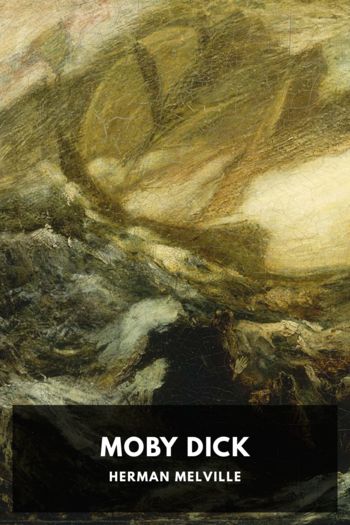
“Call me Ishmael” says Moby Dick’s protagonist, and with this famous first line launches one of the acclaimed great American novels. Part adventure story, part quest for vengeance, part biological textbook and part whaling manual, Moby Dick was first published in 1851. The story follows Ishmael as he abandons his humdrum life on shore for an adventure on the waves. Finding the whaler Pequod at harbour in Nantucket, he signs up for a three year term without meeting the Captain of the ship, a mysterious figure called Ahab. It is only well into the voyage that Ahab’s thirst for vengeance against the eponymous white whale Moby Dick—and the consequences—become clear.
The novel is semi-autobiographical: Herman Melville had had his own experience of whaling, having spent a year and a half aboard a whaling ship and further years travelling the world in the early 1840s. Herman used the knowledge gained from his experiences and wide reading on the subject to furnish Moby Dick with an almost encyclopaedic quality at times. The literary style varies widely, veering from soliloquies and staged scenes to dream sequences to comprehensive lists of ships provisions, but everything serves to further detail the world that’s being painted.
Presented here is the New York edition, which was published later than the London edition and reverted numerous changes the original publishers had made, as well as including the initially omitted epilogue.

Description
Arsène Lupin, with his characteristic wit, plots over the course of nine short stories to steal many of France’s best antiques and artworks from under their owners’ noses. Only his classic opponent Detective Ganimard has the brilliance to attempt to foil Arsène’s plans, albeit with mixed results.
This first collection of nine Arsène Lupin stories were originally serialised in the magazine Je Sais Tout from 1905 and translated into English in 1910. The final story of the set features an unauthorised Sherlock Holmes whose appearance annoyed Arthur Conan Doyle; the character’s name was changed to “Herlock Sholmes” for later stories. Arsène Lupin later went on to feature in over fifty stories by Maurice Leblanc along with many other books, films and plays around the world.

Description
Set in the 1820s in central Sweden, The Story of Gösta Berling follows the saga of the titular character as he falls from the priesthood and is rescued by the owner of a local estate. Joining the other saved souls in the pensioners’ wing of the mansion, he embarks upon a series of larger-than-life stories that tell of adventure, revelry, romance and sadness.
Gösta Berling was the eventual Nobel Prize winner Selma Lagerlöf’s first published novel, and was written as an entry to a magazine competition. The richly detailed landscapes of Värmland were drawn from her own upbringing there, and the local folk tales inspired many of the individual stories in the book. The novel was published in Swedish in 1891; this edition is based on the 1898 English translation by Pauline Bancroft Flach. In 1924 the story was made into a silent film, launching the career of Greta Garbo.
Description
Emily Pauline Johnson, who was also known by the Mohawk name Tekahionwake, was a Canadian poet and author born in 1861. Born to a Mohawk father and an English mother, she was known for introducing indigenous culture to a wider North American and European audience.
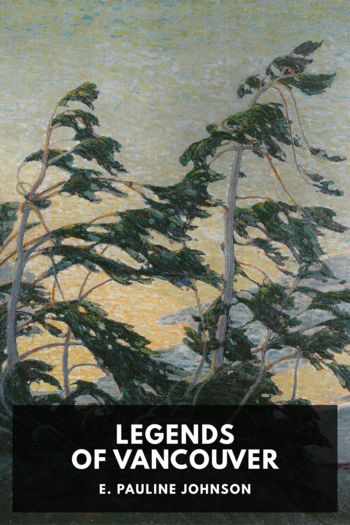
In Legends of Vancouver, perhaps her best-known prose work, Johnson tells stories of the Squamish people, as relayed to her by Chief Joe Capilano, whom she befriended upon moving to Vancouver in 1909. She provides her own framing for these stories, placing them in the context of her relationship with the Squamish people.
In 1911, a group of Johnson’s friends collected this series of stories, that had previously been published in the Daily Province, in order to raise funds to support her as she struggled with poverty and health issues. In the intervening years, Legends of Vancouver has become a foundational piece of Vancouver’s literary heritage.

Description
Emma is one of Jane Austen’s best-loved novels. Its eponymous heroine, Emma Woodhouse, is described in the very first paragraph as “handsome, clever, and rich … and had lived nearly twenty-one years in the world with very little to distress or vex her.” In other words, she has lived a pampered, protected life and consequently is somewhat unrealistic in her regard for herself and her own abilities.
She befriends Harriet Smith, a young woman of dubious parentage and no money and determines to improve her prospects. As part of this project, Emma decides to become a matchmaker between Harriet and the Reverend Mr. Elton, a vicar in the nearby town. Things, however, do not go as smoothly as she had imagined.
The novel provides an insight into the distinctions in the rigid class structure of England in the Regency period, and the social barriers to marriage between persons considered to be of superior and inferior rank.
Emma was published in 1815, the last of Austen’s novels to be published while she still lived. It received a generally very positive reception, and was well reviewed (though anonymously) by Sir Walter Scott. Criticisms of the novel, such as they were, centered around its supposed lack of plot, though its treatment of character was recognized and applauded. Today it is regarded as one of Austen’s best works. The novel has been adapted many times for theater, movies and television.
Description
Initially published throughout 1819 and 1820, The Sketch-Book is a collection of 34 essays and short stories, collected and ordered according to the Author’s Revised Edition published in 1848. The Sketch-Book is the first publication to use Irving’s pseudonym Geoffrey Crayon, which he would carry into later works.
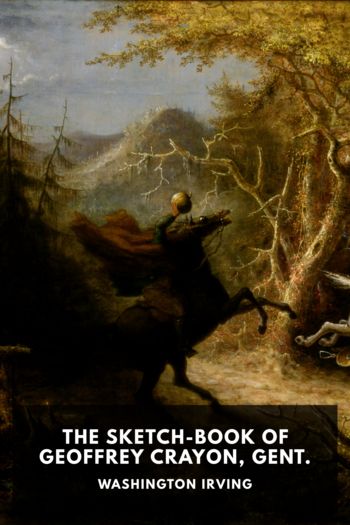
The stories vary in nature, from the comical “The Mutability of Literature” to the eerie and seemingly supernatural “The Legend of Sleepy Hollow,” but the personality of their narrator, Geoffrey Crayon, connects the stories and attracts their readers. Some stories are written on American topics, forming the need for separate American and English editions, and others consist of English life and landscape, written from the perspective of living in England for a time.
Two of the stories, “The Legend of Sleepy Hollow” and “Rip Van Winkle,” are Irving’s most well-known works, and are presented as posthumous writings of fictional Dutch historian Diedrich Knickerbocker. From these stories came the iconic characters Rip Van Winkle, Ichabod Crane, and the Headless Horseman.
Description
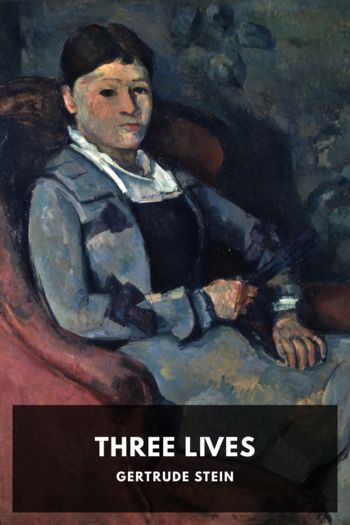
In Three Lives are the stories of three working-class woman from Bridgepoint—a town loosely based on Baltimore—in the early twentieth century. Each story tells of the hopes, loves, romances and sadnesses of the women as they live their lives.
Written in a unconventional style, the lives of the three women are uncovered through their layered conversations and interactions more than through detailed depictions. The book is notable for its descriptions of homosexual romance, something that at the time in the USA wasn’t accepted (indeed, Gertrude Stein moved with her partner to Paris to be able to live openly).
Three Lives was Gertrude Stein’s first published book, and although the sales weren’t as expected it was generally well received by critics. It’s considered today to be among her more accessible books, and is a regular on English literature curricula.
Description
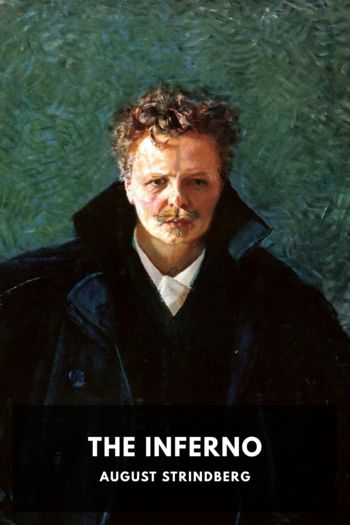
The narrator of The Inferno—ostensibly August Strindberg himself—has not had an easy recent past, and a move to Paris is not helping. As his mania overtakes his ability to function in the society of artists, writers, scientists and philosophers he’d like to be part of, he turns to more unconventional methods to help make sense of his world.
Written in diary form, The Inferno is a semi-autobiographical work that blends self-deprecating humour with a whirl of neurosis and attempted rationalisation. The novel, with a certain amount of exaggeration for literary effect, charts two years of Strindberg’s life in the 1890s. Presented here is Claud Field’s 1913 translation from the original French.
Description
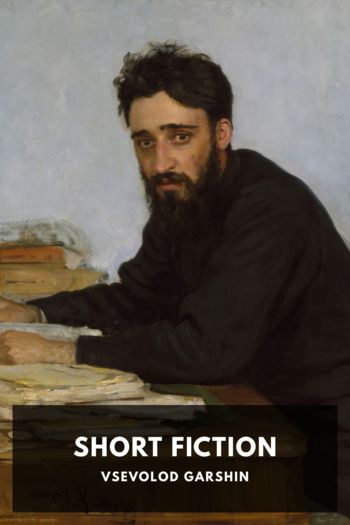
Vsevolod Garshin’s literary career followed a stint as a infantry soldier and later an officer, and he received both public and critical acclaim in the 1880s. Before his sadly early death at the age of thirty-three after a lifelong battle with mental illness he wrote and published nineteen short stories. He drew on his military career and life in St. Petersburg as initial source material, and his varied cast of characters includes soldiers, painters, architects, madmen, bears, frogs and even flowers and trees. All are written with a depth of feeling and sympathy that marks Garshin out from his contemporaries.
Collected here are the seventeen translations into English by Rowland Smith of Garshin’s short stories and novellas, in chronological order of the original Russian publication.
Description
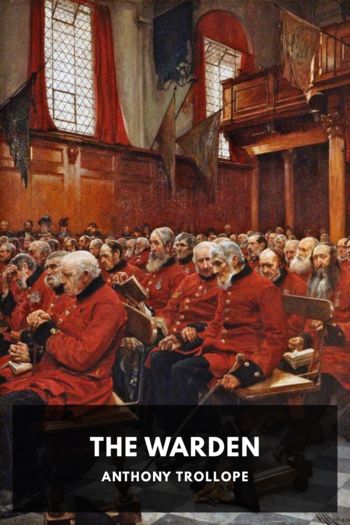
The Warden is concerned with the unassuming Rev. Septimus Harding, who has for many years been the Warden of Hiram’s Hospital in the fictional town of Barchester. This “hospital” is what we would today probably call an aged-care or retirement home. It was established under the provisions of a will to look after the needs of old men too feeble to work any longer and unable to support themselves. Mr. Harding benefits financially from his position, though the duties are very slight.
A local doctor, though sweet on Mr. Harding’s daughter Eleanor, is nevertheless a keen reformer, zealous to overturn what he sees as corrupt patronage in the Church. He investigates the terms of Hiram’s will and concludes that the money intended for the benefit of the aged wool-carders is unfairly being consumed by the salary of the Warden. He proceeds to pursue this issue through the pages of a crusading journal, The Jupiter.
Though strongly defended by the Church authorities, including his son-in-law Archdeacon Grantly, Mr. Harding has long struggles with his conscience because of this imputation.
The Warden, published in 1855, was Trollope’s first major writing success, and formed the basis for a series of six novels set in the same fictional county and its cathedral city of Barchester, now known as the “Chronicles of Barsetshire.”