






















worldlibraryebooks.com - Read eBooks online. Best free library

Description
Uncle Silas is told from the account of Maud Ruthyn, an heiress living with her reclusive father, Austin Ruthyn. She learns about her uncle, Silas Ruthyn, and his past reputation marred by gambling and the apparent suicide of a man to which Silas owed a large gambling debt that occurred in a locked room in Silas’ residence.
In order to clear the Ruthyn name of the rumors of Silas’ past, Austin names Silas as Maud’s guardian through Austin’s will upon his death. Also noted in Austin’s will, Silas would inherit the fortune left to Maud should she die while under his ward. Maud befriends her cousin Millicent and quickly adjusts to life under Silas’ care, despite his often frightening demeanor. Although Silas has proclaimed that he’s a newly reformed Christian, Maud becomes increasingly suspicious of her uncle’s motives as life for her becomes increasingly unpleasant.
The story of Maud Ruthyn and her uncle Silas evolved through multiple iterations, beginning with the short story “A Passage in the Secret History of an Irish Countess” in 1839, before ultimately becoming the three-volume novel published in 1864. This ebook reproduces a revised, two-volume version released a year later.

Description
Robinson Crusoe is one of the most popular books ever written in the English language, published in innumerable editions and translated into almost every language of the world, not to mention the many versions created in film, television and even radio. First published in 1719, it can also claim to be one of the first novels ever written in English.
Written in the form of an autobiography, it describes the life of the eponymous narrator Robinson Crusoe. A wild youth, he breaks away from his family to go to sea. After many adventures including being captured and made into a slave, he is eventually shipwrecked on a remote island off the coast of South America. Crusoe is the only survivor of the wreck. He is thus forced to find ways to survive on the island without any other assistance. His first years are miserable and hard, but he ultimately manages to domesticate goats and raise crops, making his life tolerable. While suffering from an illness, he undergoes a profound religious conversion, and begins to ascribe his survival to a beneficent Providence.
Crusoe lives alone on the island for more than twenty years until his life changes dramatically after he discovers a human footprint in the sand, indicating the undeniable presence of other human beings. These, it turns out, are the native inhabitants of the mainland, who visit the island only occasionally. To Crusoe’s horror, he discovers that these people practice cannibalism. He rescues one of their prisoners, who becomes his servant (or “man”) Friday, named for the day of the week on which he rescued him, and together, their adventures continue.

Description
The Works of Max Beerbohm is a collection of satirical essays by Max Beerbohm. It was published in 1896 at The Bodley Head, his publisher John Lane contributing a detailed bibliography of the works of the author, then aged 24. Before their publication as a book, the essays had appeared in prominent literary periodicals such as The Yellow Book and The Savoy. Most of the essays were written while he was a student at Oxford, although he had left Merton College in 1894. By then he was already known as a caricaturist, parodist and essayist and well acquainted with the writers and artists connected with The Bodley Head, notably Aubrey Beardsley and Oscar Wilde.
The essays can perhaps be best described as both elaborate parody and vicious satire. Beerbohm’s intimate knowledge of the social circles of the time and his penchant for pointed descriptions of character are always on display, dismantling the purported greatness that surrounds him.

Description
The “Moonstone” of the title is a large but flawed diamond, looted from India at the time of the Mutiny by an unscrupulous British officer. Many years later, estranged from his family due to his licentious lifestyle, the officer bequeaths the diamond to his sister’s daughter, Rachel Verrinder, to be given to her on her 18th birthday. Due to the ill-omens surrounding the gem, this may have been an act of revenge rather than reconciliation. The diamond, it appears, was taken from a statue of the Moon God worshipped by a Hindu cult, and it has long been sought by a group of Brahmins determined to return it to their temple.
On the night of the birthday party the gem mysteriously disappears from Rachel’s room. While the first suspicions naturally fall on these Indians, they are eventually exculpated. Rachel becomes hysterical and angry when questioned about the theft and refuses to assist the police. Active efforts to assist them are taken up by Rachel’s cousin (and sweetheart) Franklin Blake. These efforts simply drive Rachel into further fury, and she becomes completely estranged from him. Suspicion thus falls on her as having some secret reason for wishing to raise money on the diamond. The novel proceeds to slowly uncover the mysteries involved.
Published in 1868, The Moonstone is often considered as one of the precursors of the modern detective novel, though this is a label which would not have been used by its author Wilkie Collins and his contemporaries. While it is true that the plot revolves around the mystery of a theft, and that it features Sergeant Cuff “in the Detective Force of Scotland Yard,” the novel is much more about character and relationships than the mere revelation of secrets. It also has a good dose of Collins’ humour, as the story is told in large part by eccentric characters such as the old house-steward Gabriel Betteredge who regards Robinson Crusoe as an oracle; and the ultra-religious Miss Clack, determined to convert everyone to her views.
Immensely popular at the time of its publication in serial form, The Moonstone is rightly considered to be one of Collins’ best works, and remains highly regarded today.
Description
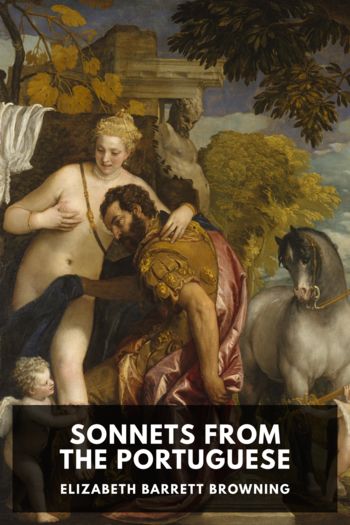
Sonnets from the Portuguese is a collection of forty-four love sonnets. Despite what the title suggests, Browning in fact composed the sonnets in English. She decided to frame them as “translations” because she was concerned they may have been too personal to publish. Fortunately her husband, Robert Browning, convinced her to publish them, and they went on to become some of the most famous and critically-acclaimed love sonnets to this day.
Description
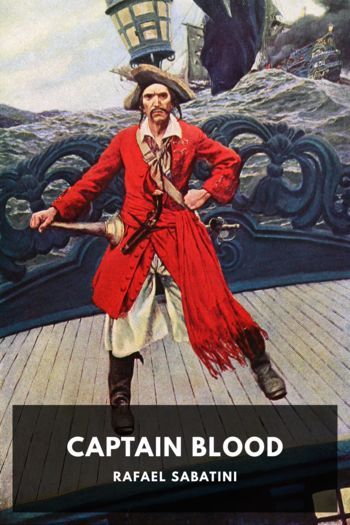
Peter Blood, with experience as a soldier and sailor, is practicing medicine in Bridgewater, England, when he inadvertently gets caught up in a rebellion being waged by the Duke of Monmouth. After being convicted of treason, Blood and some of the rebels are sentenced to slavery in the Caribbean. The year is 1688.
During the course of Blood’s servitude, he works on the sugar plantation of Colonel Bishop and becomes infatuated with the colonel’s niece, Arabella. When Bishop realizes that Blood is an accomplished physician he “employs” Blood in that capacity.
When the colony is attacked by a Spanish force, Blood and some of the other slaves manage to escape and take over the Spanish ship. Several of the other escapees turn out to be experienced seaman, including as officers in the British navy. This group turns the Spanish ship into a very successful pirate ship, specializing in raiding Spanish shipping.
This begins Captain Blood’s journey toward redemption and his “courtship” of Arabella.
Sabatini based Blood’s character on several historical figures, including a doctor who was sentenced to slavery (but did not become a pirate), as well as Henry Morgan (who was a pirate). His most well known novel was Scaramouche. Sabatini also wrote a number of short stories about Captain Blood in the early 1920s.

Description
Peter Pan, a young boy who refuses to grow up, takes Wendy to the lost boys on the fantasy island of the Neverland to be their mother. Wendy’s two brothers, John and Michael, accompany them on their many adventures, including skirmishes with the Native Americans who reside there, and battles with pirates, led by Pan’s nemesis Captain Hook, who is said to be feared even by Captain Flint and Long John Silver.
Peter and Wendy, J. M. Barrie’s most famous work, was influenced by Barrie’s relationship with the Llewelyn Davies family and the death of his older brother, who, by dying in his youth, would remain a young boy forever. It began as a play first performed in 1904, and then was later published as a novel in 1911. A large number of adaptations including plays, television, and films have since been produced.

Description
Bleak House, completed by Dickens in 1853, tells several interlocking story-lines and features a host of colorful characters. Though very difficult to summarise, the novel centers around the decades-long legal case of Jarndyce and Jarndyce, involving the fair distribution of assets of a valuable estate. The case is mired in the legal quagmire of the Court of Chancery, whose byzantine and sluggish workings Dickens spares no effort to expose and condemn. Dickens also exposes the miserable condition of the poor, living in squalid, pestilential circumstances.
The novel’s heroine is Esther Summerson, whose parentage is unclear and who has been brought up by a cold and strict godmother, who tells her only: “Your mother, Esther, is your disgrace, and you were hers.” On the death of her godmother, she is given an education through the unexpected intervention of a Mr. Jarndyce of Bleak House, whom she has never met. When she comes of age, she is appointed as a companion to Ada, one of two young people who are “wards of Chancery,” whose fates depend on the outcome of the legal struggle and who are taken into guardianship by Mr. Jarndyce. The other ward Richard, despite Mr. Jarndyce’s frequent warnings, eventually goes astray by pinning all his hopes on a successful outcome of Jarndyce and Jarndyce.
We are also introduced to Sir Leicester and Lady Dedlock, and to their cunning and suspicious lawyer, Mr. Tulkinghorn. He uncovers evidence that Lady Dedlock is not all she seems and determines to remorselessly pursue every lead to expose her secrets.
The novel has a curious construction in that the first-person narrative of Esther, written in the past tense, is interleaved with many chapters written from the omniscient viewpoint and in the present tense.
Several prominent critics such as G. K. Chesterton consider Bleak House to be Dickens’ finest novel, and it is often ranked among the best English-language novels of all time.

Description
Parnassus on Wheels is Christopher Morley’s first novel, and the first of two written from a woman’s perspective, the second being The Haunted Bookshop, this book’s sequel. Parnassus on Wheels was inspired by a novel by David Grayson (pseudonym of Ray Stannard Baker) called The Friendly Road, and is prefaced by a letter to Grayson from Morley. The word “Parnassus” from the title refers to “Mount Parnassus,” the home of the Muses in Greek mythology.
The protagonist is 39-year-old Helen McGill, who lives on a farm owned by her brother Andrew. The book’s Parnassus is a large, horse-drawn van owned by Roger Mifflin, out of which he buys and sells books while traveling around the New England countryside. Mifflin arrives at the McGill farm, looking to sell the business to someone interested in the noble cause of spreading literature to the common man. Helen is at first turned off by Mr. Mifflin, but decides on a whim that an escape from her dreadful farm—and her insufferable brother Andrew—is just what she needs. She buys the Parnassus, and embarks on exactly the type of adventure she had hoped for.
ed home his wife and children received him with the greatest joy. But instead of embracing them he began to weep so bitterly that they soon guessed that something terrible was the matter.
"Tell us, I pray you," said his wife, "what has happened."
"Alas!" answered her husband, "I have only a year to live."
Then he told them what had passed between him and the genius, and how he had given his word to return at the end of a year to be killed. When they heard this sad news they were in despair, and wept much.
The next day the merchant began to settle his affairs, and first of all to pay his debts. He gave presents to his friends, and large alms to the poor. He set his slaves at liberty, and provided for his wife and children. The year soon passed away, and he was obliged to depart. When he tried to say good-bye he was quite overcome with grief, and with difficulty tore himself away. At length he reached the place where he had first seen the genius, on the very day that he had appointed