





















worldlibraryebooks.com - Read eBooks online. Best free library
Description
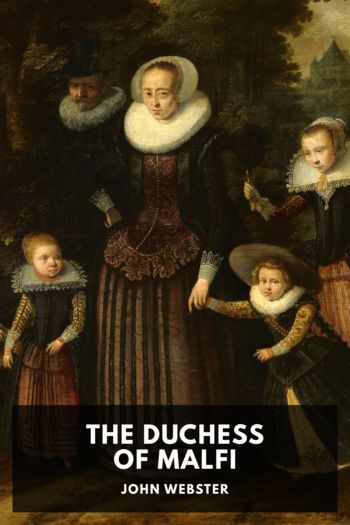
John Webster was a later contemporary of Shakespeare, and The Duchess of Malfi, Webster’s best known play, is considered among the best of the period. It appears to have been first performed in 1612–13 at the Blackfriars before moving on to the larger and more famous Globe Theatre, and was later published in 1623.
The play is loosely based on a real Duchess of Amalfi, a widow who marries beneath her station. On learning of this, her brothers become enraged and vow their revenge. Soon the intrigue, deceit, and murders begin. Marked by the period’s love of spectacular violence, each character exacts his revenge, and in turn suffers vengeance at the hands of others. Coming after Shakespeare’s equally sanguine Hamlet and Kyd’s The Spanish Tragedy, Webster’s The Duchess of Malfi brings to a close the era of the great Senecan tragedies of blood and revenge. As the Jacobean period progressed, the spectacle became more violent and dark, reflecting the public’s growing dissatisfaction with the corruption of King James’ court.

Description
In Great War–era France, E. E. Cummings is lifted, along with his friend B., from his job as an ambulance driver with the Red Cross, and deposited in a jail in La Ferté Macé as a suspected spy. There his life consists of strolls in the cour, la soupe, and his mattress in The Enormous Room, the male prisoners’ communal cell. It’s these prisoners whom Cummings describes in lurid detail.
The Enormous Room is far from a straightforward autobiographical diary. Cummings’ descriptions, peppered liberally with colloquial French, avoid time and, for the most part, place, and instead focus on the personal aspects of his internment, especially in the almost metaphysical description of the most otherworldly of his compatriots: The Delectable Mountains.
During his imprisonment, Cummings’ father petitioned the U.S. and French authorities for his liberty. This, and his eventual return home, are described in the book’s introduction.

Description
Set a mere three months after The Laughing Cavalier, the titular first Sir Percy is set to wed his love Gilda in a double wedding with her brother and his intended. The attendees include many of the rich and famous, including the Stadtholder himself. But immediately after the ceremony, bad news arrives, and Percy, A.K.A. Diogenes, is tasked with rushing to get messages to two of the Stadtholder’s divisions that are in peril from the enemy. But there are unknown enemies about as well as known ones, and Diogenes will soon face the darkest hours and direst threats of his young life.
In the seventh entry in the series, Baroness Orczy returns again to early seventeenth-century Netherlands, but with a darker tone than The Laughing Cavalier. This time she turns her focus to the antagonist and his henchmen, and once again puts her hero in an untenable position. This time the nation’s life is at stake, as well as his own.

Description
Suffolk returns from France bringing the new Queen of England, Margaret of Anjou, and a peace treaty. The Duke of Gloucester discovers that the French forces are allowed to keep the territories of Anjou and Maine in a trade for Margaret; he foresees that England will lose what little control remains over France. Because Gloucester heavily influences King Henry VI’s decisions and is highly respected amongst his peers, he is seen as a major target.
Cardinal Beaufort, Gloucester’s main rival, mentions to Buckingham and Somerset his interest in removing Gloucester. The Duke of York sees Gloucester’s death as an opportunity to grab the English throne for himself. The French are also in favor of removing Gloucester from power. For Queen Margaret and the Duke of Suffolk to manipulate the king and help France, Henry’s most loyal advisor must not stand in their way.
This Standard Ebooks production is based on William George Clark and William Aldis Wright’s 1887 Victoria edition, which is taken from the Globe edition.
Description
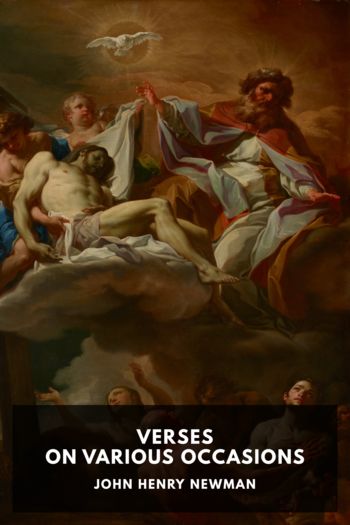
Verses on Various Occasions is a collection of poems written by John Henry Newman between 1818 and 1865. This period of Newman’s ecclesiastical career saw his ordination as an Anglican priest in 1825, his involvement in the High Church “Oxford Movement” in the 1830s, his conversion to Roman Catholicism in 1845, and his founding of the Birmingham Oratory, a Catholic religious community, in 1849.
The poems in this collection span a range of Christian subjects, including piety, biblical prophets, Church Fathers, and Newman’s evolving views on the Catholic Church. Some noteworthy inclusions are “The Pillar of the Cloud,” which has been set to music as the hymn “Lead, Kindly Light,” and “The Dream of Gerontius,” which relates a man’s journey into the afterlife, inspired by Dante’s Divine Comedy.
Description
National Avenue, originally titled The Midlander, is Booth Tarkington’s final entry in his Growth Trilogy. Like the previous entries in the series, National Avenue addresses the rapid industrialization of small-town America at the turn of the century, and the socioeconomic changes that such change brings with it.
Dan Oliphant and his brother Harlan are the children of a wealthy small-town businessman. Harlan is a traditional upper-class man—affecting an accent, dressing for dinner, and contemplating beauty and culture—while Dan is boisterous and lively, eager to do big things. Dan sees the rise of industry in America’s east as a harbinger for his own Midwestern town, and sets his mind on building an industrial suburb, Ornaby Addition, next to his city’s downtown.
Dan’s idea is met with scorn and mockery from not only his family, but also his fellow townspeople. Dan persists nonetheless, and soon the town must contend with his dream becoming a reality: noisy cars, smoky factories, huge, unappealing buildings, and the destruction of nature and the environment become the new normal as Dan’s industrial dream is realized.
Where The Turmoil focuses on industrialization’s effect on art and culture, and The Magnificent Ambersons focuses on industry’s destruction of family and of small-town life, National Avenue focuses on the men and women who actually bring that change about. Dan is portrayed sympathetically, but Tarkington makes it clear that his dreams and choices lead to a deeply unhappy family life and the ruination of the land around him. But can Dan really be faulted for his dream, or is industry inevitable, and inevitably destructive?

Description
The Adventures of Pinocchio is a story that has reached many people across the globe since it was first penned by Carlo Collodi in 1883. The adventures were originally published in serial format in an Italian weekly magazine for children. In 1940, Disney released an animated film adaptation of the story that has solidified the fable in popular culture.
A wooden puppet is crafted out of a magical piece of wood by Geppetto, a humble woodworker. To Geppetto’s surprise, the puppet comes to life. Thus begins the adventures of this magical puppet, Pinocchio. Geppetto takes the role of father to Pinocchio, and tries to stress the importance of his education. Pinocchio, however, is drawn into many mischievous adventures by his peers and others.
Description
The Wings of the Dove is perhaps the most well-received of Henry James’s novels. First published in 1902, it follows Kate Croy and Merton Densher, an engaged couple in late-Victorian London, who meet Milly Theale, a wealthy American heiress.
Milly, though young and lively, is burdened with a fatal disease. She wishes to spend her last days on happy adventures through Europe, and her sparkling personality, still bright despite her looming death, quickly makes her a hit in the London social scene. As she plans an excursion to Venice, Kate and Merton, who are too poor to marry and still maintain their social standing, scheme to trick Milly out of her inheritance.
The character of Milly is partly based on Minny Temple, James’ cousin who died young of tuberculosis. He later wrote that the novel was his attempt to immortalize her memory, and that he spent years developing the core of the book’s conceit before committing it to the page. The novel is James at his peak: dizzyingly complex prose weaves rich, impressionistic character studies, heavy in symbolism and allusion, amid the glamorous backdrops of high-society London and decaying Venetian grandeur.
Description
King Henry V has suddenly died, and the kingdom is in chaos. In England, noblemen are fighting amongst themselves. Loyalties are divided into two factions: the White Roses (York) and the Red Roses (Lancaster). The Duke of Gloucester, Henry VI’s Protector, is accused by Cardinal Beaufort of seizing the throne for himself.
Meanwhile in France, the Dauphin Charles has been crowned the new king. English-held land once conquered by Henry V is quickly being recaptured by French forces. In one of these battles, the English hero Talbot is imprisoned. A French woman named Joan la Pucelle—also known as Joan of Arc—has been having visions that reveal to her how to defeat the English Army.
The only thing that unifies the two countries is their pessimism towards the new English monarch. It is now Henry VI’s turn to rule over England, or die trying.
This Standard Ebooks production is based on William George Clark and William Aldis Wright’s 1887 Victoria edition, which is taken from the Globe edition.
Description
Psmith, down on his luck, takes out a newspaper advertisement to undertake a job, and the Hon. Freddie Threepwood, younger son of Lord Emsworth, enlists Psmith to steal his Aunt Constance’s diamond necklace. Psmith inveigles himself into Blandings Castle, posing as a Canadian poet. He falls in love with Eve Halliday and has to survive the suspicious and Efficient Baxter. In the meantime, others in Blandings Castle are also after the necklace.
Sir Pelham Grenville Wodehouse was an English author and one of the most widely read humorists of the twentieth century. After leaving school, he was employed by a bank but disliked the work and turned to writing in his spare time. His early novels were mostly school stories, but he later switched to comic fiction, creating several regular characters who became familiar to the public over the years.
Leave It to Psmith was originally serialized in the Saturday Evening Post in the U.S. and in Grand Magazine in the U.K. in 1923. It is the sequel to Psmith, Journalist.